


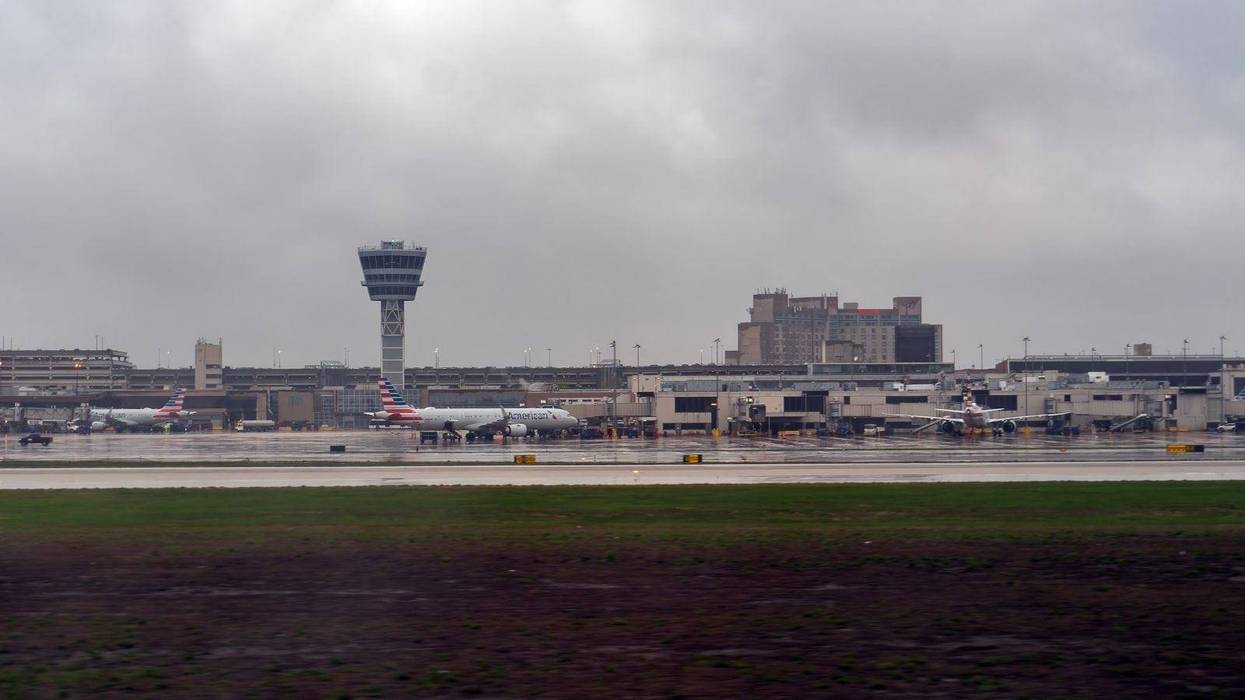
PHILADELPHIA (KYW Newsradio) — The Philadelphia Department of Public Health is warning of possible measles exposures after a person with the virus traveled through the city last week.
According to officials, the person was at Philadelphia International Airport, William H. Gray III 30th Street Station, and a southbound Amtrak train on Wednesday, Jan. 7.
According to the health department, the locations and times include Terminal A East at Philadelphia International Airport from 7:50 p.m. to 11 p.m., 30th Street Station from 8:15 p.m. to 11:25 p.m., and Amtrak Northeast Regional Train 175, southbound, from the scheduled Philadelphia stop from 9:23 p.m. through 11:30 p.m. The train made scheduled stops between Boston and Washington, D.C.
Officials said the person also traveled through Washington, D.C., and Maryland. Maryland's health department has already put out an advisory.
Those who were at those locations at those times are advised to check their vaccination status and watch for symptoms.
Measles is a highly contagious virus that spreads through the air when an infected person coughs, sneezes or talks. People who are not protected can become infected up to two hours after an infected person leaves the area, officials said. Early symptoms include fever, runny nose, cough, and red, puffy eyes, followed by a rash. In severe cases, measles can lead to pneumonia, brain infection and death.
In a statement, Health Commissioner Dr. Palak Raval-Nelson said officials do not believe the case poses a threat to the general public.
"We encourage people who were possibly exposed to take action if they are not protected against measles," Raval-Nelson said.
In 2000, measles was officially eliminated from the United States, according to the Centers for Disease Control and Prevention. Elimination status is reached when the continuous spread of disease is absent for more than 12 months.
Last year, in 2025, the nation saw its highest outbreak since 1991, with 2,144 confirmed cases. So far this year, there have been at least three reported cases.
The disease is preventable with vaccinations. But Dr. Lori Handy, associate director of the Vaccine Education Center at Children's Hospital of Philadelphia, said vaccination rates are on the decline.
"That is because measles is highly contagious, meaning that if somebody enters a room and they have measles, say there's 10 people in the room who are unvaccinated, nine or even all 10 of those people in that room will get measles," Handy said.
She said 95% of the population needs to be vaccinated, and that the disease really is terrifying and sneaky and hangs around like a ghost.
"So a person walks into a room, they have measles virus. Some of that virus hangs out in the air. They leave the room. That virus stays in that space for, sometimes, up to two hours, depending on the ventilation of the space."
Last year, about 93% of confirmed measles cases were among people who were unvaccinated or whose vaccination status was unknown, according to the American Academy of Pediatrics.