


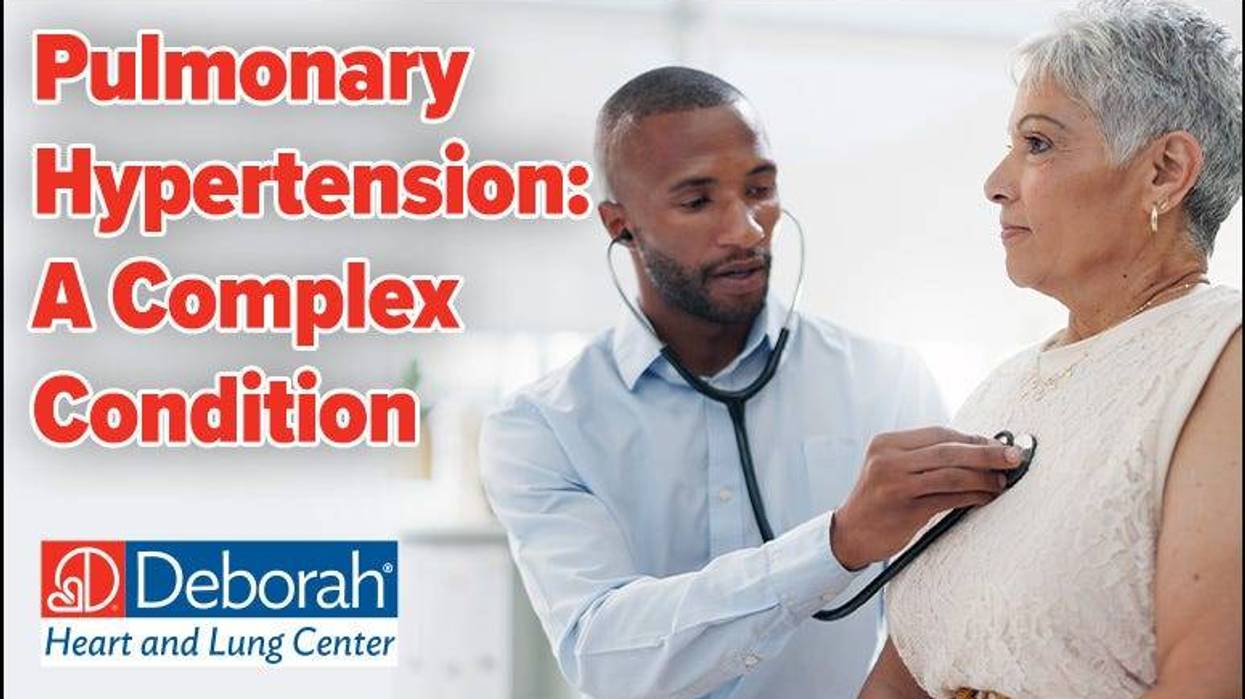

Pulmonary hypertension, simply put, is high blood pressure in the arteries that supply the lungs.
You may assume that if you have been diagnosed with hypertension – high blood pressure – then it would stand to reason that it's high all over your body, and that pulmonary hypertension is probably part of it.
You would probably be wrong.
Pulmonary hypertension (PH) is a rare group of serious but LOCALIZED medical conditions that can have full-body impacts if not recognized early and treated appropriately.
When any of these conditions damage or burden the pulmonary arteries that carry blood between the lungs and the heart, the heart has to work harder. That can weaken it and lead to right-sided heart failure and all its symptoms and complications.
 Deborah Heart and Lung Center
"In general, there are five different types of pulmonary hypertension," explained cardiologist Geurys Rojas-Marte, MD, Medical Director, Advanced Heart Failure and Pulmonary Hypertension Programs at Deborah Heart and Lung Center.
"Each one of them has a different etiology, and a different treatment, and a different approach. So that's what makes it a little complicated."
Some cases of pulmonary hypertension have no obvious cause or may be triggered by another rare disease. But there are usually underlying conditions that contribute to the four other types:
•Pulmonary arterial hypertension (PAH): narrowing or stiffening of the pulmonary arteries
•PH due to left heart disease: such as heart failure or valve problems
•PH due to lung diseases: such as chronic obstructive pulmonary disease (COPD), or interstitial lung disease
•Chronic thromboembolic pulmonary hypertension (CTEPH): blood clots in the lungs
The symptoms of pulmonary hypertension often develop gradually and may be mistaken for other conditions. You've seen the list often in this space: shortness of breath, fatigue, swelling of the legs and feet, among others.
While pulmonary hypertension can't always be cured, customized treatment regimens can help manage symptoms and slow disease progression.
KYW's Rasa Kaye talks with Dr. Rojas-Marte about living with pulmonary hypertension.
To schedule an appointment, visit DemandDeborah.org or call 609-831-4456.
This Health Report is sponsored by Deborah Heart and Lung Center.