


Following the offseason departures of Al Horford, Kristaps Porzingis, and Luke Kornet, the Celtics entered the season with significant questions surrounding their frontcourt.
Those questions extended even to the man who built it.
"We'll see how that looks," Brad Stevens said on media day in late September. "I don't know how the front court is going to play itself out right now. I can't predict it."
Fifty games into the season, the answers have been more positive than Stevens — or anyone else — could have reasonably expected. Boston sits at 32-18, tied for second in the Eastern Conference, with the third-best point differential in the NBA (+353), and the development of both Neemias Queta and Luka Garza, both in the midst of career years, has played an important role in that.
Queta has started 46 of his 47 appearances, averaging 10.1 points on 63.5% shooting, along with 8.1 rebounds, 1.5 assists, and 1.3 blocks. Among players with at least 45 games played, his 11.6 net rating trails only Shai Gilgeous-Alexander and Cason Wallace.
Since being re-inserted in the rotation on December 20, Garza has averaged 9.4 points (60.5% FG, 50.0% 3PT), 5.0 rebounds, and 1.3 assists across 22 games.
Both have been excellent in their roles. Still, the Celtics needed more.
Behind them, the Celtics have leaned almost exclusively on small-ball lineups, as veterans Xavier Tillman and Chris Boucher have appeared in just 13 and nine games, respectively — the fewest among Celtics players on standard contracts. When shorthanded recently, Mazzulla has turned to two-way rookie Amari Williams as emergency center depth, though he is only eligible to be active for 50 games and cannot play in the postseason due to his two-way contract.
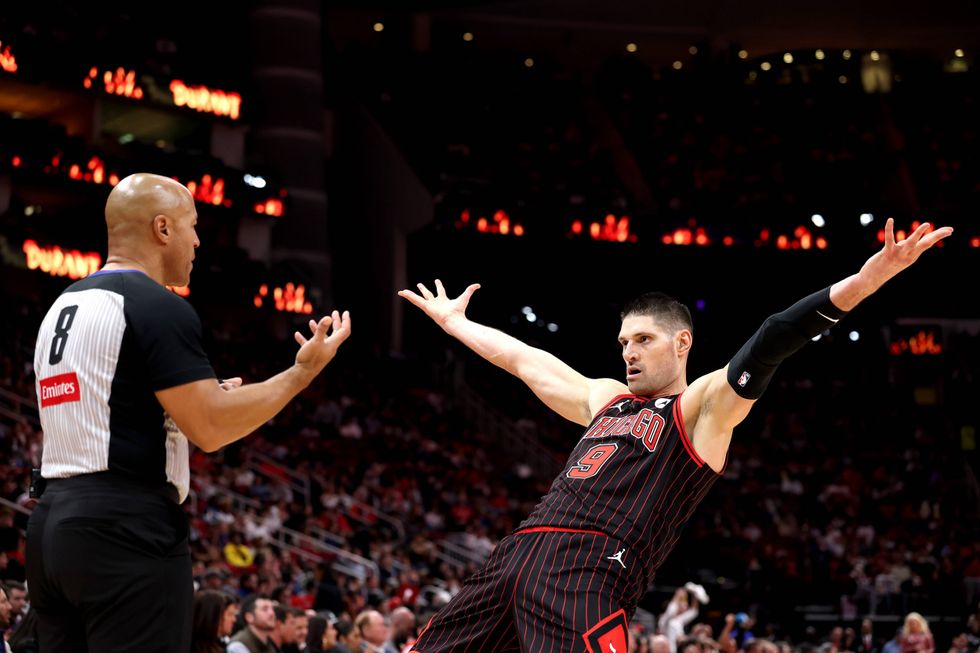
Acquiring Nikola Vucevic fills that roster hole. The big man is averaging 16.9 points, nine rebounds, and 3.8 assists through 48 games this season. He has posted a 21.0% defensive rebounding percentage, one of only 17 players (min. 40 games played) north of 20% this season, an area the Celtics have struggled in, ranking 23rd as a team in defensive rebounding percentage.
The 35-year-old is also the only player in the NBA this season with at least 400 rebounds and 80 made three-pointers. Over the past two seasons, the two-time All-Star has shot 39.1% from beyond the arc on 4.5 attempts per game.
 Kenneth Richmond/Getty Images
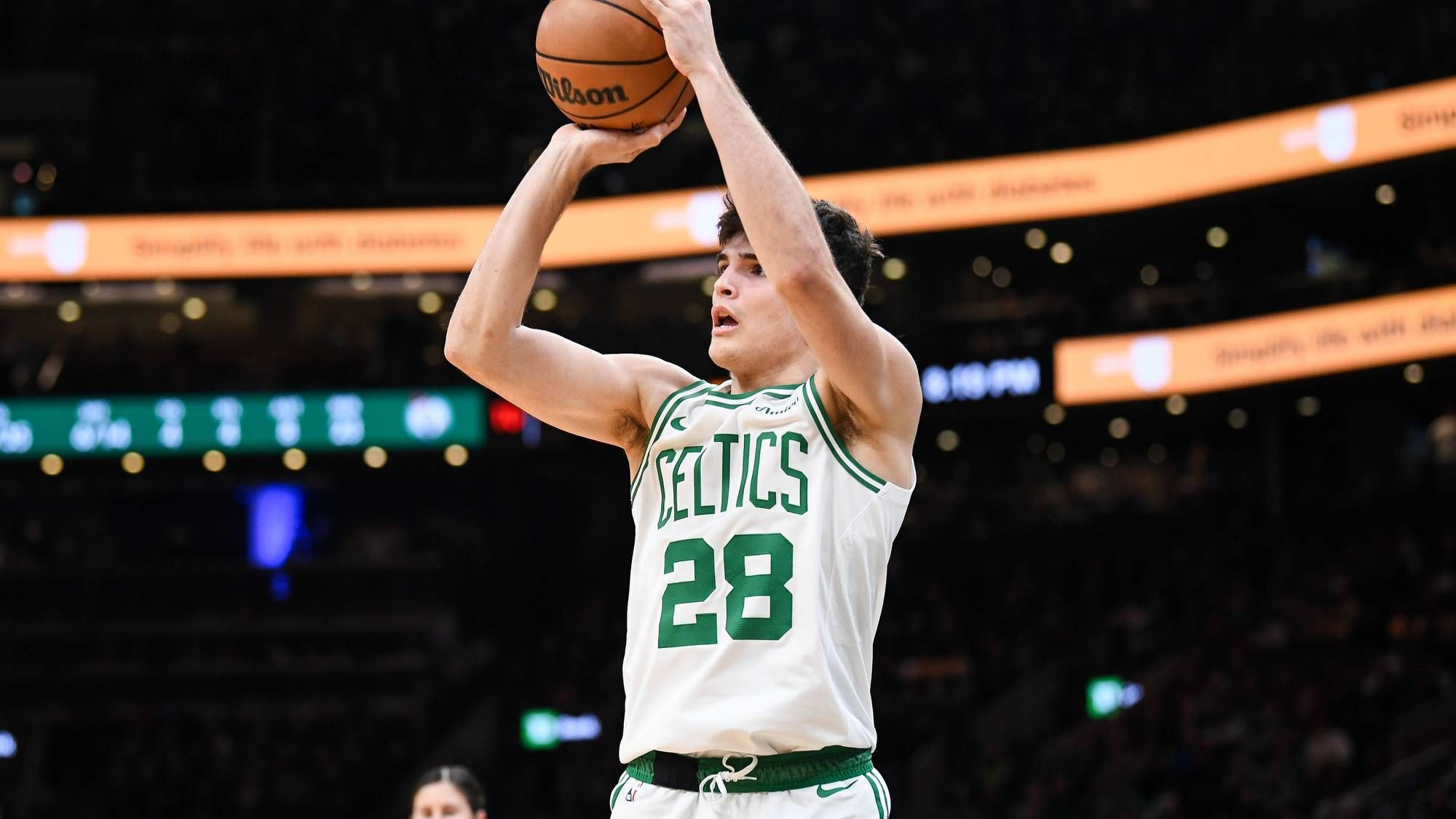
Anfernee Simons made a compelling case to remain in Boston. The 26-year-old averaged 14.2 points and 2.4 assists per game this season across 49 games (all off the bench), shooting 44% from the field and 39.5% from three, and looked better and better as he grew more comfortable within the Celtics' system on both ends of the floor. He led all reserves in made threes (130) and is third in total scoring (694). Among reserves with at least 45 games, he was second in both net rating (6.1) and offensive rating (118.8).
In the end, to get, you have to give. Simons and his expiring $27.7 million contract were always Boston's biggest trade chip. And with the possibility of Jayson Tatum's return, Simons' scoring punch became less essential, making strengthening the frontcourt the clearer priority.
In trading Simons, though, there is now a need for another guard/ball-handler, as the Celtics don't have one behind Derrick White and Payton Pritchard, which is why Pritchard came off the bench for the first time this season in Boston's 110-100 win over the Mavericks on Tuesday night.
"As you can see, how our team is constructed, you need somebody to come off the bench and handle the rock," he told reporters in Dallas. "And it's good. D-White comes out, and then I come in, like there is always somebody who can bring it up, get us into the flow, stuff like that. So, it just makes the most sense for our team."
This is where the financial flexibility created in the Simons trade comes into play.
The trade drops Boston below the first apron, cuts its projected tax bill from $39.5 million to $17.7 million, and restores access to the signing players who were waived previously earning $14.1 million (the non-taxpayer mid-level exception) or more. The Celtics now sit just $5.9 million shy of falling under the luxury tax entirely.
It also creates a new $27.6 million traded player exception. By using the TPE from the Kristaps Porzingis deal to acquire Vucevic, Boston now holds a fresh exception that can be carried into the summer, providing another pathway to reshape the roster if larger moves are deferred until the offseason.
In the short term, it's hard to imagine the Celtics are finished. Reports indicate they remain active in trade talks, and Chris Boucher — scratched for personal reasons ahead of Tuesday's game — has drawn interest around the league.
On the floor, Vucevic fits. He rebounds at a high level, stretches the floor, and adds a pick-and-pop element that Boston hasn't consistently featured this season. Among centers attempting at least four three-pointers per game, he's one of just five shooting better than 36%. His passing and post scoring also add a new offensive dimension.
Ironically, defense remains the primary concern surrounding Vucevic, as it did with Simons when he first arrived in Boston. As Simons showed under Joe Mazzulla, that side of the ball can improve within the Celtics' system.
For Vucevic, now in his 15th NBA season, Boston also represents a chance to finally experience postseason success. He has made the playoffs just four times in his career, playing 16 total games and exiting in the first round in each of his last three appearances.
Simons will be missed. But balancing the roster, shedding salary, and directly addressing the team's biggest weakness make the move logical, particularly if the Celtics are planning for Tatum's return.