

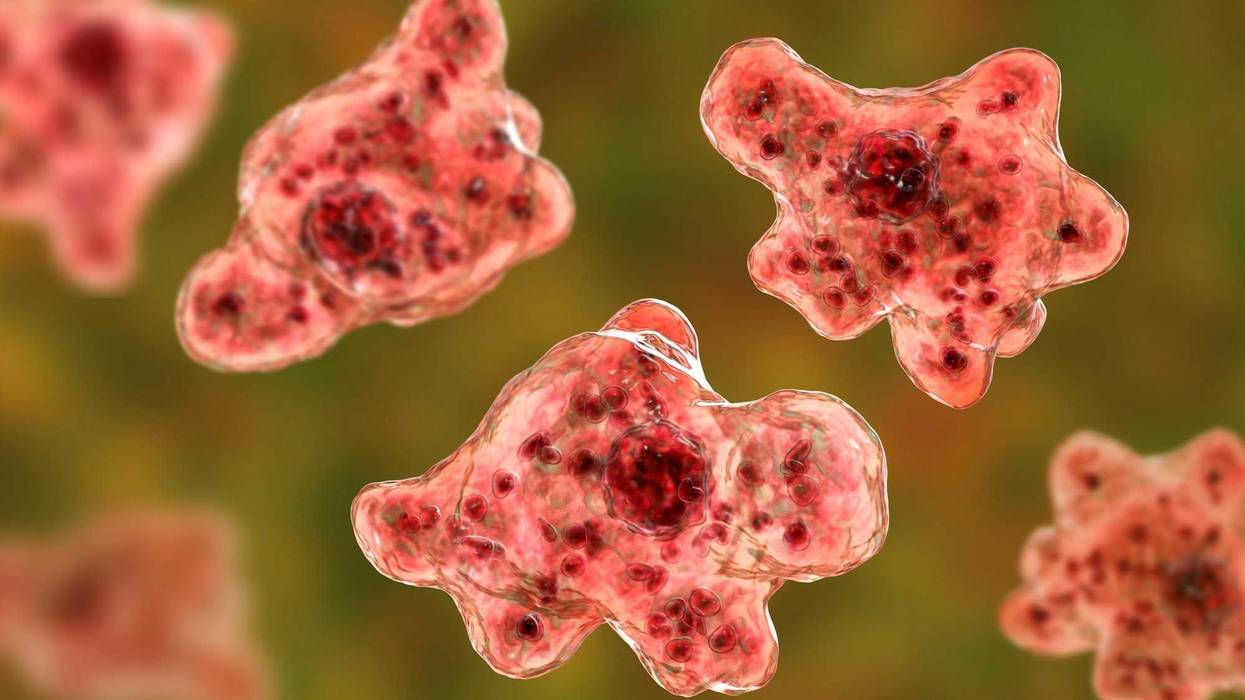

Nothing will ruin a great summer faster than a stomach bug and it turns out that one is exploding across the country: Health officials are monitoring a sudden spike in cases of cyclosporiasis, a parasitic infection that causes severe watery diarrhea.
The Centers for Disease Control and Prevention have recorded 145 cases across 17 states, with the illness spreading to at least 18 states. The most affected states include Illinois, Michigan, New York, and Texas. The Hill reported that other states linked to the outbreak include Alaska, Colorado, Connecticut, Florida, Georgia, Louisiana, Massachusetts, New Jersey, North Carolina, Ohio, Pennsylvania, Tennessee, Virginia and Wisconsin.
Since the latest federal numbers release in mid-June, there's been an even larger burst of cases in Michigan. The state has identified 681 cases. Typically, Michigan identifies only about 50 cases per year.
“MDHHS is working with [the] local health department in southeast Michigan to investigate [the] large and growing outbreak of cyclosporiasis, a diarrheal illness, to identify a common exposure,” said the DHHS spokesperson.
The illness known as cyclosporiasis is caused by a parasite found in contaminated food or water and can lead to symptoms such as cramps, nausea, and fatigue.
One of the worst parts about is that while people keep getting sick, the source of the outbreak has not been identified. Health officials do know previous outbreaks have been linked to prepackaged food and fresh produce.
The microscopic parasite Cyclospora cayetanensis spreads through contaminated food or water, with outbreaks often linked to fresh produce such as cilantro, basil or berries in past outbreaks. Health officials say that's because those items are the hardest to wash thoroughly. Direct person-to-person transmission is unlikely because the parasite needs time in the environment to become infectious.
Symptoms typically appear about a week after exposure and can include watery diarrhea, loss of appetite, weight loss, cramping, bloating, nausea and fatigue. The illness is generally not life-threatening for healthy people but can last weeks or longer without treatment and may recur.
Twenty people have been hospitalized nationwide, with no deaths reported.
The Texas Department of State Health Services issued a health advisory in May urging clinicians to watch for symptoms, especially in immunocompromised patients who face higher risks.
The CDC continues to work with state health departments and the FDA to trace possible sources while reminding the public that many mild cases may go unreported. Symptoms including fatigue, extreme diarrhea, low-grade fever can last a few days or up to a month, and they can return after subsiding.
Those with symptoms lasting more than a few days should see a doctor. Trimethoprim-sulfamethoxazole is the standard treatment for those who need it.
Protecting yourself from cyclosporiasis
The CDC recommends taking the following steps to reduce the risk of exposure:
- Wash your hands with soap and water before and after handling or preparing raw fruits and vegetables.
- Thoroughly wash all fresh produce, herbs, fruits, and vegetables before eating, cutting, and cooking.
- Scrub firm fruits and vegetables, such as melons and cucumbers, with a clean produce brush.
- Cut away any damaged or bruised areas on fruits and vegetables before preparing and eating.
- Refrigerate cut, peeled, or cooked fruits and vegetables as soon as possible, preferably within two hours.
- If cooking raw foods, make sure they reach 158° Fahrenheit or higher to kill the parasites.