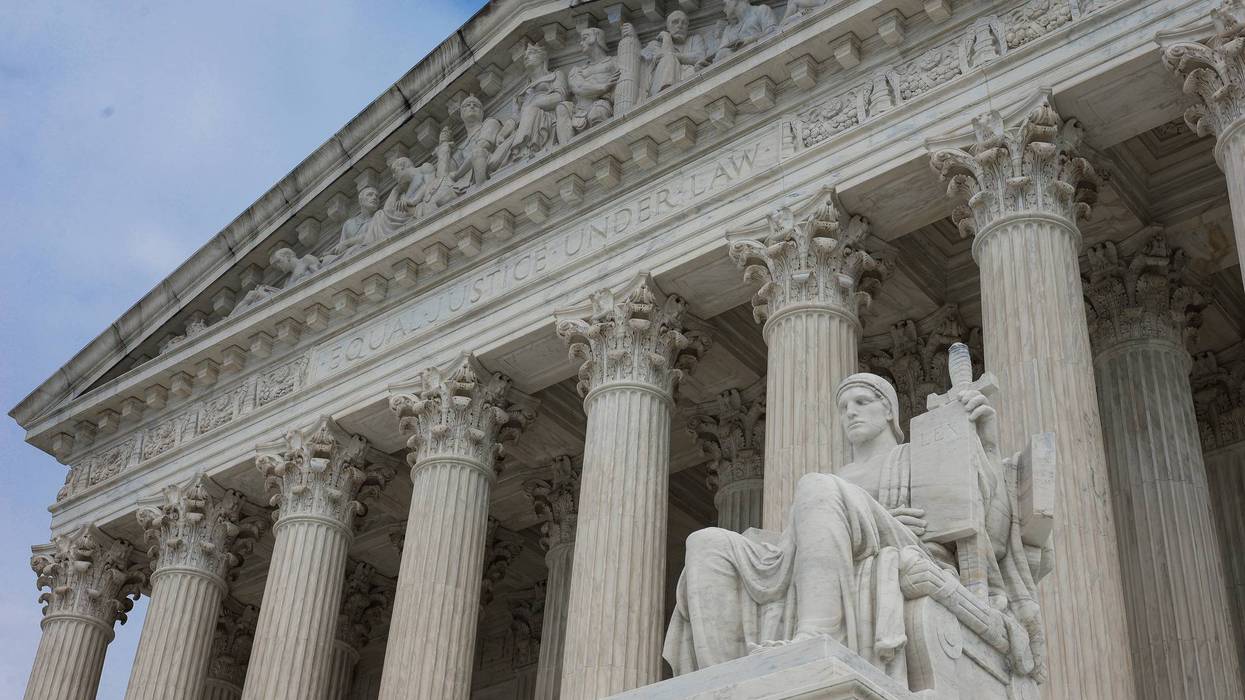

States can exclude transgender athletes from women and girls’ sports teams, the U.S. Supreme Court ruled Tuesday in its opinion on the West Virginia v. B.P.J. case and the Little v. Hecox out of Idaho.
Oyez explained that B.P.J. a transgender girl who identified as female since the third grade. She began taking puberty blockers to align with her gender and lived as a girl at school, including her participation in girls’ athletic teams.
Then, West Virginia enacted the “Save Women’s Sports Act,” in 2021. It required public school and collegiate sports teams to be designated based on “biological sex,” thus excluding transgender athletes like B.J.P. form participating on female teams.
After it took effect, B.J.P. sued the West Virginia State Board of Education and the West Virginia Secondary School Activities Commission through her mother. This suit alleged that the institutions violated the Equal Protection Clause and Title IX, and the state intervened to defend the law.
“Initially, the district court granted B.P.J. a preliminary injunction, allowing her to participate on girls’ teams pending litigation,” said Oyez. “However, at summary judgment, the district court reversed course and upheld the law.”
On appeal, the U.S. Court of Appeals for the Fourth Circuit held that application of the law to B.P.J. violated Title IX. Now, the Supreme Court’s opinion penned by Justice Brett Kavanaugh has ruled that “[c]onsistent with Title IX and the Equal Protection Clause, we hold that the States may maintain women’s and girls’ sports for biological females.”
The Idaho case concerned a transgender woman who he wanted to try out for the women’s track and cross-country teams at Boise State University in Idaho. The U.S. Court of Appeals for the 9th Circuit agreed with Lindsay Hecox that the Idaho law violates the 14th Amendment’s guarantee of equal treatment and prohibited Idaho from enforcing the ban.
According to SCOTUSBlog, the nine Supreme Court Justices unanimously agreed that laws enacted by Idaho and West Virginia don’t violate federal civil rights laws. They were split on whether the West Virginia law violates the Constitution in the B.J.P. case.
“The majority extends great sympathy to those it favors: the young cisgender girls and women who play sports. I share that sympathy,” said a dissenting opinion penned by Justice Sonia Sotomayor, in an opinion joined by Justices Elena Kagan and Ketanji Brown Jackson. “Playing sports can lead to benefits that are immeasurable, and many are understandably invested in ensuring that competition stays fair and safe. Because the majority, however, inflicts a hardship on those it disfavors without giving them the fair and full opportunity the Constitution requires to litigate their contentions, I respectfully dissent.”
SCOTUSBlog also noted that the ruling allowing states to ban transgender athletes from women and girls’ sports comes around a year after the court upheld a Tennessee law banning the use of puberty blockers and hormone therapy by transgender teenagers in a 6-3 vote. It also comes after President Donald Trump’s issued an executive order last year that said his administration would “defend women’s rights and protect freedom of conscience by using clear and accurate language and policies that recognize women are biologically female, and men are biologically male.”
In response to the Supreme Court’s ruling Tuesday, Joshua Block, Senior Counsel for the American Civil Liberties Union’s LGBTQ & HIV Rights Project, said: “This is a heartbreaking ruling for our clients and transgender girls like them who’ve asked for nothing more than the same opportunities afforded to their peers. The reality is that the equality of transgender women and girls takes nothing away from, and in fact promotes, the equality of all women and girls. We will continue to advance the fundamental principle that all young people deserve equal opportunity to thrive and succeed.”