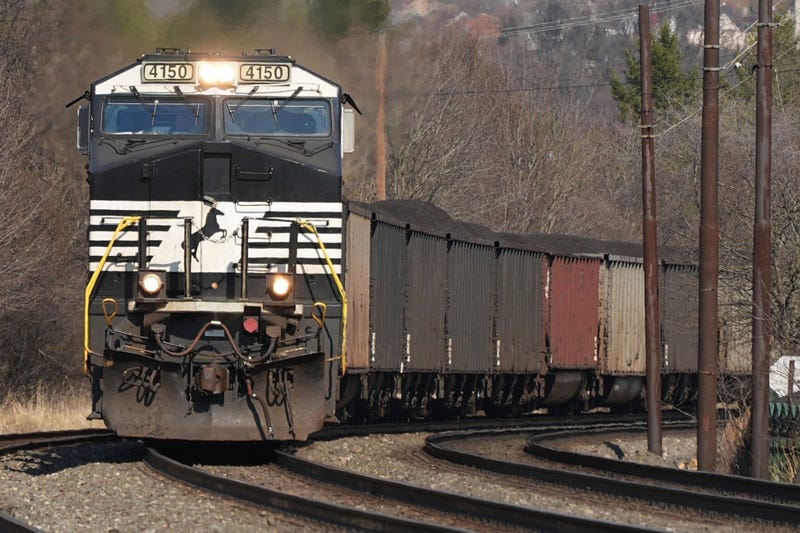
OMAHA, Neb. (AP) — The proposed $85 billion merger of Union Pacific and Norfolk Southern railroads has lost the support of two of their biggest unions that represent more than half the workers because they are worried the deal would increase safety risks, lead to higher shipping rates and consumer prices and cause significant disruptions.
The unions' decision they plan to announce Wednesday will make the Brotherhood of Locomotive Engineers and Trainmen and the Brotherhood of Maintenance of Way Employes Division two of the most prominent critics of the deal to create the nation's first transcontinental railroad. They join the American Chemistry Council, an assortment of agricultural groups and competing railroad BNSF in raising concerns that this combination would hurt competition.
But the deal has picked up the support of the nation's largest rail union that represents conductors and hundreds of individual shippers as well as an Oval Office endorsement from President Donald Trump. The U.S. Surface Transportation Board will begin weighing the opinions of all those stakeholders to determine whether the merger is in the public interest once the railroads file their formal application, which is expected later this week.
Union Pacific CEO Jim Vena has argued that creating a railroad that stretches from coast to coast would be good for the economy because it would be able to deliver shipments more quickly without handing them off between railroads in the middle of the country and it could better compete against trucking. But the presidents of the Brotherhood of Locomotive Engineers and Trainmen and the Brotherhood of Maintenance of Way Employes Division unions — which are both affiliated with the Teamsters — said that after months of meetings with Vena and other executives they have serious doubts about the potential benefits, and they said the promises Vena made to preserve jobs for all current employees aren't detailed enough to be counted on.
Rail unions worry about safety and shippers
“This proposed monopoly will end up costing businesses more and those costs will be passed on to consumers,” Brotherhood of Locomotive Engineers and Trainmen National President Mark Wallace said. "We believe this transcontinental railroad will make shipping by rail less attractive as the merged carrier passes off rail lines that serve small towns, factories and farms to short line railroads while running miles-long slow-moving trains on the main line. For rail customers it will be a choice between ’Hell or the highway.' ”
The unions say they are worried that safety could deteriorate after a merger because Norfolk Southern has made some strides over the past two and a half years since the disastrous East Palestine, Ohio, derailment.
Vena and Norfolk Southern CEO Mark George have said they are optimistic the merger will get approved because they believe it will be good for the country, their customers and rail workers. Shareholders of both railroads overwhelmingly support it.
Deal faces stringent review
The Surface Transportation Board plans to review the deal under the tough new standard it adopted in 2001 after a series of disastrous rail mergers in the 1990s that led to delays of weeks or even months for some shipments. These untested rules require any merger of the six largest railroads to be in the public interest and show that it will enhance competition. When the Surface Transportation Board approved the first major rail merger in more than two decades two years ago it used a less stringent standard allowing Canadian Pacific's $31 billion acquisition of Kansas City Southern.
Transportation expert and DePaul University Professor Joe Schwieterman said many people have been raising concerns about the Union Pacific merger because of its scope and the likelihood that it could trigger another merger and leave companies with only two American railroads to deal with. But everyone wants to examine the details in the merger application closely, he said.
Currently, Norfolk Southern and CSX serve the eastern U.S. while Union Pacific and BNSF serve the west, and the two major Canadian rails compete where they can with their tracks crossing Canada and extending down into the United States and Mexico.
“This merger is like nothing we’ve seen before. It’s creating a railroad of such enormous scope that it’s somewhat of a paradigm shift,” Schwieterman said.
A merged Union Pacific would likely control more than 40% of the nation's freight.
Competitors question the benefits
BNSF's Chief of Staff Zak Andersen said his railroad, which is owned by Warren Buffett's Berkshire Hathaway, is convinced this merger would be bad for competition and only lead to higher rates and fewer options for shippers.
“No customer is asking for this. This is strictly a Wall Street play for shareholders,” Andersen said.
Earlier this fall, Buffett and CPKC's CEO both said they weren't interested in any kind of rail merger right now. Instead, they believe the railroads should continue to find ways to cooperate to deliver shipments more quickly, which can be done without all the complications of a merger. Still, CSX decided to replace its CEO this fall with an executive who has a background leading companies through major mergers.
.