MINNEAPOLIS (AP) — A vast network of labor unions, progressive organizations and clergy urged Minnesotans to stay away from work, school and stores Friday to protest immigration enforcement operations, even as subzero temperatures beset the state.
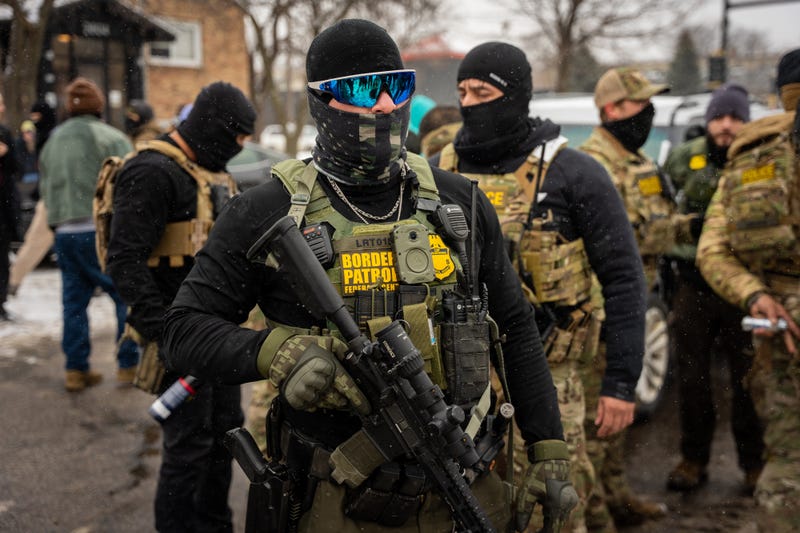
Minneapolis and St. Paul have seen daily protests since Renee Good was fatally shot by an Immigration and Customs Enforcement officer on Jan. 7. Federal law enforcement officers have surged in the Twin Cities for weeks and have repeatedly squared off with community members and activists who track their movements.
Organizers said Friday morning that more than 700 businesses across the state have closed for the day in solidarity with the protest -- from a bookstore in tiny Grand Marais near the Canadian border to the landmark Guthrie Theater in downtown Minneapolis.
“We’re achieving something historic,” said Kate Havelin of Indivisible Twin Cities, one of the more than 100 groups that is mobilizing. The demonstration coincides with a blast of cold air hitting the Upper Midwest and ahead of a severe winter storm that is expected to affect millions.
On Friday, Border Patrol commander Gregory Bovino sought to shift the narrative from that of a 5-year-old boy detained by ICE officers in Minneapolis by attacking the news media for, in his view, insufficient coverage of children who have lost parents to violence by people in the country illegally. After briefly mentioning the 5-year-old during a news conference, he talked about a mother of five who was killed in August 2023.
On Thursday, a prominent civil rights attorney and at least two other people were arrested for their involvement in an anti-immigration enforcement protest that disrupted a Sunday service at a church in St. Paul. They remained in federal custody Friday morning.
Organizers hope Friday’s mobilization will be the largest coordinated protest action to date, with a march in downtown Minneapolis planned for Friday afternoon. Earlier Friday, the temperature in Minneapolis was minus 21 with a wind chill of minus 40 (minus 29 Celsius with a wind chill of minus 40 Celsius).
Havelin compared the presence of immigration officers in Minnesota to the winter weather warnings.
“Minnesotans understand that when we’re in a snow emergency … we all have to respond and it makes us do things differently,” she said. “And what’s happening with ICE in our community, in our state, means that we can’t respond as business as usual.”
Somali businesses especially have lost sales during the enforcement surge as workers and customers, fearing detention, stay at home.
Many schools were planning to close Friday, but cited different reasons. The University of Minnesota and the St. Paul public school district said there would be no in-person classes because of the extreme cold. Minneapolis Public Schools were scheduled to be closed “for a teacher record keeping day.”
Clergy planned to join the march as well as hold prayer services and fasting, according to a delegation of representatives of faith traditions including Buddhist, Jewish, Lutheran and Muslim.
Bishop Dwayne Royster, leader of the progressive organization Faith in Action, arrived in Minnesota on Wednesday from Washington, D.C.
“We want ICE out of Minnesota,” he said. “We want them out of all the cities around the country where they’re exercising extreme overreach.”
Royster said at least 50 of his network’s faith-based organizers were joining the protest. About 10 were traveling from Los Angeles while others from the same group planned a solidarity rally in California, said one of the organizers there.
“It was a very harrowing experience,” said the Rev. Jennifer Gutierrez of the large immigration enforcement operation in Los Angeles last year. “We believe God is on the side of migrants.”
___
Associated Press journalists Jack Brook and Sarah Raza in Minneapolis, and Tiffany Stanley in Washington contributed.