WASHINGTON (AP) — The House refused Thursday to override President Donald Trump's veto of two low-profile bills as Republicans stuck with the president despite their prior support for the measures.
Congress can override a veto with support from two-thirds of the members of the House and the Senate. The threshold is rarely reached. In this case, Republicans opted to avoid a fight with the president in an election year over bills with little national significance. The two vetoes were the first of Trump's second term.
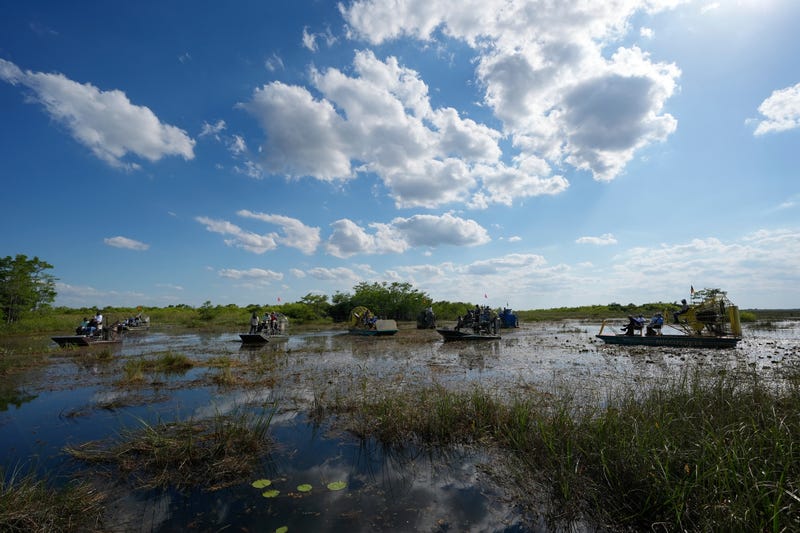
One bill Trump vetoed was designed to help local communities finance the construction of a pipeline to provide water to tens of thousands in Colorado. The other designated a site in Everglades National Park as a part of the Miccosukee Indian Reservation. On the Colorado bill, 35 Republicans sided with Democrats in voting for an override. On the Florida bill, only 24 Republicans voted for the override.
The White House did not issue any veto threats prior to passage of the bills, so Trump's scathing comments in his veto message came as a surprise to sponsors of the legislation. Ultimately, his vetoes had the effect of punishing those who had opposed the president’s positions on other issues.
The water pipeline bill came from Republican Rep. Lauren Boebert of Colorado, a longtime Trump ally who broke with the president in November to release files on convicted sex offender Jeffrey Epstein. The bill to give the Miccosukee Tribe of Indians more control of some of its tribal lands would have benefited one of the groups that sued the administration over an immigration detention center known as “ Alligator Alcatraz.”
Republicans take sides
Speaker Mike Johnson, R-La., said leadership was not urging — or “whipping” — members on how to vote. He said he would personally vote to sustain the vetoes and the president's message opposing the bills “sounded very reasonable to me.” He said he understood the concerns of the Colorado lawmakers about the veto and would work to help them on the pipeline issue going forward.
Boebert said she has been talking to colleagues individually about overriding Trump's veto, but wasn't sure about hitting the two-thirds threshold. Some colleagues “don't want to go against the president,” she said.
On the House floor, Boebert told colleagues that the communities targeted through the bill could see the cost of their drinking water triple without the legislation.
“This bill makes good not only on a 60-year plus commitment without wasting hundreds of millions of dollars in state and local and federal investments, but it also makes good on President Trump's commitment to rural communities, to Western water issues,” Boebert said.
When asked by a reporter if the veto was in response to her signing a discharge petition to release the Epstein files, she said, “I certainly hope not.”
Trump did not allude to Boebert in his veto of her legislation, but raised concerns about the cost of the water pipeline, saying “restoring fiscal sanity is vital to economic growth and the fiscal health of the Nation.”
Rep. Jeff Hurd, another Colorado Republican, also urged colleagues to override the veto, saying the vote was not about defying Trump but defending Congress.
“If Congress walks away from a 60-year commitment mid-project, then no Western project is truly secure," Hurd said.
The Florida legislation had been sponsored by Republican Rep. Carlos Gimenez, whom Trump has endorsed. In his veto message, Trump was critical of the tribe, saying, “The Miccosukee Tribe has actively sought to obstruct reasonable immigration policies that the American people decisively voted for when I was elected.”
Before the House voted to pass his bill, Gimenez said it would simply allow an inhabited tribal village to be included in the Miccosukee Reservation, empowering the tribe to manage water flow into the Everglades and raise structures within the camp to prevent flooding. He did not speak on the floor prior to the vote.
Instead, Democratic Rep. Debbie Wasserman Schultz of Florida urged colleagues to vote to override.
“This bill is so narrowly focused that (the veto) makes absolutely no sense other than the interest in vengeance that seems to have emanated in this result,” Wasserman Schultz said.
Rep. Don Bacon, R-Neb., said he would vote to override the president's vetoes.
“They passed unanimously,” Bacon said of the bills. “And I don't know if I agree with the explanations for the veto."
Rep. Nicole Malliotakis, R-N.Y., said she would vote to sustain the vetoes.
“My constituents want me to stand with Trump,” Malliotakis said.