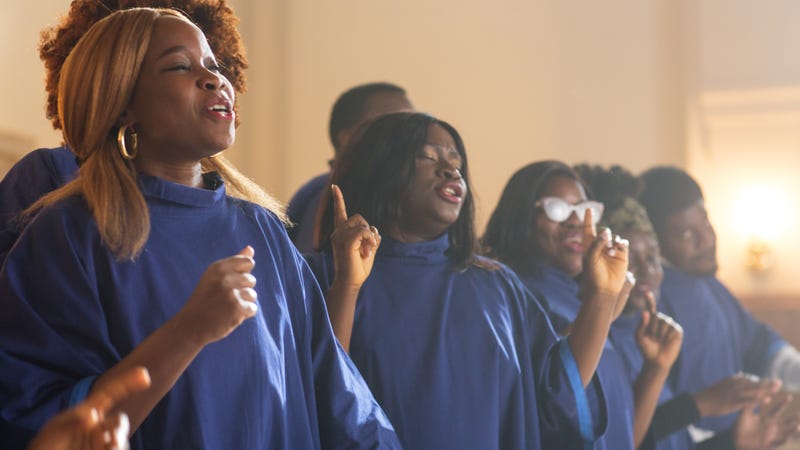

Gospel music’s earliest sounds rose from enslaved voices. Later, Black churches fused those spirituals with European hymns. And when Thomas Dorsey moved to Chicago during the Great Migration in the early 1900s, he blended blues with sacred lyrics, giving birth to modern gospel.
Around that same time, 3-year-old Shirley Wahls was singing in the junior choir at Mount Pleasant Baptist Church on the South Side, under Ruth Jones — known to the world as Dinah Washington.
“That was awesome, and I will never forget those days. She gave me the prowess to be brave enough to get out there sing…It meant a lot to me, and that’s when everybody started coming along.”
Wahls became one of gospel’s young pioneers. And as the Civil Rights Movement grew, gospel music became its soundtrack. Martin Luther King, Jr.’s death motivated Wahls to write a song.
“...And I did it from the heart and I donated the funds to the movement,” Wahls said. “And I still today believe in what Martin Luther King was saying…We’ve got to keep on moving on. And now Jesse’s gone. And that’s what Gospel music was about…you might mistreat me here, but you can’t keep me from Heaven.”
Chicago churches even had their own theme songs. Sweet Holy Spirit Bishop Larry Trotter remembers them all, and says Chicago’s sound stood apart.
“Chicago sings what I call ‘Hard Gospel.’ You hardly ever see a Chicago gospel artist without emotions. Some sweat! Other parts of the country, people sing real light. We, in Chicago, we go get it, with everything in us.”
That foundation carried gospel into new spaces. In the 1990s and 2000s, artists like Kirk Franklin, who won 20 Grammy awards to date, blended gospel with hip hop and R&B, expanding its reach. And today, Chicago native and 2-time Grammy winning-Jonathan McReynolds represents a more intimate praise and worship style — reflective, stripped down, deeply personal.
The full legacy will live on in Bronzeville at the future National Museum of Gospel Music — rising on the sacred ground of Pilgrim Baptist Church, where Dorsey’s sound took root. The same sanctuary where Albertina Walker, Mahalia Jackson and Aretha Franklin sang — and where Dr. Martin Luther King Jr. once stood.
“There isn’t a major national museum that reflects the history of Gospel music,” said Don Jackson, founder of the Stellar Awards, the world’s first awards show for gospel music. He’s leading the charge for the museum. It’lll feature exhibits, a research library and explore the science behind the music — what happens to the brain when we hear it.
“It serves a purpose to leave all of the difficulties, problems we may endure. And that’s what Gospel music does. It’s right at the door of our God. That’s what attracted me,” Jackson said.
Chicago didn’t just sing this music. Chicago MADE Gospel music.