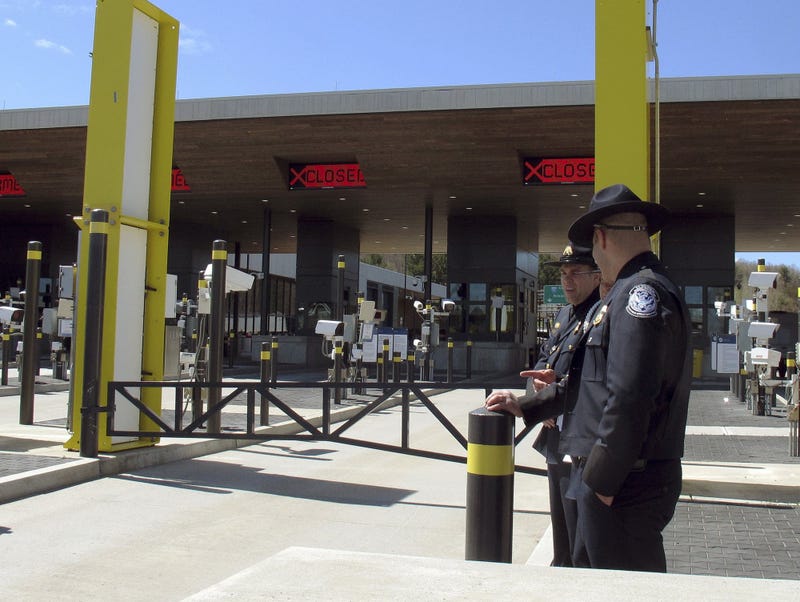

Buffalo, N.Y. (WBEN/AP) - The U.S. and Canada have agreed to temporarily close their shared border to nonessential travel.
President Donald Trump made the announcement Wednesday on Twitter as the two nations work to stem the spread of the coronavirus pandemic. The decision will not affect the flow of trade between the countries. Both countries are eager to choke the spread of the virus but also maintain their vital economic relationship. Canada relies on the U.S. for 75% of its exports. About 18% of American exports go to Canada.
"Essential travel will continue," said Canadian Prime Minister Justin Trudeau. "Our governments recognize that it is critical that we preserve supply chains between both countries. These supply chains ensure that food, fuel, and life-saving medicines reach people on both sides of the border. Supply chains, including trucking, will not be affected by this new measure."
"We had big changes overnight", says attorney Jamie Fiegel of Fiegel and Carr, a law firm specializing in border related issues.
Canadian Deputy Prime Minister Chrystia Freeland said the border is vital to the daily life to people on both sides.
"Nearly 200,000 people cross that border every day, and that border and that traffic that goes across that border is literally a lifeline for both the Canadians and the Americans on both sides of that border,'' Freeland said.
“We get our groceries thanks to truckers who drive back and forth across that border," she said. “Very urgently needed medical supplies and medicines go back and forth across that border. And essential workers go back and forth across that border every day. So it is a unique relationship for Canada, and it's important for us in handling our situation on the border to be sure that we act to get things right.''
But many people in Canada criticized the decision to give Americans an exemption. British Columbia Health Minister Adrian Dix said he vehemently disagreed with the American exemption given the surge in cases in neighboring Washington state.
Bruce Heyman, a former U.S. ambassador to Canada, said both countries recognize how many people cross the border daily.
“Border traffic has already slowed and in line with recommendations to stay home and eliminate nonessential movement,” Heyman said. “New rules jointly accepted for our shared border makes sense."
Robert Bothwell, a professor of Canadian history and international relations at the University of Toronto, noted the government-to-government accord merely ratifies what is already in place.