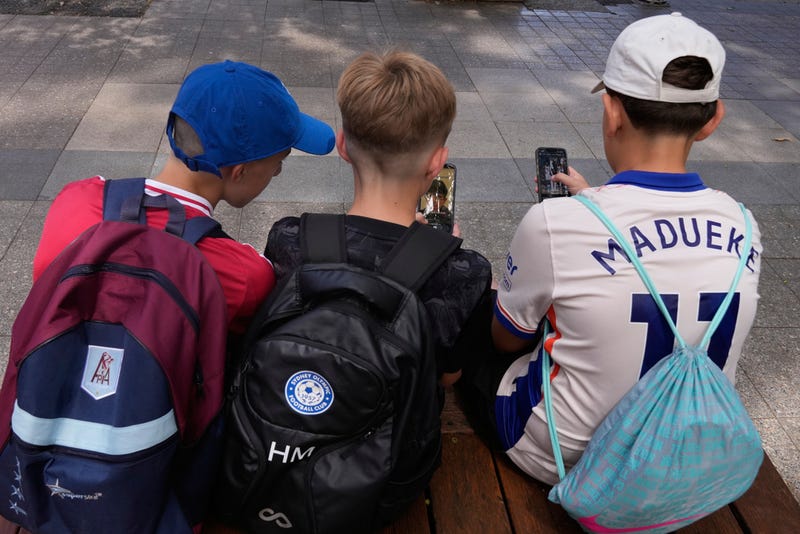

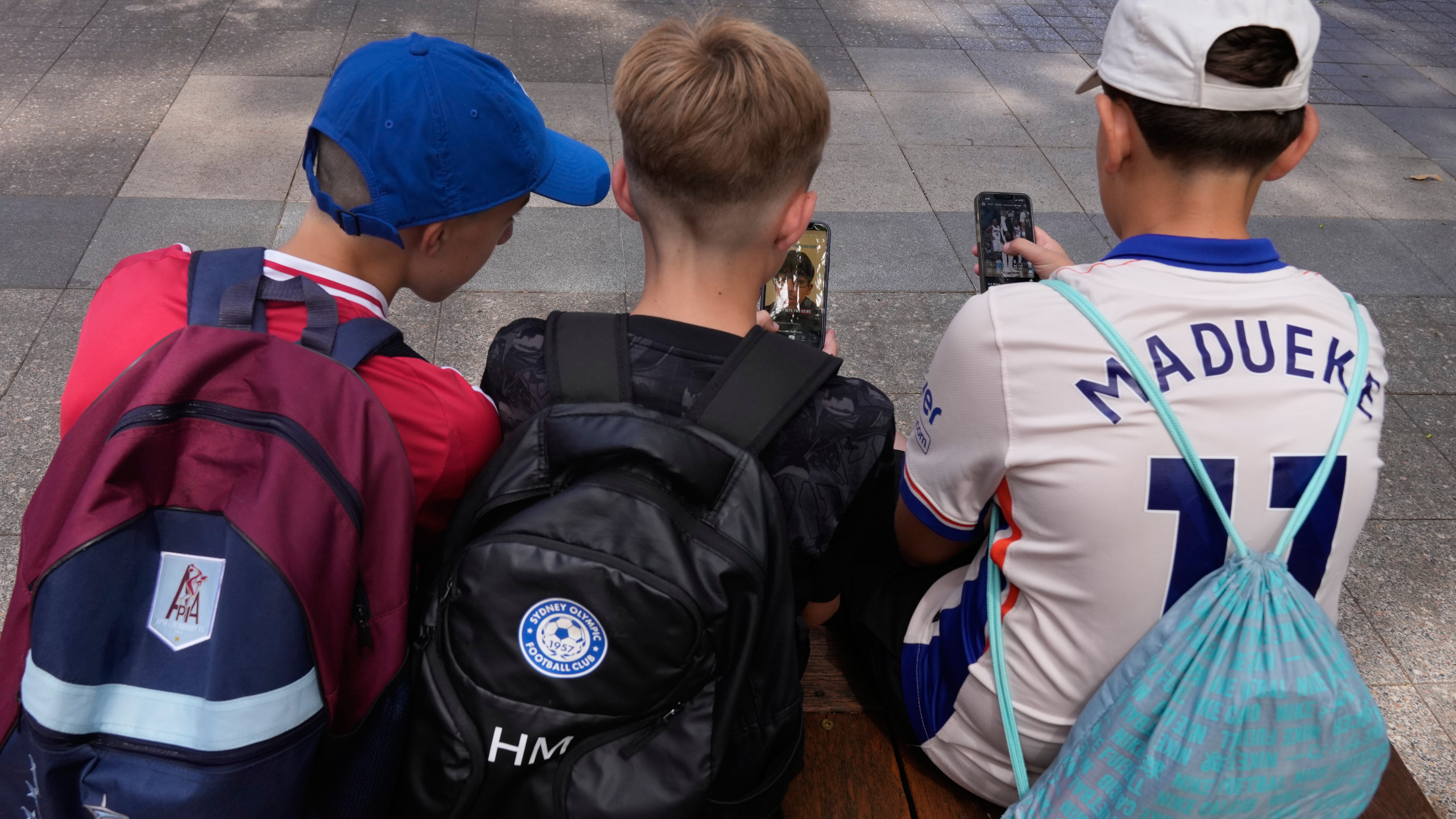
Buffalo, N.Y. (WBEN/AP) - Australian Prime Minister Anthony Albanese welcomed a world-first social media ban on Wednesday that institutes an age limit of 16 years for children to start using social media, and hold platforms responsible for ensuring compliance.
The proposal comes as governments around the world are wrestling with how to supervise young people’s use of technologies like smartphones and social media.
How this social media ban is enforced and the results of such a ban will be closely followed by experts and others at a local, state and even global level.
Dr. Sourav Sengupta, MD, MPH, Associate Professor of Psychiatry and Pediatrics at the Jacobs School of Medicine feels in some ways, Australia really thought hard and long about the age at which they should implement this social media ban, and then who's responsible for it.
"It's not just the kid, it's not the family, but it's actually saying companies have to take those kids off the platform. And the idea here is this is going to give kids back time and bandwidth for them to be able to engage in real life with their peers, pay attention to school, engage in home and family life. There's a lot to be said for that," said Dr. Sengupta in an interview with WBEN. "We have to keep in mind there may be some other consequences that we have to kind of mitigate as well, but that's the big idea."
Dr. Sengupta believes there will be a number of countries, including the United States, that will want to take a long look at how Australia implements this ban of social media for kids.
"Australia has a really well-developed educational system, health system. We'll be able to have some sense of what the outcomes are of this kind of a policy, and I have to imagine that lots of folks in the European Union, Canada, the U.S., we're absolutely going to be paying attention and hopefully taking notes," he said.
One thing Dr. Sengupta wants people to keep in mind, at some level, is these social media platforms are companies, whose primary responsibility has been to their stakeholders, not the health and development of children. That's where Australia is making this push to regulate this via policy.
"In that space, they have absolutely developed algorithms that target young people, that get them sort of connected to and hooked on looking for the most controversial comments, or potentially getting them exposed to things that could get them really in an emotionally challenging space," Dr. Sengupta noted. "We do have a good sense that when young people spend an excessive amount of time in social media, that's correlated with increased rates of depression and anxiety, and we also have some support that some of these companies have been aware of that and have still sort of moved ahead with it."
While Dr. Sengupta is sure there's plenty of kids under the age of 16 in Australia that aren't happy right now, but as a society, it's important to find ways to give these kids more of what they need.
"They need, in real life, ways to interact with each other," he said. "We can't take away all their, what we call, third spaces - the places outside of school and home - where teens can congregate and pro socially have a good time with each other. We need to think about how we provide those if we're going to take these spaces away."
Related
Meanwhile, Niagara Falls City Schools superintendent Mark Laurrie applauds what Australia is attempting to accomplish with this social media ban, calling it a "monumental" leap to go that far.
"I think it's well-worth watching," said Laurrie with WBEN. "Some of the conditions are not equal to what we're dealing with here in the United States, but I think it's well-worth watching. I'll be interested to hear and follow, and see some of the nuances of how that's working out."
Starting this school year in New York State, all districts implemented a bell-to-bell cell phone ban, restricting students from accessing their phones throughout the school day in order to focus on education and socialization with fellow students.
Going into this year, Laurrie admits he had some trepidation on the ban and its implementation, especially in the largest high school in Western New York with 2,000 students. Through the first three months of the school year, he couldn't be more pleased.
"I think it is going very well. There's always room for improvement, but we're beginning to see and reap some of the benefits of not having cell phones available during the school day," Laurrie said.
"I think I couldn't be more proud of our students and staff for the way this implementation has gone down. We're seeing students talking to each other, students talking about homework, talking about classes. And our student board member put it best: 'I'm seeing the faces of my classmates, not just the tops of their heads because their face was buried in a cell phone.' So overall, I'm really pleased."
While students are able to have their phones as they enter or exit the school for the day, Laurrie says there's been a major reduction in behavior among students carrying over actions on social media into the hallways of school.
"We have seen a couple of instances right at dismissal time," he noted. "Once students get their cell phones at dismissal, that's where we've had two or three instances where kids that have had a problem with each other, or at some dispute - mostly outside of school - have been able to connect with each other. It's been a concern, it's not completely gone away, but during the operational day of the school day, I'm going to say 100% better. And we need to keep going."
Laurrie feels this cell phone ban in school is a great interim step to potentially see some kind of social media ban, like in Australia, being implemented in the U.S., and is a believer that such a ban could work.
As for Dr. Sengupta, he feels the cell phone ban in schools across New York State has gotten off to a good start.
"The initial impression has been young people are able to be more engaged in school, and they're more engaged socially with each other. There's actually people talking to each other in the halls, there's a little bit of conversation happening, whereas before, you might have had everyone mostly looking at their phones and not engaging. I think the proof's in the pudding," Dr. Sengupta said.
"We have to make sure that schools are safe and that parents and kids are feeling safe at school. Obviously, those things are important, and at the same time, we have to make sure that we're also still providing them with these other opportunities to engage. So if we're saying you can't use these in schools, we have to make sure that we have time and space for them to find ways to connect with their peers."
Social media platforms would be penalized for breaching the age limit, but under-age children and their parents would not. The platforms including X, TikTok, Instagram, Facebook, Kick, Reddit, Snapchat, Threads, YouTube and Twitch now face fines of up to 49.5 million Australian dollars ($32.9 million) from Wednesday if they fail to take reasonable steps to remove the accounts of Australian children younger than 16.
The ban will be enforced by Australia’s eSafety Commissioner Julie Inman Grant. She said the platforms already had the technology and personal data about their users to enforce the age restriction with precision.
She would send the 10 targeted platforms on Thursday notices demanding information on how the age restriction was being implemented and how many accounts had been closed.
Australia's Privacy Commissioner Carly Kind said the platforms could potentially ask all account holders across the country to prove they were 16 or older.
The platforms’ age verification options were to ask for copies of identification documents, use a third party to apply age estimation technology to analyze an account holder’s face, or make inferences from data already available such has how long an account has been held, Kind said.
The Australian government has said requesting all account holders verify their ages would not be a reasonable step, given the platforms already held sufficient personal data of most people to perform that task.
The platforms also cannot compel users to provide government-issued identification.