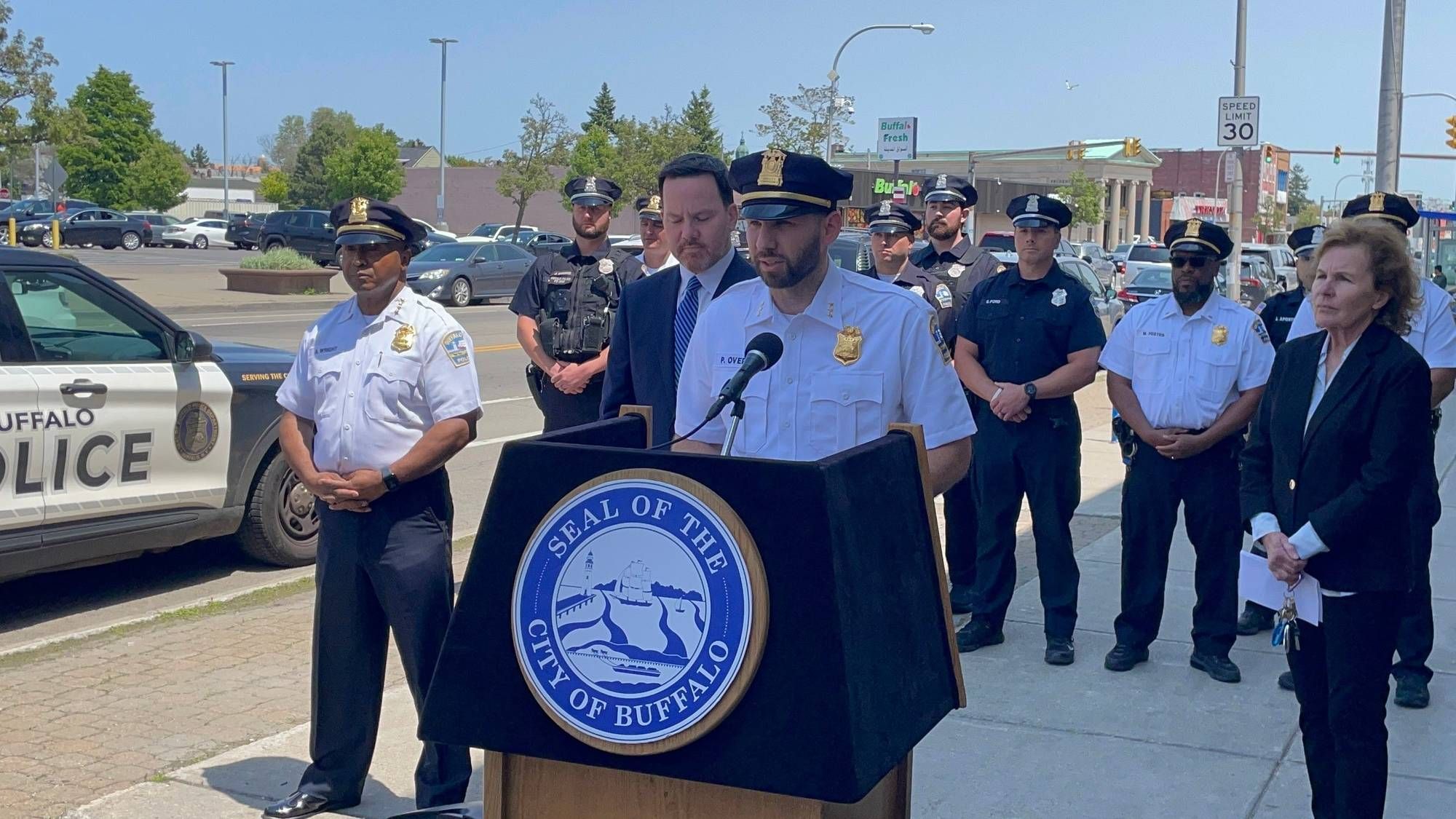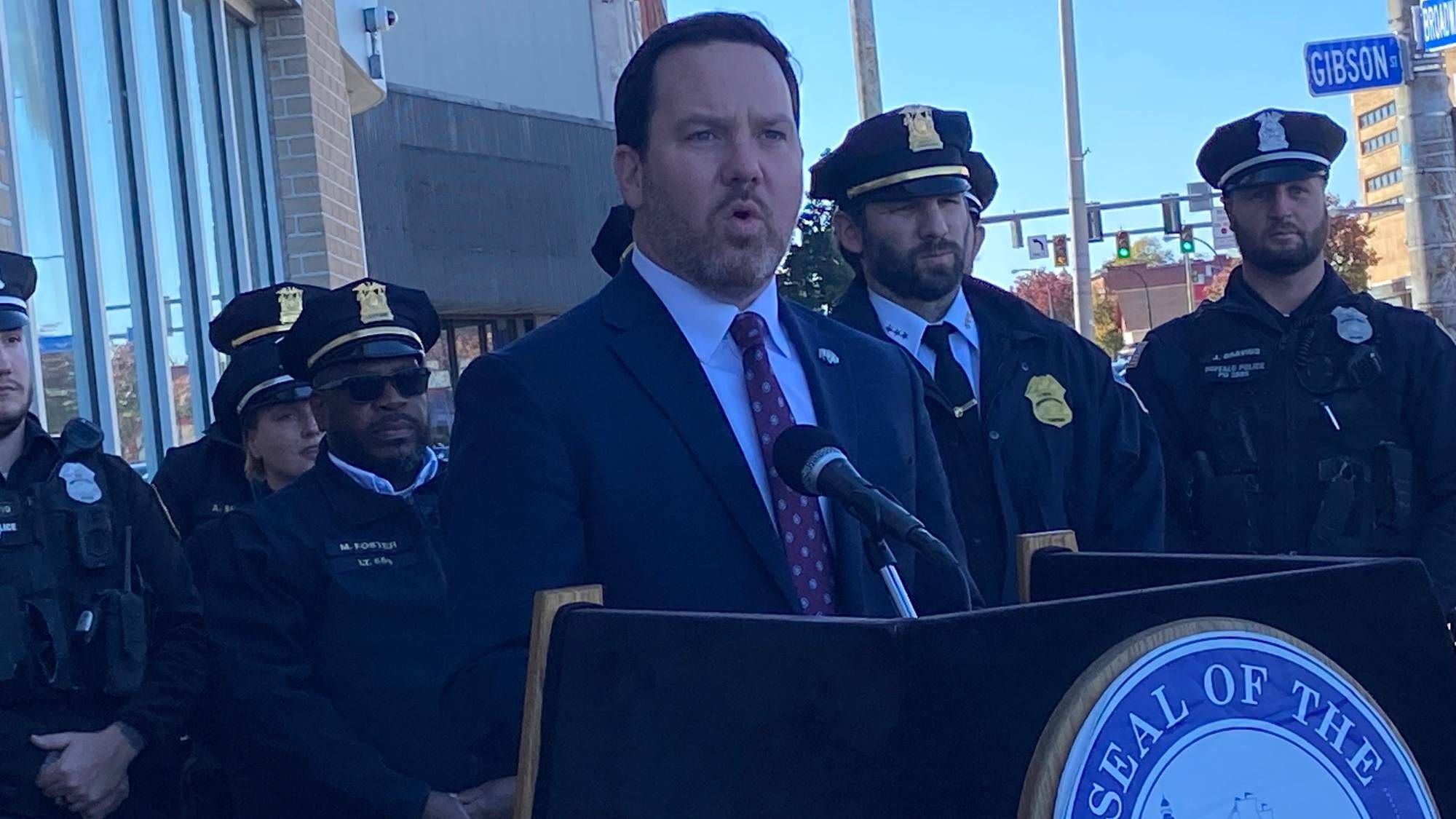



Buffalo, N.Y. (WBEN) - During a Tuesday meeting of the Police Oversight Committee in Common Council Chambers at Buffalo City Hall, Council Majority Leader Leah Halton-Pope brought up a question to interim police commissioner Craig Macy regarding the recent elimination of the department's Foot Patrol Integration Unit (FPIU).
The program centered on community presence, neighborhood engagement and two-way communication between Buffalo police officers and residents and businesses.
While the program and the presence of police officers in the community was seen as a popular and well-supported initiative. Macy says the walking unit was only one method the department was employing to boost community engagement.
"Many times, officers from each individual district were doing foot patrols, and that will continue throughout the summer," said Macy on Tuesday in Council Chambers. "When you start looking at an actual resource management and then some of the other topics that may come up, when you start looking at overtime and backfilling - those spots where they originally came from - the concept is very good, the method that they do it was very well received. However, the actual implementation was very tough to keep going, especially during the winter months."
The FPIU was started last spring under the leadership of, then, Acting Mayor Chris Scanlon, who has since returned to his representation of the city's South District in the Common Council.
Scanlon wishes he would've been able to be at Tuesday's Police Oversight Committee meeting, because he has plenty of unanswered questions to why the program was ended.
"I'm extremely disappointed," said Scanlon in an interview with WBEN. "I can tell you that during my time as Acting Mayor and since then, I can tell you how overwhelmingly positive that program has been, and how well received it has been across the entire city. I can tell you that it has benefited our community. If you look at crime stats, they are down, lower than they have been in four decades. And I can tell you that it was beneficial to the officers as well. They felt healthier, they were motivated by it. So it's extremely disappointing. I can't possibly understand what the reasoning would be for discontinuing the program, other than the fact that it wasn't the administration's idea."
With Macy's comments pointing to "resource management", Scanlon feels that's just a matter of prioritizing. For him, public safety comes first, and he feels no one can deny the results of the walking unit in Buffalo.
"I read there was talk about it not working in the winter, that is not true. Officers were out, they had plans for the winter. They wanted to implement and integrate some of the equipment we brought online over the course of the past few years as well to make it easier to get around for them," Scanlon noted. "And I saw some other talk about this agreement had a sunset, that was just to make sure that the union and the officers were comfortable with the plan. But there was never any intention by me or anyone else to sunset that program."
Not only does Scanlon feel this program was widely accepted and supported by the community, but also by the officers and the police union in Buffalo.
"If you talk to the union, I think you would get a positive response from them about the success of the program, both what it's led to out in our streets, but also what it's done for their members," Scanlon said. "That was a group of officers who volunteered for that program, and that's a problem you have. When you talk about now you're going to maybe use some overtime to do it, this and that, overtime is, contractually, it's going to go to the people who are on the department the longest. This program was full of people who wanted to be a part of this program, that wanted to be out walking the streets. Getting to know residents, getting to know business owners, making this community not just feel safe, but more importantly, be safe."
With public safety continue to lead the way, Scanlon strongly feels the city should reconsider the elimination of the program.
"Just because it's a little cold outside, it doesn't mean crime stops. We want our communities to feel safe. Obviously, crime dips a little bit in the winter, but we want people out feeling safe year-round. And we want our officers out seen in the community," he said. "I can't tell you how many times I've been stopped in the last year or so, saying it was so great to see officers walking down this main thoroughfare, walking down our side street, having a conversation with us. So the boost in morale within the officers, the positive feelings it's led to in the community, in every neighborhood in this city is undeniable. And I think that if it is discontinued, the administration has to answer that."
While former Buffalo Police commissioner Joseph Gramaglia believes it's always a great idea to get officers out of their cars and the community gets talking about more interaction, he feels it's also important to measure the effectiveness of a program such as the FPIU.
"You have to look at what you did, how it worked out, what the return on investment is. You have to look at the size of our police department: They're budgeted for just over 800 officers. In actuality, you're probably, at this point, below 750 officers. To patrol 58 square miles, having a dedicated set number of officers to walk all the neighborhoods and really develop relationships would really require a substantially higher number than the 20 officers and four lieutenants that were assigned," said Gramaglia with WBEN.
With such a large area to cover and a smaller number of officers by comparison, Gramaglia questions how the department would be able to get back to a neighborhood time-and-time again without stretching resources thin.
Gramaglia also feels the cost of continuing such a program has to be examined.
"You're taking 20 officers and four lieutenants out of their patrol districts, there certainly is a cost on the overtime and the backfill. When those officers and lieutenants are coming out of the assignments where they're at, there's a substantial - probably a six-figure overtime cost to backfill those officers when there is a shortage in the districst caused by them being removed in this temporary assignment," Gramaglia noted. "You have to look at the overall budget. It's no secret the city is struggling, it's no secret the police department has a high budget. So you would have to add money to the budget, really, to make that effective."
Gramaglia pointed to a different model of community engagement that had worked in the past for the Buffalo Police Department.
"What we were doing for the years of the hotspot driven policing model is officers were put on directed patrols, where they would engage their flashers on their cars for much higher visibility, and then get out of the car and actually go talk to neighbors within that block or that immediate area," he noted. "You can really get around to a lot more areas and actually engage in those conversations, and build more relationships within your respective district."
Gramaglia believes the cornerstone of what police departments should be doing nationwide is neighborhood engagement. However, given the city's financial situation and other societal factors, it has become more about doing more with less.
"That's in the private world, that's in government work. You obviously look at the size of government, you look at the size of industries across America, and they are not what they were for a variety of reasons - automation and expenses and other things. So you really have to look at how you can be as efficient as possible," Gramaglia said. "That's why we looked at and created the directed patrol model so that we can be as efficient as possible and getting officers out of the cars."
And while a foot patrol program is a great concept to be able to get out and engage with the public, it, once again, comes down to cost, and Gramaglia feels there is no way of working around that.
"I think if you really want to build an integrated foot patrol unit that is really going to build a lot of those bonds, you would really have to do them out of the respective districts, each of the five police districts, and then look at the four sectors within those districts. But you're gonna have to increase your manpower," Gramaglia added. "You're gonna have to hire a lot more people, and depending on how effective you want to be with it and how much repeated contact - which is, ideally, the goal - it's going to require a lot more manpower to do that."
As someone who has led the Buffalo Police Department in the past, Gramaglia knows for Macy, he's responsible for a budget and maintaining that budget.
"That's what we heard all the time when we hear complaints from the Council, that were valid, questioning us on overtime. How are you spending the overtime? You have to be able to account for that," he added.
One element Gramaglia continues to push for in Buffalo, as well as other departments nationwide, is the use of technology, especially in areas where you can't always have a police officer.
"You want to be able to rely on technological advances, and that comes with proper policies and procedures and follow through and transparency to make sure the public knows exactly what technologies are being employed," Gramaglia explained. "Not everything has to be 'the boogeyman', if you will, of technology, but you have to do more with less. And you're going to have to have eyes and ears in places where you can't always have a police officer. It's kind of that healthy mix: You've got to have technology to help the police officers do their jobs so that you can hopefully reduce crime, and then have more time for those officers to get out of their cars and be able to engage with the community, as opposed to running from call-to-call-to-call-to-call and being tied up on an arrest for longer because the crime you know is occurring. ... I think you get a better return on your investment when you invest in technology."