


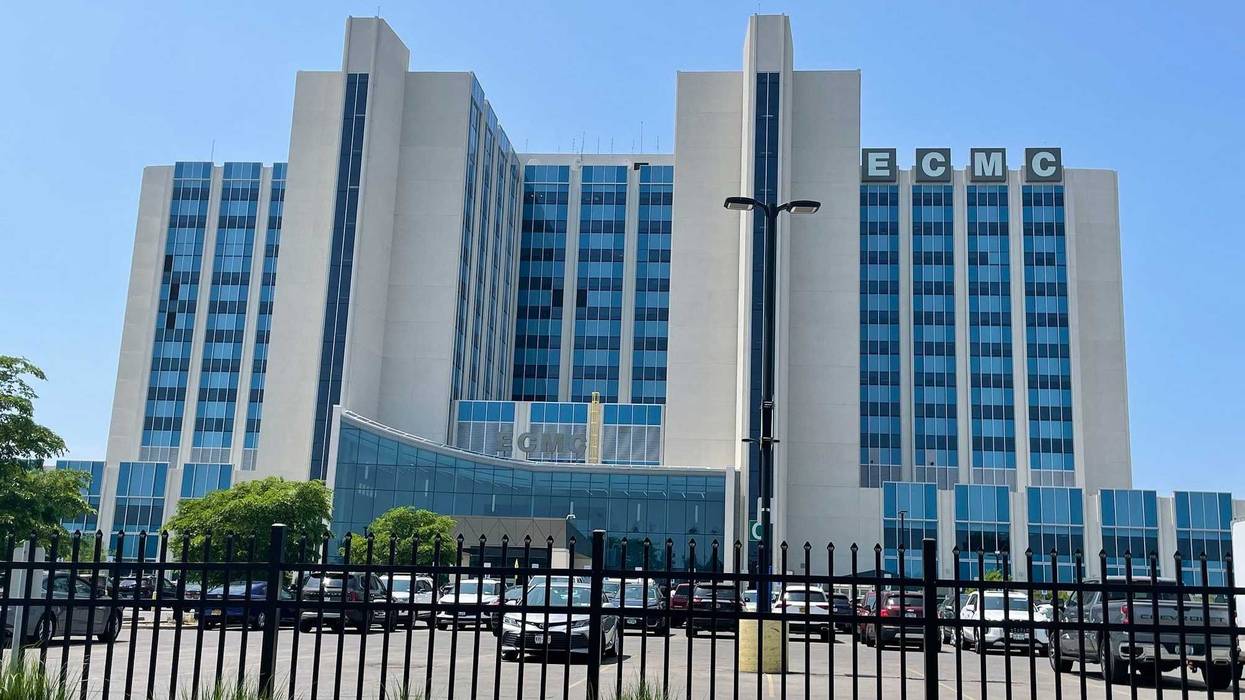

Buffalo, N.Y. (WBEN) - Flu season is hitting its peak in Western New York, and over the last few weeks, there's been a spike in patients heading to the emergency room. However, that is clogging up treatment spaces for others who need emergency care.
Dr. Samuel Cloud from Erie County Medical Center (ECMC) says this has been the worst flu season in his 25 years of practicing.
"We have seen a big spike in hospitalizations. And I would say previously, even in a bad flu year, we might have 9 or 10, 11 patients admitted at once. And this year, we have upwards of 20 plus," said Cloud in an interview with WBEN.
He says the problem is the hospital doesn't have surge capacity as the hospital did before COVID.
"Since COIVD, we have development called an ALC crisis. That means alternative level of care. Those are patients who are in the hospital who do not need to be in the hospital, but we can't discharge them to another location. There's nowhere to take them," Cloud explained. "I don't have surge capacity. So when you get a spike, when you're increasing admissions, 20 or 30 patients, I don't have a place to put them, so they end up backing up into the ER, which then takes those treatment spaces for new patients."
Cloud says EMS has been overwhelmed as well.
"Our partners in the ambulance business that are picking up the patients and bringing them to us, they're having trouble getting to all the calls because they, themselves, are sitting at hospitals unable to unload patients because the ERs don't have a place to put them," Cloud noted.
Cloud is asking residents to be judicious in the use of calling 9-1-1, except for a true emergency. What is a true emergency?
"If you're having chest pain, if you've passed out, if you're feel profoundly ill, if you can't breathe, having really significant difficulty breathing, severe pain. Those are reasons to come to the emergency department," Cloud explained. "And if you can't get there yourself, or if it's a really severe symptom, then calling an ambulance is appropriate."
Another suggestion from Cloud is going to an urgent care facility.
"Urgent cares are good for simple fractures, simple lacerations, getting a flu swab. But in patients that don't feel so ill, that they don't feel safe at home, if you have a primary care doctor, it's always a good idea to call your primary care doctor and let their medical expertise guide where you should be treated," Cloud said.
But if you're doubting whether you're safe to be at home, then Dr. Cloud and other local medical experts will see you in the ER.
"If we determine that you don't require emergency treatment in a treatment room, we may have to have you sit in the waiting room while we do your workup," Cloud said.

Dr. Joshua Lynch of Kaleida Health has seen a similar surge.
"The increase in flu cases, and even COVID and upper respiratory symptoms in general, has put a strain not only on the emergency departments, but also the inpatient side of the hospital, which causes backups into the ER, causes longer wait times, and a more congested hospital environment than we've seen in quite a long time," said Lynch with WBEN.
Lynch says there are other options, including waiting it out at home.
"Oftentimes, cases of the flu can be managed at home with over-the-counter medications - Tylenol, ibuprofen, fluids and touching base with your primary care doctor really should be the first step," Lynch said. "There are also virtual visits available through Kaleida Health, and then if you're having severe symptoms - very bad shortness of breath, very high fever, things like that - those would be reasons to come to the emergency department. But touching base with your primary care doctor really should be the first step."
He adds wait times for flu at ERs have been lengthy.