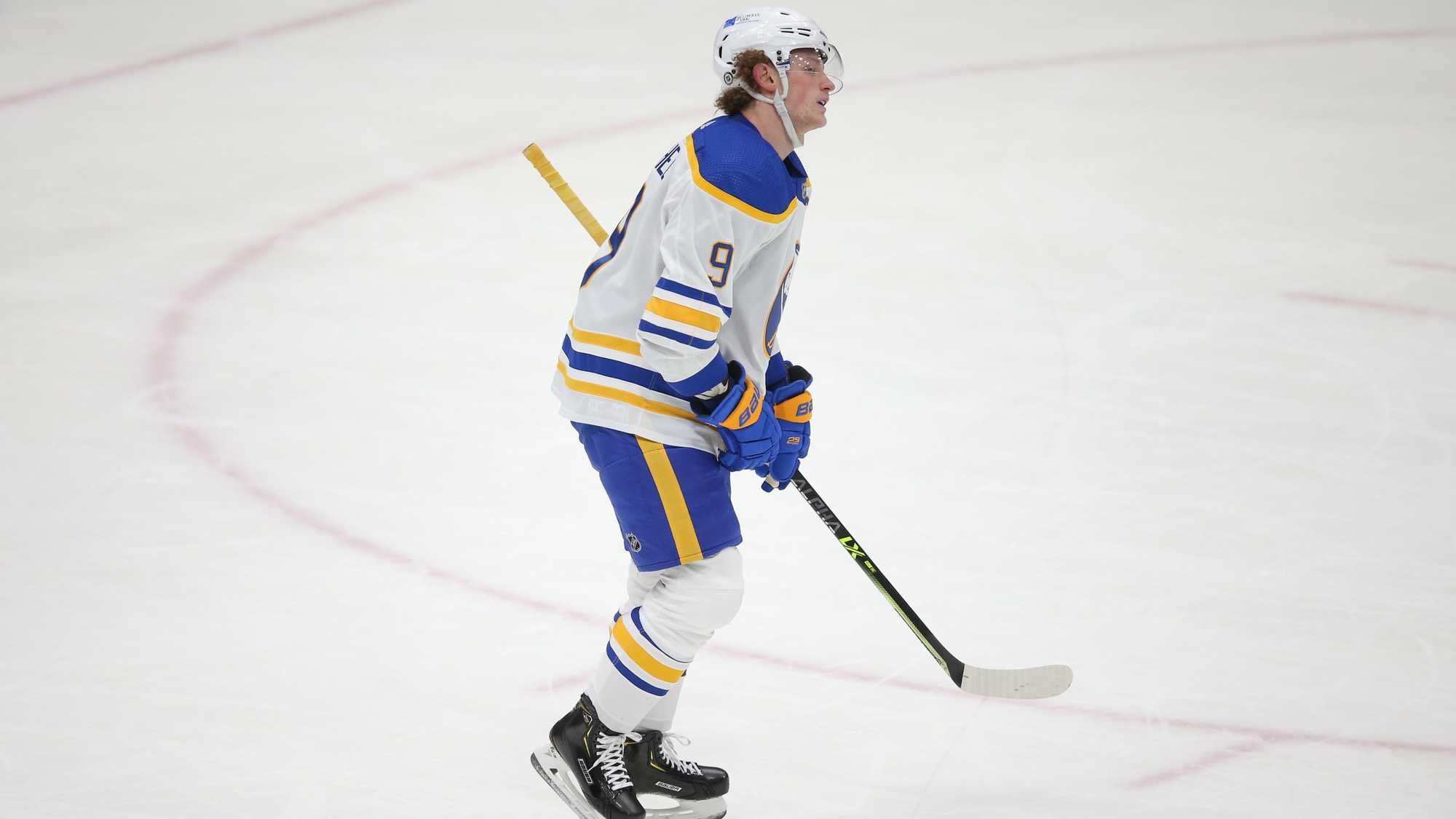




Buffalo, N.Y. (WBEN) - We as Buffalonians remember Jack Eichel's unattractive exit with the Buffalo Sabres. He fought with the team as well as the league to become the first NHL player to undergo a neck surgery that no other NHL player has received before, artificial disk replacement surgery (ADR).
He eventually received the surgery a week after he was traded to Las Vegas Golden Knights and was back on the ice three months later, a significantly quick turnaround time compared to the more commonly practiced surgery for herniated disks, anterior cervical discectomy and fusion (ACDF).
Fast forward to almost a year later and Eichel is no longer the only NHL player to receive ADR surgery, "A year ago nobody had had it, and now all of a sudden, three guys have had it. It's a more common injury than you think and it's a good way to resolve that injury, so I'm happy that guys had the opportunity to do it," Eichel said after his O.T. victory against the Ottawa Senators last week.
"This is a new kind of surgery for individuals with either disc herniations, or traumatic disc disease. It's been commonly used in the lower back. For many years, it was somewhat new in the neck. But that's not to say that this surgery has not been used in the neck over the last 10 to 15 years," said Dr. Laszlo Mechtler, the Chief Medical Officer of DENT Neurologic Institute and Professor of Neurology.
"Anterior cervical disc fusion (ACDF), that's what the standard form of treatment is, but like everything in medicine, science improves, techniques improve and this type of procedure now is becoming more and more commonly used."
ACDF surgery does not come without disadvantages, "The problem with fusion, is it works upfront, but five years down the road, it's not uncommon to see herniated discs occur above and beyond the fusion in about 50% of patients and about 10 to 15% of patients, the fusion itself doesn't work," says Dr. Mechtler.
According to studies, ADR surgery recovery time could be as quick as 4-6 weeks and there is a far less complication rate.
One of the concerns the Buffalo Sabres had with this type of surgery, other than the fact that it was completely new to the NHL, was whether or not these replacement disks stand the test of time given the rigors of the NHL.
Dr. Mechtler says only time will tell, "These types of surgery, you need a five to ten year timeframe to know what the long term effects are. I totally understand why an individual would rather have this type of surgery, but being somebody who's an NHL elite hockey player, it was a risk that he wanted to take. So the real question is, who has the who has the right to make decisions about surgery, if not the individual who's undergoing surgery? It gets far more complicated when you talk about professional sports and multi-million dollar contracts. At this point, we have to wait and see by for the next few years to see if [this] type of surgery that really was successful."
Dr. Mechtler believes this surgery will be more frequently used and considered for athletes going forward but there are some contingencies that should be considered before decision, "It really depends on the orthopedic or neurosurgical opinion, the MRI findings, and even the neurological input. So it's a decision that will be made on an individual basis. But in general, I think this surgery will become more commonplace than it has. In fact, today, I saw a patient who after a car accident underwent artificial disc replacement and has been doing quite well. So this surgery will be indicated now in athletes but in other indications such as motor vehicle accidents and trauma."
"I saw a patient with 35 years ago has a anterior cervical disc fusion, which is the old type of surgery and is doing extremely well. So you know, I would not say that this surgery has to be done in everybody. It's an option and the option they need to discuss with their physician," Dr. Mechtler added.