



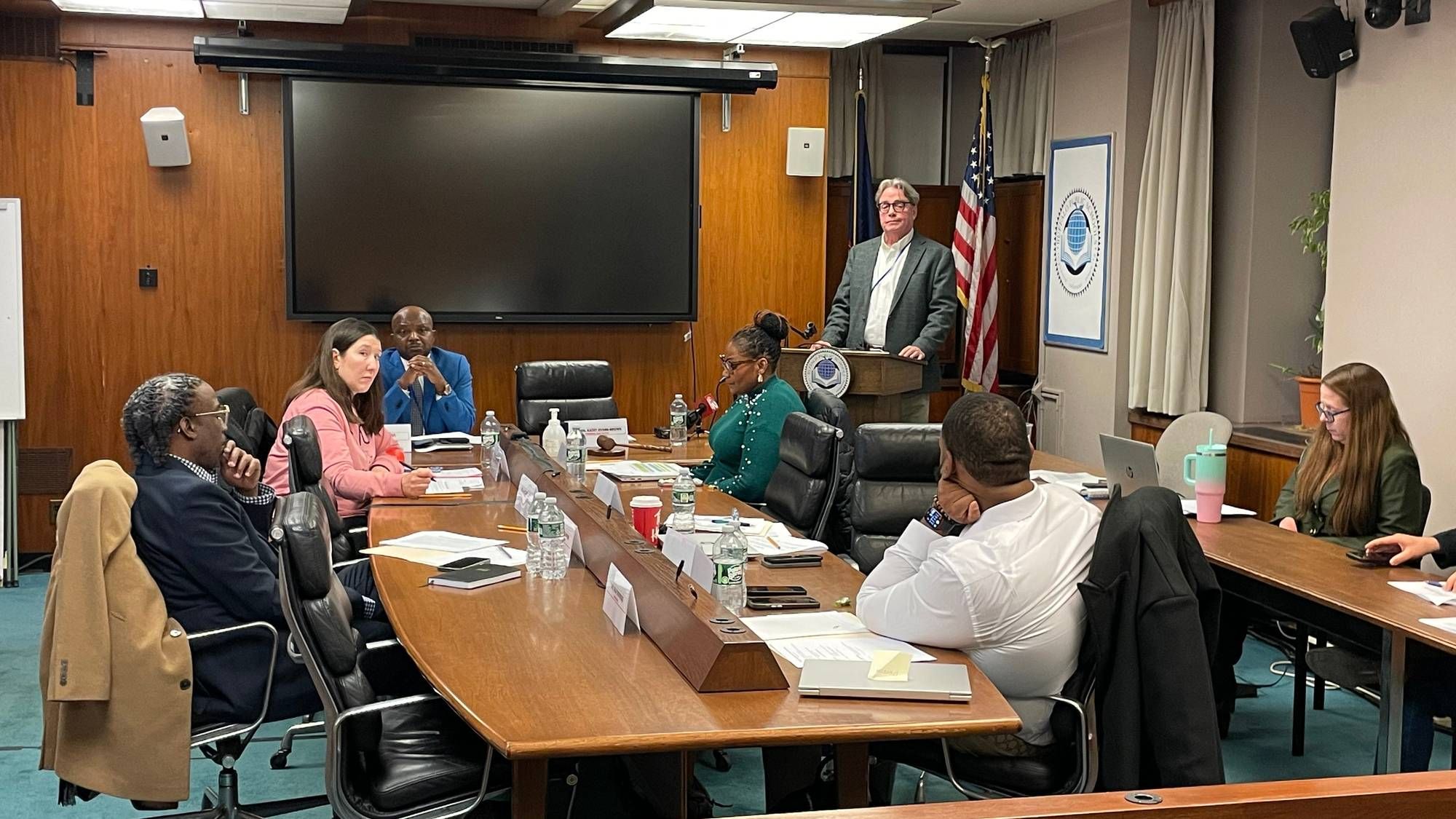
Buffalo, N.Y. (WBEN) - If there's one thing parents and other schools across Western New York appreciate with the Buffalo Public School District's launch of its new student attendance lottery is it's tackling the issue of attendance of students in the classroom.
This initiative is designed to encourage student attendance, while also reinforcing the connection between being in school each day and academic success.
Parent advocate Aymanuel Radford from We The Parents feels anytime the community can come together to have a conversation about how to get better outcomes for children - both attendance-wise and academic-wise - is good.
"My hopes is this is just the first step of many. I hope this isn't just the only thing that we're doing to try to address a lot of underlying issues we have that goes on in our schools. But I'm appreciative of the first step," Radford said in an interview with WBEN. "I think in order to get to where we ultimately want to be, you have to take a step like this. So I think Dr. [Pascal] Mubenga is doing the right thing. My hopes is that this is the first step of many steps we have to take."
How this lottery will work is students who miss no more than one day of school in a given month will have their names entered into a monthly attendance lottery. Each month, superintendent Mubenga will randomly select three student names from the eligible students attending the district's 60 schools.
The monthly award amounts for students selected are as follows:
- The first student selected will receive $500.
- The second student selected will receive $300.
- The third student selected will receive $200.
- Total amount awarded each month: $1,000.
While superintendent of Durham Public Schools in North Carolina, Dr. Mubenga was able to conduct a similar lottery that he felt had some good success.
With such bad attendance problems like Buffalo Public Schools has, Radford feels you have to try to do anything to get kids to come to school and be in the classroom, and believes such an incentive will help.
"I think some kids who might not be coming school because of things like a lack of incentive to come to school, this may help them. Who doesn't like money?" Radford said.
While these types of incentives may help a certain group of kids in the district, Radford still doesn't think it's going to be the sole solution that's going to get students back in class.
"Although it may seem a little weird, and when you look at it, it seems like we're paying kids to go to school, I think what Dr. Mubenga is doing is saying, 'Our attendance is so bad, we have to try as many things as possible.' That's why I'm hoping this is the first of many steps, but I do understand the perspective he's taking in saying we've got to do something," Radford said. "Because our kids aren't coming to school, and I think we're dealing with the reality of that. And if this helps get, at least, 5% or 10% more kids to come to school, that's a step in the right direction."
One of the conversations Radford believes all parents, administrators and community members should be having to tackle the attendance problem in schools is a move back to community schools.
"I think the reality we have, when it comes to our children attending schools, is the majority of our kids are bused outside of their neighborhood. They're bused to other sides of the town, and because they're bused there, when they miss a bus, there's a likely chance they're not going to go to school," Radford noted. "We just paid this $400 million contract to First Student, and we're still having transportation issues. So I think one solution could be going back to a community school model, where kids could just go to schools in their neighborhood.
"We live in the third poorest city in the country, where most parents don't have cars to get their kids to school, and/or are working jobs and can't afford to get their kids school. So I think a model like a community school model, that cuts down on the busing issue and allows kids to go to the schools that they live in, it will be helpful, especially in the times we're living in now, and especially in the climate we live in. We've got kids standing on bus corners not getting picked up and things that nature, so I think the community school model would be the best solution. And I'm hopeful this is a first step to really having that conversation amongst all of us."
Similar to Buffalo Public Schools, attendance is the Niagara Falls City School District's No. 1 struggle. Superintendent Mark Laurrie gives credit to Dr. Mubenga for getting creative in trying to pull out such an interesting proposal.
"It's not something we are interested in doing in Niagara Falls, but as he stated, superintendent Mubenga, they'll do anything they can to improve. Even a few students in attendance, it makes a big difference," said Laurrie with WBEN.
Laurrie also feels this attendance lottery system is quite unique and different from other models of trying to improve the number of students at school on a regular basis.
"I know the criticism is that's not what we should be doing with kids. We should be building their intrinsic motivation to want to be there, based on the curriculum, the learning. But I also know that students and this society is very instant gratification driven, and they're driven by tokens and they're driven by rewards. So it's a very difficult balance to make those kind of decisions," Laurrie acknowledged. "I give him credit for doing what he thinks he needs to do for his district to make it better. I like to do shorter-term, I encourage our principals to do shorter-term, by the week, by a couple of days, because every day matters. And I think kids need to be reinforced rather quickly, and I think we've had more success with that."
What Laurrie believes is a main driver of improved attendance in schools is an engaging curriculum.
"I think one of the biggest things that we did to get our attendance improved, and it's not where it needs to be yet, is we really looked at the structure of the high school classes. High school classes that are really engaging, that are tied to career pathways. That's ultimately what high school kids want to see and do. What am I interested in? Why am I here? How does it tie to what I'm going to do in the future? The curriculum offerings are the biggest driver of improving attendance," Laurrie explained.
"Kids will come when they're motivated to come to the class. We have 52 kids in our Construction Trades class, they rarely miss because they know they'll fall behind in building whatever project they're building. They're into it, their attendance improves, they're learning a life skill, and that really matters to them."
Another program Laurrie has implemented in Niagara Falls is called Everyday Labs, which allows the district to give a text or phone call nudge to the student, parent and/or guardian each time a child is tardy or absent.
As for Michael Cornell, former superintendent of the Hamburg Central School District and now interim president of Hilbert College, he feels like the attendance lottery system can be a fun and interesting idea for students at Buffalo Public Schools.
"I think strategies like that are particularly effective in raising awareness to the issue of attendance in the first place. Whether or not it's successful in actually raising attendance, depending on the implementation, things like that have worked well in some places and less well in others. So we'll see how that all plays out," Cornell said with WBEN. "[Dr. Mubenga] is certainly right and his team is certainly right to raise awareness to the issue of student attendance. If they're not there, we can't teach them, and they are spot on to shine the light on that, for sure."
Cornell believes this attendance lottery can serve as a nice "and" proposition, where the district tries the lottery "and" focuses on three or four other things to approach getting kids back to school.
"When we were working together in the Hamburg Central School District, we talked a lot about joy, value and connection. We talked about the humanness of the school experience, and one of the ways that we thought really drew students to love school is you've got to make it fun," Cornell explained. "It doesn't have to be all fun all the time, but there's got to be a part of the school experience every day that's a joyful experience. Not because of one kind of fun activity as a one off, but just because the school experience has with it a sense of joy. And that's for kindergarten, all the way up to [12th grade], and for the employees too.
"We know that young people seek joy, value and connection often in unhealthy ways - online, social media - and we've talked about that many times. But when you can create a school experience where the young person knows that joy, value and connection are going to be a significant part of it, by design, that's a place where they want to be. That, along with some of these other things that the Buffalo Public Schools are trying to do, - this, that and the other - those things together, I think, make a real difference over time, if you persist in whatever the contest is."
Like Laurrie in Niagara Falls, one of the best ways to encourage more student attendance is by customizing the school experience through initiatives like the Portrait of a Graduate. This State Department of Education initiative allows districts to create different pathways for young people in a way that doesn't always rely on them needing to pass exams at the end of a course.
"Maybe they're framing out a debate or creating a podcast, or a series of videos or something like that. That allows students to show what they know and can do in a particular area in a way that's a little bit more relevant to the way content would be created in the real world," Cornell noted. "If you think about the world generally, like all business, it's designed to create and customize an experience for the end user. Very little of the world is one size fits all, so we all, as consumers, have an opportunity to customize our own experience."