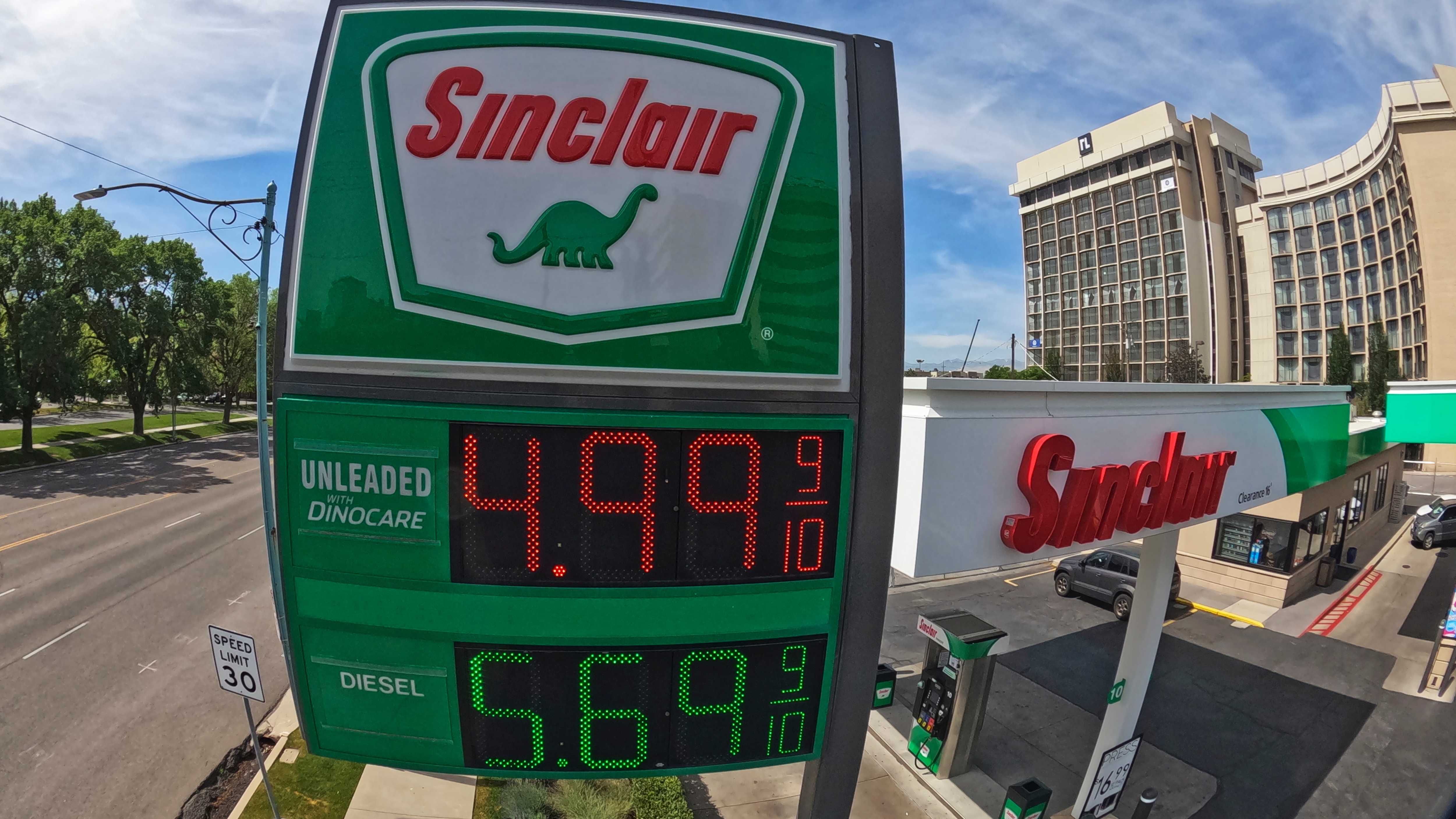



Buffalo, N.Y. (WBEN) - Soaring gas prices continue to put a damper on the wallets of drivers across the country, with the average price of regular gas nationwide hitting $4.97 per-gallon on Thursday, according to AAA.
AAA says the average gallon of gas in New York State has surpassed the national average, and has officially hit the $5 per-gallon mark at $5.01 per-gallon. That's even with the 16-cent savings with the State capping the sales tax on gas on June 1.
Meanwhile in the Buffalo-Niagara region, AAA has the average price for a gallon of gas set at $4.89 per-gallon, which is one of the lowest rates across New York. This is also taking into effect an 11-cent savings in Erie County with the capping of the sales tax on gas on June 1.
However, gas prices have spiked substantially just in the past week, with prices in the Buffalo-Niagara region up 20 cents over the course of the last week. To make matters worse, this recent jump in prices is only going to continue as we head into the summer months.
"We've continued to see gas prices going up, Buffalo no exception," said Patrick De Haan, head of petroleum analysis at GasBuddy. "Unfortunately, I don't see much improvement on the horizon."
"In Buffalo, it is a little bit lower, and it's yet to be seen if those prices are going to increase based on these high oil prices that we're seeing right now," added AAA's Director of Public Relations, Elizabeth Carey. "Oil's well over $120 a barrel, so that's up drastically from last week. If these high oil prices stay up there, we're gonna keep feeling this pain at the pump."
At the rate gas prices continue to skyrocket, Carey says it's likely only a matter of days before Buffalo catches up with the rest of New York State with eclipsing the $5 per-gallon mark.
"That's the way it looks, unless something really unforeseen takes place. But unfortunately, we're at about that $5 mark right now," she said. "It's really painful, when you think about it. AAA research shows that 75% of people, both young and old, said if gas prices hit $5, they'd have to change their driving habits. They wouldn't be able to afford to drive the way they do right now."
While the average price of gas in Erie County sits around $4.89 per-gallon - $4.92 per-gallon according to GasBuddy - the price of gas at the pump will vary depending on which station you visit. At one station, the price of gas could vary at different amounts compared to a station just across the street or across town.
"Well, I mean, the timing is everything right now," De Haan said of the differences. "Wholesale gas prices have actively been spiking, and stations generally buy gasoline every 3-5 days. You may see tremendous differences in what stations paid, and they may be charging a higher or lower price depending on when they bought their supply of gasoline."
"As far as the individual stations, a few different things are going on," Carey added. "One, the gas stations have the right to set their own prices based on supply and demand. If they bought gas at a certain level, they're gonna want to sell it at a certain price, or someone else may have gotten a new delivery and at a higher price so they're going to increase those prices, because they had to pay more for their wholesale delivery. If the gas station is next door to a big box retailer, they might lower their prices because of competition. ... A lot of times it does vary, and it's just a matter of going around the corner to get a cheaper price."
Are there ways to try and curb the differences at each gas station and provide a flat rate for people to pay at the pumps?
"It's impossible when stations are all paying a different amount. It's very difficult to be able to control that," De Haan answered. "Price controls have often failed miserably and caused prices to go higher. It's just the simple fact that markets are extremely volatile right now, and stations are buying every few days and the price can vary dramatically between them."
As De Haan mentioned earlier, many are unsure if these high prices at the gas pump are going to go away anytime soon. It could be a situation that gas prices stay dramatically high for most of the summer.
"It's a question of how far can they go," Carey said. "Typically, in the regular year, prices peak around Memorial Day, stay up there a little bit, and when that summer travel season gets into play, they tend to taper off a little bit and we get a little bit of relief. But with these high oil prices, it's hard to say if that's going to happen this year."
So what more could possibly be done to try and find a way to lower gas prices not only locally, but across the nation and the globe?
"I'm afraid not a whole lot," De Haan said. "These are long-term issues that will likely stick around for quite some time. The Russia situation doesn't look to improve anytime soon. In addition, refining capacity and gasoline supplies are down. Gasoline supply is down a billion gallons compared to where it was a year ago. All of that doesn't look to change overnight, and a part of the reason is because of high U.S. consumption."
"While we may see some price relief heading in towards the fall, these relatively high prices will probably stick around for a good portion of the year."
In the meantime, the New York State Division of Consumer Protection (DCP) issued some useful tips on Thursday in an attempt to help New Yorkers save money every time they fill up at the pumps.
Here are some suggestions the DCP is offering on how to save money at the pump:
 Tom Merton - Getty Images
AT THE PUMP:
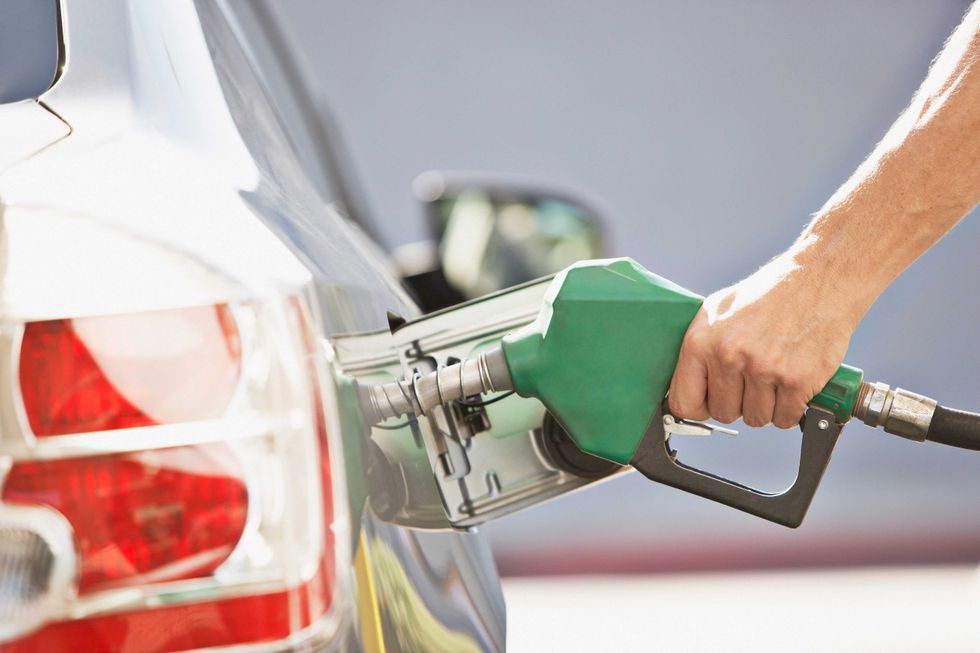
- WAIT until your gas gauge reads ¼ tank before filling up in warmer weather. Your vehicle gets better gas mileage with a lighter load and keeping the tank full can waste money.
- CHOOSE the lowest octane recommended for your car.
- COMPARE the price advertised on the gas station's sign and on the pump to make sure they are the same. If not, ask which price is the one you would actually be paying.
- DOUBLE CHECK that the price per gallon remains the same throughout the entire time you are pumping. Be aware if the price per gallon changes or the number turns back or advances quickly.
- MAKE sure that the gas pump reads $0 before you begin fueling and stops running when you finish pumping, so you know you are only paying for the gas being dispensed into your vehicle.
- KNOW the size of your gas tank and how many gallons of gasoline it holds so you can make sure you are getting what you are paying for at the pump.
- ASK your gas station if they have different prices for payment in cash or credit. Some stations offer gas at several cents less per gallon if you pay in cash.
- USE a gas price tracking app to compare prices at local gas stations and try to use a station that is on your route so you aren't driving extra miles. Driving out of your way to save money at the pump may not save you anything.
- AVOID filling up right before a holiday or weekend when gas prices tend to be higher.
- WATCH OUT for scams. Scam artists prey on desperate consumers during difficult economic times or when certain commodities become difficult to obtain or ultra-expensive. Approach alleged fuel saving programs, devices, or chemicals with skepticism. Remember that if it sounds too good to be true, it probably is.
 Getty Images
ON THE ROAD:
- CUT BACK on needless driving around. Make lists of errands and try to have them all in similar locations.
- MAINTAIN your vehicle in good condition. Your vehicle will get better gas mileage if you have the oil changed and tire pressure checked regularly. Get a tune-up from a certified mechanic.
- CLEAN out your vehicle and carry only what is necessary. Extra weight in your car lowers your gas mileage. Consider removing roof racks and towing devices mounted on the outside of the vehicle when not in use.
- CHANGE your driving habits. Your vehicle will get better gas mileage if you do not accelerate fast or overuse your brakes, commonly referred to as "riding your brakes." To save gas, stay at or under the speed limit, and drive at a consistent rate of speed. Consider using cruise control when practicable, and do not idle your car in a parking lot or driveway.
- CONSULT maps, internet directions or a GPS system to ensure you are taking the most efficient route and reduce the likelihood of getting lost and driving unnecessary miles.