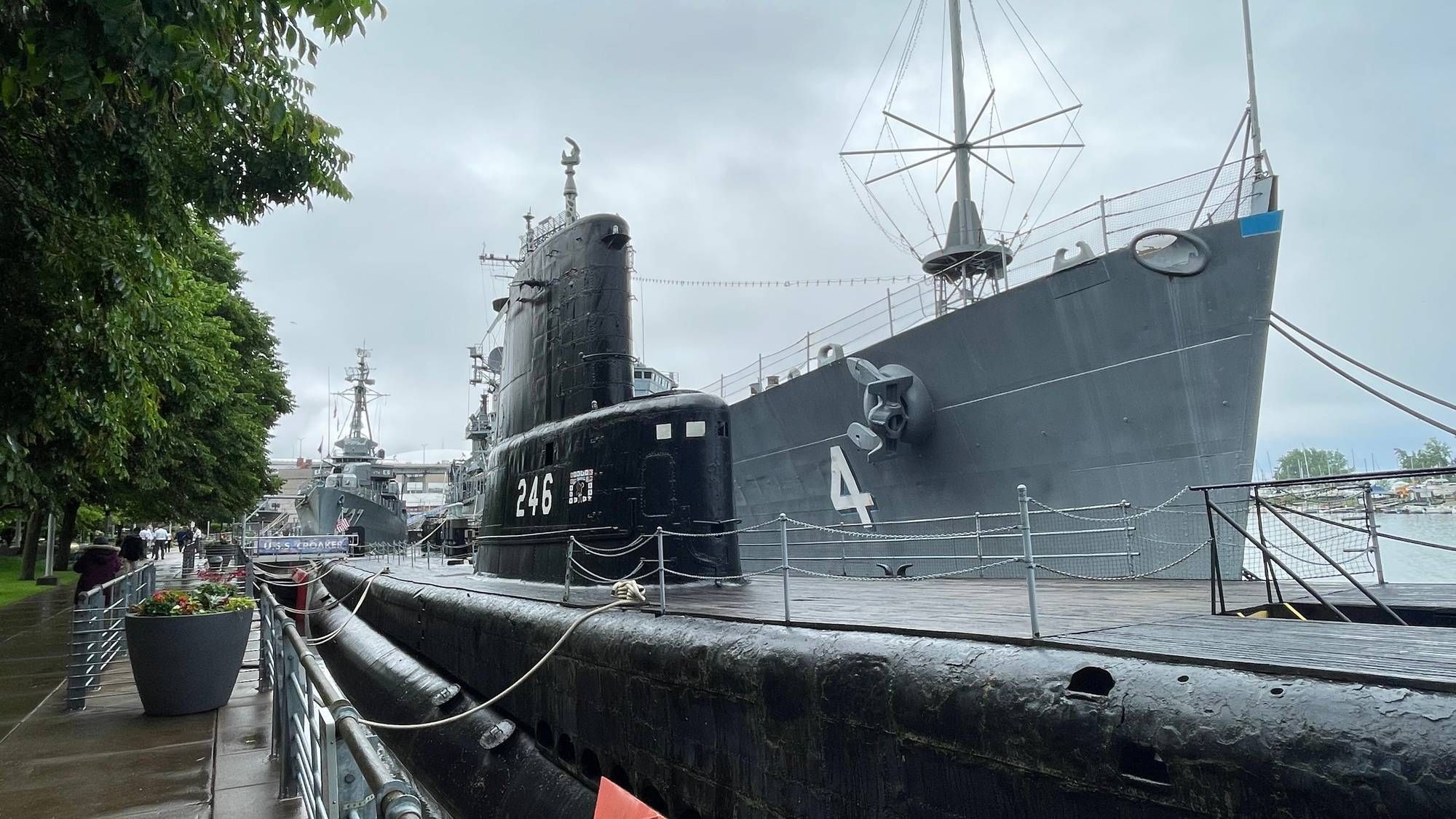



Buffalo, N.Y. (WBEN) - The New York State Department of Environmental Conservation (DEC) is leading an operation along with the U.S. Coast Guard, the City of Buffalo and the Buffalo and Erie County Naval and Military Park to coordinate response operations addressing environmental concerns at the Naval Park along the Buffalo River.
Recent inspections of the USS Croaker and USS The Sullivans identified an intermittent discharge of petroleum products from a pinhole in one of the fuel tanks aboard the Croaker and water ingress on The Sullivans.
There are no reports of injury or impact to local wildlife at this time.
"DEC is committed to protecting the Buffalo River, and is coordinating closely with the Coast Guard, City of Buffalo and the Naval Park to ensure an effective and safe response at these historically significant vessels," said DEC commissioner Amanda Lefton.
The Unified Command has implemented coordinated operational planning and resource mobilization to ensure the safe and efficient removal of legacy residual fuel products typical of historic vessels, along with contaminated water requiring treatment. Response assets are being staged in preparation for removing the fuel and contaminated water from both vessels, starting on Monday.
"The recovered water is anticipated to be offloaded into portable storage tanks for treatment. Environmental remediation and stabilization are required steps needed before the USS Croaker and the USS The Sullivans can be safely prepared for transport to Donjon Shipbuilding in Erie, Pa., where long-planned dry dock repairs will take place," Lefton explained.
Both vessels remain permanently moored in the Buffalo River with residual fuel remaining in their internal fuel tanks. The USS Croaker holds an estimated 25,000 gallons of diesel fuel and potentially 115,000 gallons of oily water onboard, which responders are carefully monitoring to limit environmental impact.
Simultaneously, operations to dewater and prevent further damage to the USS The Sullivans will occur to stabilize the ship and support vessel integrity in preparation for the removal of an estimated 30,000 gallons of oily water on board.
"The Coast Guard, would like to thank the proactive approach that both the Naval Park and the state have taken regarding this incident. They have been forward-leaning with measures to protect not only the environment, but to protect the national historic landmarks they do oversee. We appreciate their forthright response, and we are eager to help them during this process, and have a contingent of personnel both at the incident command post and on site," said Cmdr. Adam Mosley, the Coast Guard's incident commander. "We will continue to have that contingent there throughout the duration of this response, and we look forward to working with them through to the completion of this incident."
Buffalo Naval Park president and CEO Brian Luallen views this as a positive step forward for the preservation of both nationally significant historic naval vessels.
"We're seeing very strong collaboration amongst state, federal and local partners, working together towards a common goal of ensuring the protection of our environmental resources, and also these incredible historic vessels. I'm very impressed that the unified command structure is allowing the work to move forward quickly, safely and transparently," said Luallen.
Luallen believes the DEC's leadership with this project is a vital step in the long-term preservation of these vessels.
"Their leadership provides incredible immediate flexibility, technical expertise and the ability to move faster than would have otherwise been possible," he said.
"We did not believe it could be done this quickly. And through this unique public-private partnership and Unified Command structure, we are very encouraged by everything that we're seeing, and we're grateful for everyone's support at the local, state and federal level."