


Buffalo, N.Y. (WBEN) - To say we're on 'thin ice' in the Great Lakes region for this time of year would probably be an overstatement.
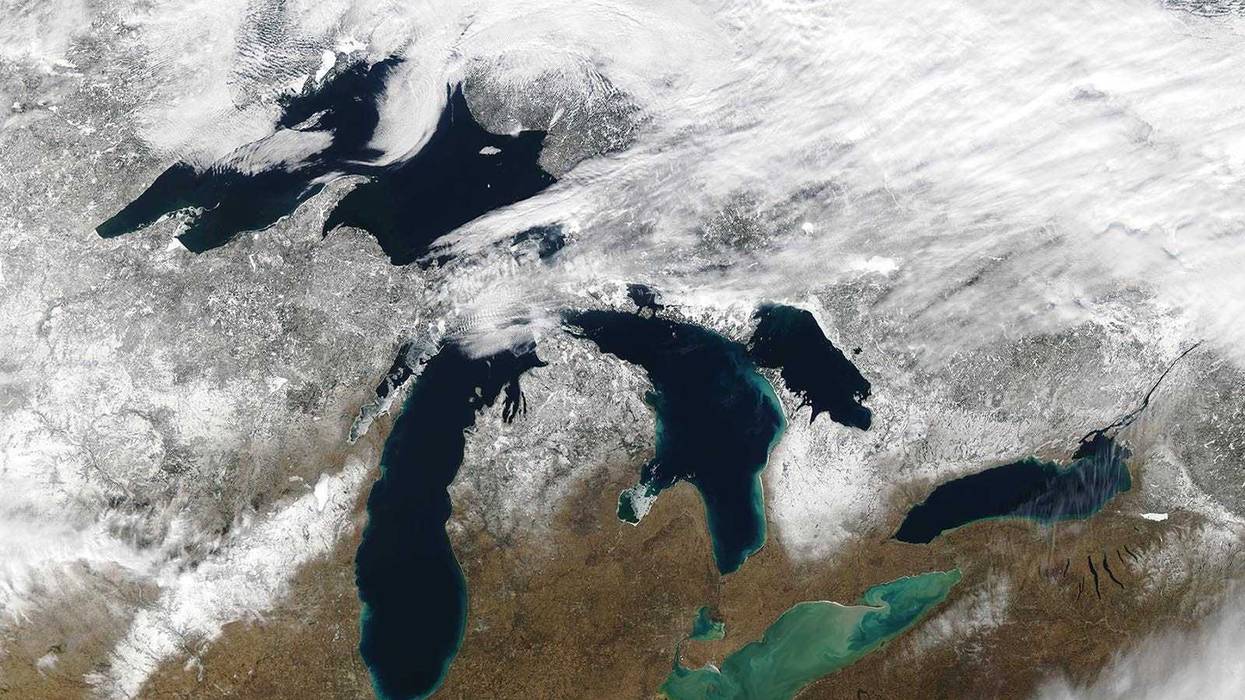
Ice cover on Lake Erie and for all the Great Lakes is at a record low level for this time of year according to the authorities at NOAA.
As of February 13, 2023, only 7 percent of the five freshwater lakes was covered in ice, which is significantly below the 35-40 percent ice cover that is expected for this time of year, according to NOAA's Great Lakes Environmental Research Laboratory.
The latest Lake Erie ice cover is less than one percent.
While there was a brief spike to about 21 percent ice cover earlier in the month, warmer temperatures have again melted the ice and the coverage is at a record law at a time when normally the ice coverage would be at its peak for the season.
"Low ice coverage on the lakes can be a set up for large severe "lake effect" snow storms," says Ayumi Fujisaki-Manome, a researcher at NOAA's Cooperative Institute for Great Lakes Research at the University of Michigan. "The moisture and heat from the lake surface water are absorbed into the atmosphere by storm systems, and then fall back to the ground as snow in the winter. When ice is not present, we can end up with big snow storms like those that hit Buffalo in December."
NOAA research has found that in recent years ice cover is in a downward trend. An analysis led by Jia Wang, an ice climatologist at NOAA's GLERL, found significant declines in average ice cover of the Great Lakes between 1973 and 2017. During the winter period of those 44 years, which runs from December 1 to April 30, average ice cover on the Great Lakes declined about 70 percent.