

The new majority owners of the Minnesota Timberwolves and Lynx, Marc Lore and Alex Rodriguez, have made it clear they'd like the teams to have a new home.
Target Center is now 35 years old, certainly in the senior citizen category when it comes to major sports arenas. Only Madison Square Garden (1968), home to the New York Knicks, is older than Target Center now.
Minneapolis Mayor Jacob Frey has gone on record saying the city wants to help, but not necessarily pay for, a new arena. But what are the options? What is realistic?
Nick Halter is a Twin Cities-based writer for Axios, and he spoke to WCCO's Chad Hartman on Thursday after getting the scoop on a story about Frey wanting the City Center area to be the new home of the arena.
There are big questions to answer about that, including knocking down what is the fourth tallest building in the city means, what the space considerations are for a new arena on that footprint and more.
Also, it's not the only option. Halter and Hartman break down the City Center proposal and a few other idea that are being tossed out there.
City Center
The mixed use building between Nicollet Mall and Hennepin Avenue is sitting in a prime downtown spot, with nearly every anchor tenant space vacant. That includes Target, who bought out the remaining portion of their lease after moving that entire building's staffing to other places, including their Brooklyn Park location, and their main downtown headquarters during the pandemic.
"It's the fourth tallest in the city, and they consolidated their employees to the buildings that they own a couple blocks south on Nicollet Mall there," Halter says. "And at the time, I had even been hearing some whisperings that there was some people (that) had some ideas like, 'let's tear this thing down.' Like, we need to get rid of office space. There's way too much in the city right now."
The problem of too much office space has only grown since that point.
"It also meshed well with, I think, the mayor's vision with Nicollet Mall, reactivating it, getting it pedestrian only, having open containers, and you could see the, the appeal of that, right? Like, people strolling up and down the mall before the game, going to restaurants," says Halter. "It would really bring some life back to the mall if they did that."
Space-wise, it could make sense. But it's not perfect. It's a long block between Hennepin and and Nicollet, there are a few restaurants in there still in the Skyway level. But main retail tenants like Marshalls and Saks Off 5th are long gone.
"Tom's Watch Bar is in that complex, which is maybe the most popular pregame spot in downtown these days," Halter adds. "And then, David Fhima's restaurant just closed in there. And then the other big thing is there's a hotel (Marriot City Center) at the site, which is separately owned, a different owner, which is another big kind of difficulty with it."
The space that housed Fhima's would be a major hurdle. It's the old Forum Cafeteria and was placed on the National Register of Historic Places on March 16, 1976, meaning it is protected from being demolished, something Fhima said was no small thing when operationg a restaurant in a space that needed constant upkeep.
But the space City Center occupies is actually larger (4.75 acres to 3.4 acres) than Target Center. Despite that, Halter says you're still jamming an arena into a tight space, something Minneapolis is familiar with after the construction of Target Field which abuts parking ramps, a garbage incinerator and other downtown properties.
"That's a difficulty with the Wolves, is that they want more space for like clubs and lounges," Halter adds. "That's the modern NBA arena, is more of that stuff."
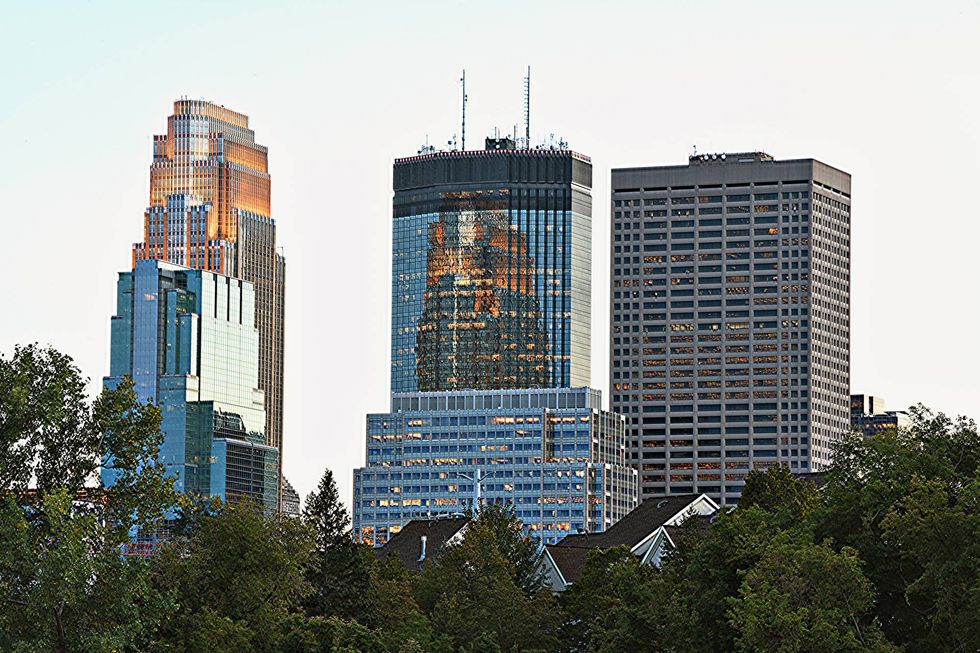
City Center (right) is a 1983-built, modern mixed with brutalist architecture skyscraper that is the fourth tallest in Minneapolis. It's also sitting mostly vacant and Mayor Jacob Frey has proposed it as a future site of the Timberwolves/Lynx.
(Getty Images / otman lazrak)
Minneapolis Farmers Market Site
The Minneapolis Farmers Market is a long-debated, well-known spot for a sports facility and was considered when the Twins were looking for options for a post-Metrodome home. The Minnesota United also considered that spot off of East Lyndale Avenue North, just west of downtown.
"I know when Alex Rodriguez was talking about this, even before they closed on the team when they were sort of fighting with Glenn Taylor over it, he had talked about the farmers market site," Halter explained. "And that's obviously been the site that people have talked about for years."
That spot has more land, but it also has a lot of infrastructure work that would have to take place, located near where interstates connect (394 and 94), not to mention the Lyndale-Hennepin exchange.
"Cobbling together those parcels and seeing if any land will, you know, it's owned by a whole bunch of different entities," Halter adds. "And so, it's difficult to cobble together. The other thing is that, is it too far away, kind of walled off from the rest of the city? I mean, you're surrounded by freeways there. And if you're asking for the city to help with anything, whether it be financially, what good does that do downtown Minneapolis?"
In other words, it's too far away from other things, like bars and restaurants.
"No one's going to go out in downtown Minneapolis and walk all the way to the farmers market site," adds Halter.
Star Tribune printing plant site
Last year, the Minnesota Star Tribune closed the site where for decades the printed the newspaper in the North Loop neighborhood. That has now been outsourced out of the state, leaving the plant site available.
It's a large site, in one of the city's most popular neighborhoods, loaded with great bars and restaurants.
"There's no transit. There's no parking," Halter says about the downsides. "So you'd have to build, you know, I don't know what an arena needs now, 5,000 spaces. So you're building a whole bunch of parking ramps. You're going to fight with neighbors up there. There's a lot of residential up there.
The residential creates big issues for that area, with some of the most desirable apartments and condos in the city located around it. Moving from residential - a major priority for the city's downtown - to parking ramps and an arena is probably not feasible.
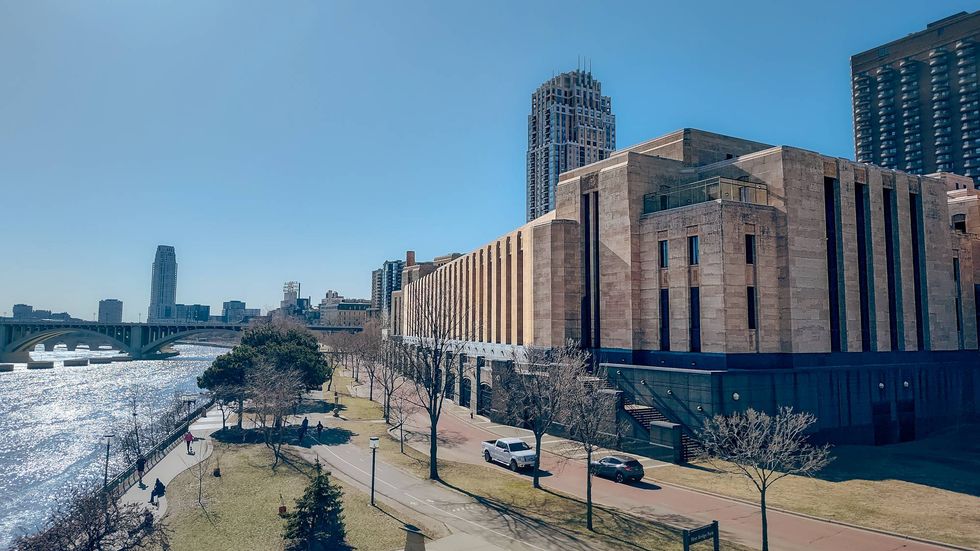
The Minneapolis Post Office, a striking example of 1930's Art Deco architecture, stands proudly along the banks of the Mississippi River.
(Getty Images / Vasjan Gulka)
The old downtown post office
The post office on the river is historic. That part probably is staying, but the entire footprint of the area is no longer used, and there are buildings on either side that are expendable.
"That's an option, but, again, there's the parking issue," Halter says. "A lot of land fiasco there."
There's certainly a draw to the area which is located on the banks of the Mississippi River, which would create a beautiful spot for fans.
But access is a major problem too. There's no close freeway access to the spot located near Hennepin Ave. and Washington Ave. It's a traffic nightmare waiting to happen.
And parking is very limited. Nowhere are there large parking ramps like exist next to Target Center now (Hawthorne, and Ramps A/B/C).
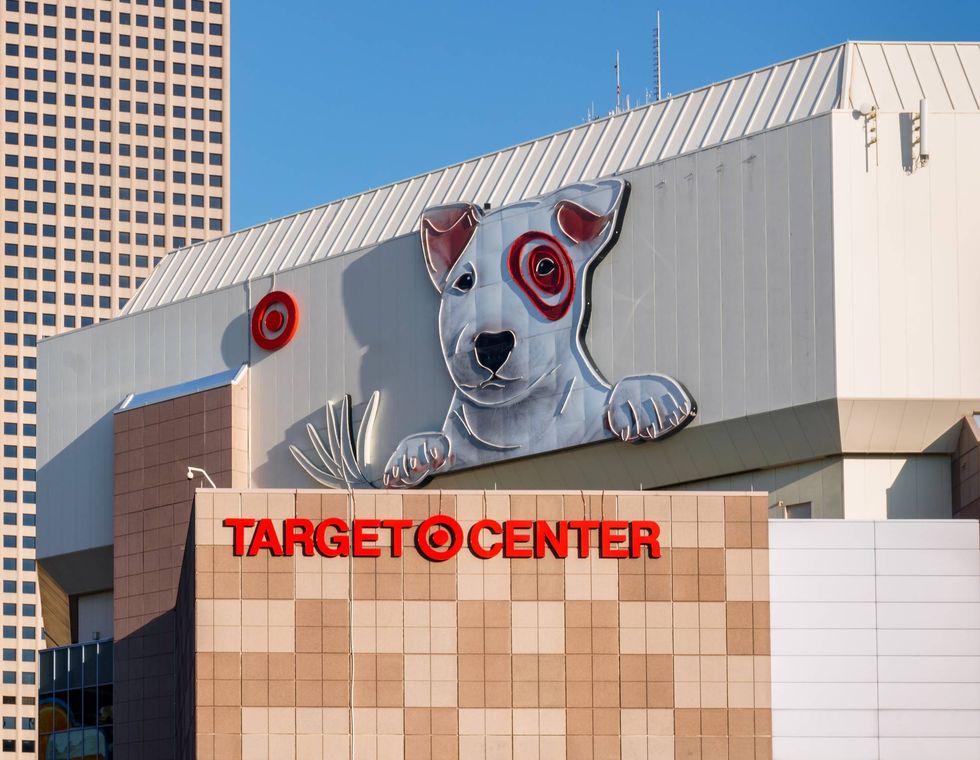
The exterior of the current home for the Timberwolves and Lynx, Target Center.
(Getty Images / Wolterk)
What about just keeping Target Center?
Again, it's probably a longshot to tear down Target Center, and remodel that area, having the team probably play in St. Paul at Grand Casino Arena in the meantime.
"Because you are sort of again boxed in there," Halter said. "I mean, unless you tore down Mayo Clinic Square and expanded it there. You're up against like Butler Square on one side, which is historic and probably protected, and then the freeway on the other side. That's a struggle."
Perhaps there's a way to reconfigure it, but it would be an expensive proposition to just remodel it again.
Other options?
There is much more space on the east side of downtown Minneapolis, with Hennepin County Medical Center on the other side of downtown next to U.S. Bank Stadium.
HCMC, whose future is in doubt to begin with, has been consolidating their campus already.
"So that's the thing, there could be land available over there at some point, but you're sort of left in this position where you're dealing with a healthcare system that is in a financial crisis right now," Halter explains. "And I don't know that you can wait for that. How do you plan that out?"
We also have to consider the suburbs, and at this point any city willing to step into this is a mystery.
The Vikings tried this prior to U.S. Bank Stadium, going far down the road with Arden Hills before eventually abandoning that idea.
Is there a suburb that's interested in stepping up and helping the franchise? Halter says there's probably only one who would consider it, that has plenty of land, and highway proximity.
"I have emailed the Bloomington mayor about this question, and he usually avoids it and makes a joke about it," Halter says. "But if there were a suburb to make that offer, it would be Bloomington. I don't have any information that says they would, but what I do know is that they have all the land you're talking about. They're on light rail. They have that area near IKEA where they want to build a waterpark, but there's even more sites than that down there."
Halter also adds that Bloomington has a large fund that they can use for economic development.
"And at one point it was projected to be at around $400 million to do stuff around the Mall of America," he explains. "So that would be the play. I mean, that could be the suburb that I would think would make sense."