


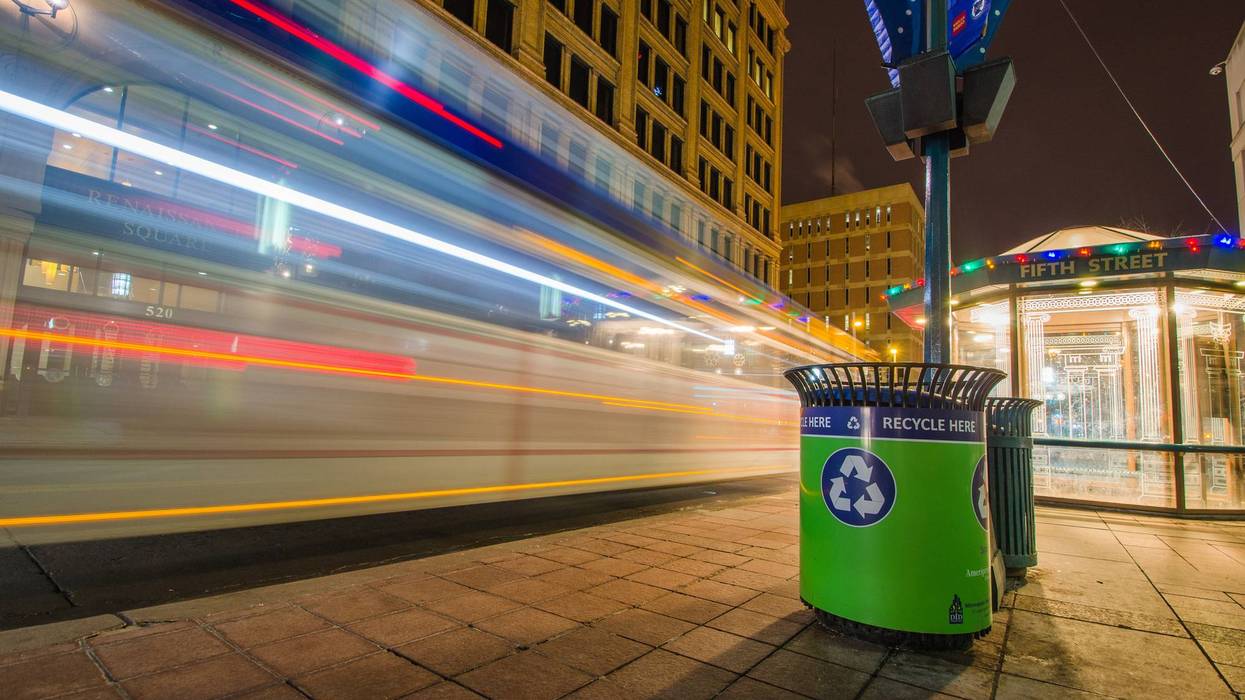

With Nicollet Mall at a crossroads, WCCO’s Taylor Rivera explores the city's potential plans to transition it from a retail hub to a residential "downtown backyard" in a WCCO In-Depth series, "The Mall’s Next Move."
If you take a walk down the mall it's hard to miss a bus whizzing by. It’s also hard to avoid an uncomfortable encounter with someone who is homeless. And it’s definitely impossible to miss former storefronts that now sit empty, or restaurants that are shuttered.
The city’s prime corridor for decades, home to anchor retail spots like Dayton’s, Neiman Marcus, or even further back Montgomery Wards, is in need of a makeover. And Minneapolis’ leadership knows it.
Adam Duininck is the CEO of the Minneapolis Downtown Council, and he says city officials are aggressively working to change that, and are moving to replace vanishing storefronts with a bold "Social District".
“We see it as an opportunity to activate the space in a different way, because what Metro Transit will tell you is if we take the buses off, that clears bus traffic,” he says. “But it also removes approximately 10,000 people a day that board buses. That's something that I'm thinking about and engaged with some of the bigger employers up and down the block.”
Duininck says a lot of the plan's success relies on the ongoing negotiations with Metro Transit about shifting bus traffic off of Nicollet Mall within the next five years, something the city has been discussing for years now.
And it’s a decision that would officially transition the mall from a transit artery into a pedestrian-only destination.
WCCO has reached out to Metro Transit about this story, and officials with Metro Transit declined the opportunity to comment on any plans to move buses off the mall.
Public information shows that discussions about potentially moving buses off Nicollet Mall are focused on a future agreement between the City of Minneapolis and Metro Transit. While the city has shared a few rerouting ideas with its committees to help spark new life into the idea, there hasn't been a public announcement about a final deal.
Until now, Metro Transit hasn't made any specific demands for a move and their relative silence on the matter likely comes down to the fact that the project is still in the early stages of planning and negotiation, a phase where official policies usually aren't confirmed until formal agreements are signed.
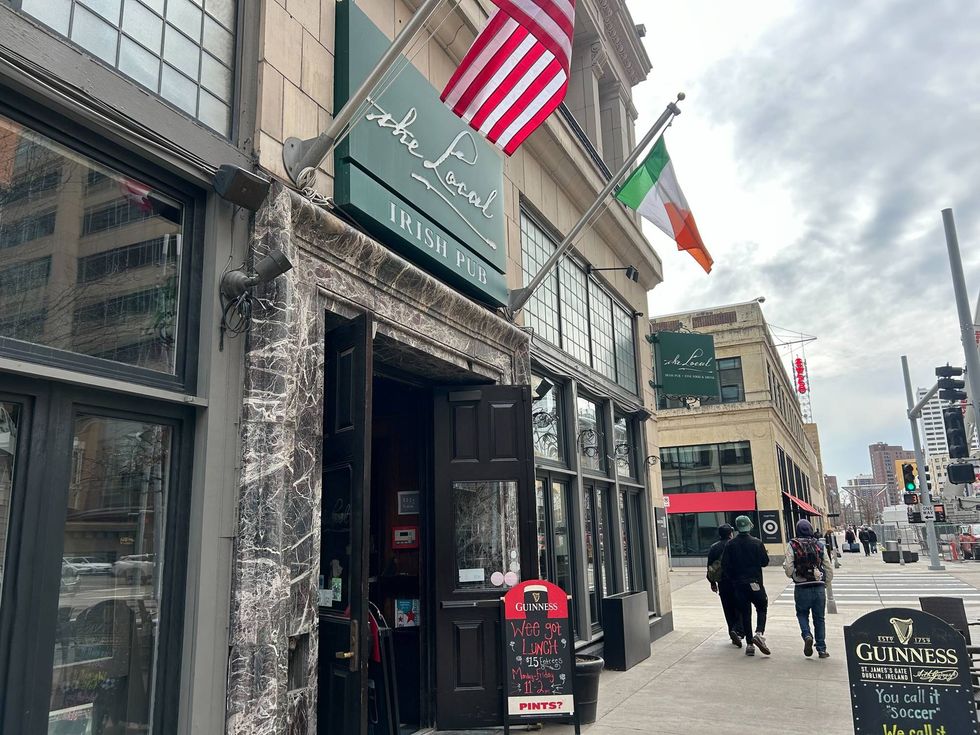
Brad Johnson, general manager of The Local, a longtime tenant at 9th and Nicollet, says while a shift toward a dedicated entertainment district would put them on them on the right path, but adds hurdles remain.
(Audacy / Taylor Rivera)
"Buses, homelessness and crime, oh my"
Some local business owners along Nicollet are also pushing for a permanent pedestrian walkway. They say it would allow for expanded patio seating, and a safer atmosphere for guests and people who call the mall home.
“Sitting on a patio where a bus drives by and knocks a flower down that's right next to your head? It's a little bit dangerous,” says Brad Johnson, general manager of The Local, a longtime tenant at 9th and Nicollet.
Johnson says while a shift toward a dedicated entertainment district would put them on the right path, critical hurdles remain.
He says increased public safety and more support for struggling businesses needs to be part of the discussion.
That is something Ward 7 City Council member Elizabeth Shaffer supports. The area is part of her ward, and she is pushing for more "visible safety" along Nicollet Mall.
When asked about how she would keep the mall cleaner and safer, Shaffer suggested police foot patrols with expanded community ambassadors.
“This is one of the top things that we heard from residents as one of their top priorities, and of course with the ICE situation, it's still a work in progress,” Shaffer says.
She is pointing out something Minneapolis Police have said as well, and that is the federal immigration surge drew the attention of local law enforcement away from other priorities.
The Minneapolis City Council says there is evidence of progress however, pointing to a 14% drop in downtown violent crime and a 12% decrease in unsheltered homelessness between 2024 and 2025.
But council members are still facing a persistent crisis on the ground, with over 2,000 individuals still lacking permanent housing citywide, and their visibility continues to plague parts of the city, including along the mall.
Shaffer says more law enforcement presence is going to be needed to stabilize the area around the mall, and make way for transforming the area into a high-quality neighborhood for future residents.
"This is an area that needs attention citywide,” Shaffer adds. “Nicollet Mall, Uptown, and other areas of the city. We have got to get our law enforcement back up to the numbers that they need to be at so that they can be more present.”
Minneapolis Police have been scrambling since the COVID-19 pandemic and George Floyd riots to get staffing numbers up to what the city charter calls for. And while there has been major progress made, they’re still behind where they need to be.
As of early 2026, the MPD has approximately 617 sworn officers, with 32 more in the academy, over 100 officers below the legally required minimum of 731.
Shaffer says while city leaders continue to navigate managing and removing persistent homeless encampments, the Council is expected to evaluate how more security could impact their goals of propping up green spaces and housing conversions as well.
 The historic Minneapolis Grain Exchange was, for decades, a commodities and futures exchange of grain products. Now under new ownership, the plan is to transition it to a residential space with room for retail.(Getty Images /JHVEPhoto)
Give us residents - not more stores
Meanwhile, business owners along Nicollet say more neighbors - not more stores - may be the answer to the mall's future.
Downtown restaurants have been particularly hard hit, with the pandemic creating more work-from-home opportunities for workers, and the recent surge of ICE agents also creating millions of dollars worth of economic damage across the Twin Cities.
That has restaurants working to overcome already thin profit margins, and dealing with the continued decline of the traditional “office rush.”
Stakeholders like The Local’s Johnson say they are looking to city officials for a reinvention of the corridor that moves beyond temporary fixes.
“I know getting some of the funds and all that kind of stuff definitely helps in the short term,” Johnson says of some proposed legislation to help businesses. “But it's really the long-term planning that most of us, I think, are hoping for. Where it's like, all right, let's figure out how to turn it around city-wise.”
Johnson says the success of this corridor now depends on how upcoming city programming and infrastructure shifts.
For the Downtown Council and Duininck, he says they are focused on developing residential conversions and communal green spaces over traditional department stores. No more Dayton’s, Macy’s, Saks. At least to start.
The planned reinvention of the old Dayton's, a massive building on Nicollet between 7th and 8th streets, never worked. The Dayton's Project has mostly sat empty, a casualty of the COVID-19 pandemic and perhaps overly nostalgic and ambitious plan to make it retail and office space now has it facing foreclosure.
Duininck says that while commercial vacancies remain a challenge, downtown residential occupancy is holding steady above 90%, and more people living in the area will naturally add infrastructure.
“Apartments and condominiums are filled,” says Duininck. “Commercial occupancy is a different story. So if some of these buildings get converted to people living down here, I think there is demand. And the reason that there is, is because people are right in the middle of the action.”