

Here we go again.
Wildfire smoke from Canada is expected to blanket the entire state Friday, prompting the Minnesota Pollution Control Agency to issue an air quality alert for the 25th time, continuing to set new air quality alert records for Minnesota.
The alert is orange, meaning the air will be unhealthy for sensitive groups. It starts at 8:00 a.m. Friday and will be in effect until 3:00 p.m. Saturday.
The affected area includes all of Minnesota as well as the tribal nations of Prairie Island, Mille Lacs, Fond du Lac, Upper Sioux, Leech Lake, Red Lake and Grand Portage.
A statement from the MPCA says:
“Smoke from wildfires in Alberta and British Columbia will move south across Minnesota following a cold front on Friday. The sinking air associated with the cold front will push smoke elevated in the atmosphere down to the surface. This will result in poor air quality. Air quality will gradually improve on Saturday with gradual clearing across Minnesota from north to south. This alert may need to be locally extended depending on how fast the smoke dissipates.”
"Fine particle levels are expected to reach the orange air quality index (AQI) category, a level considered unhealthy for sensitive groups, all of Minnesota. In the orange area, sensitive groups should limit prolonged or heavy exertion and time spent outdoors.”
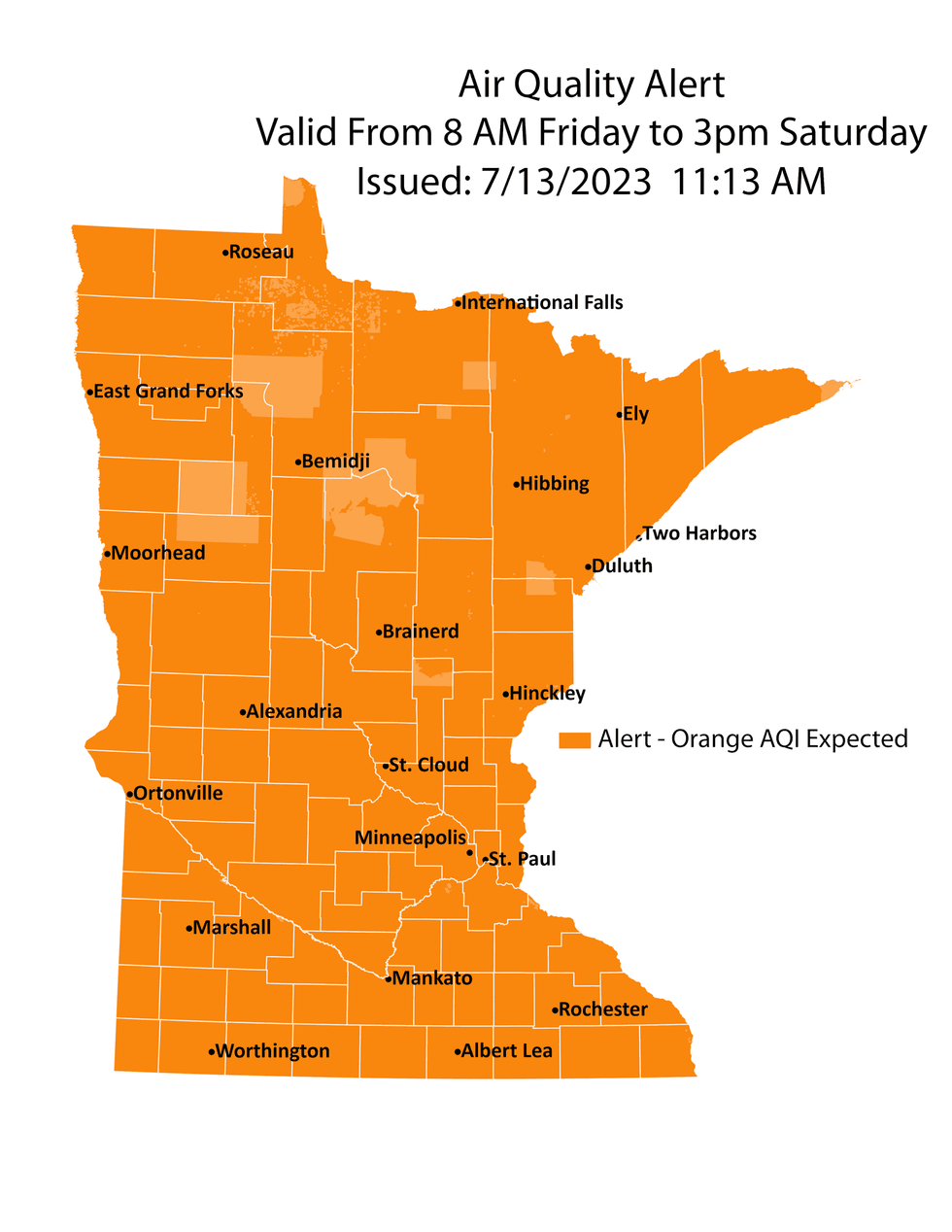 Friday and Saturday's Orange Air Quality Alert covers the entire state of Minnesota.(Image: Pollution Control Agency)
Orange air quality: Unhealthy for sensitive groups
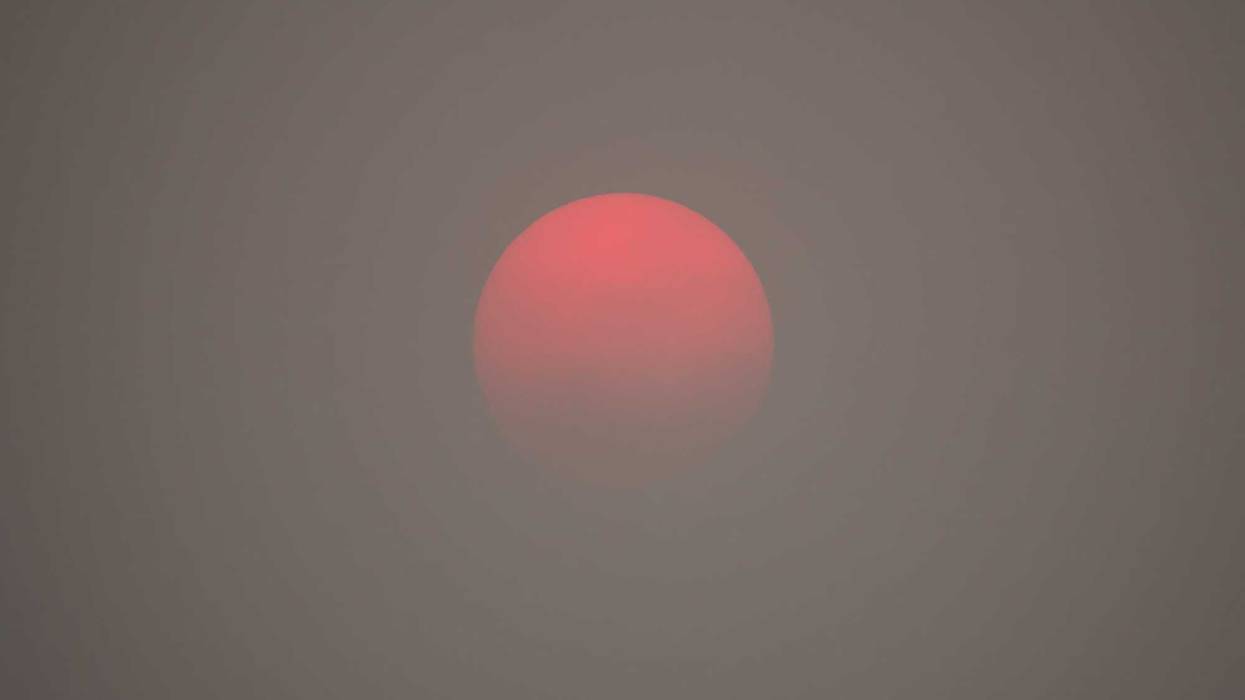
Sights and smells: In areas where air quality is in the orange AQI category due to wildfires, the sky may look hazy and residents may smell smoke even when wildfires are far away.
Health effects: This air is unhealthy for sensitive groups and pollution may aggravate heart and lung disease as well as cardiovascular and respiratory conditions. Symptoms may include chest pain, shortness of breath, wheezing, coughing, and fatigue.
What to do: People in sensitive groups are encouraged to reduce outdoor physical activities, take more breaks, or do less intense activities to reduce their exposure. People with asthma should follow their asthma action plan and keep their rescue inhaler nearby.
Who’s most at risk
Poor air quality impacts health. Fine particle pollution from wildfire smoke can irritate eyes, nose, and throat, and cause coughing, chest tightness, shortness of breath, dizziness, or fatigue. Smoke particles are small enough that they can be breathed deeply into lungs and enter the bloodstream. This can lead to illnesses such as bronchitis or aggravate existing chronic heart and lung diseases, triggering heart palpitations, asthma attacks, heart attacks, and strokes.
Certain groups experience health effects from unhealthy air quality sooner than others, either because they are more sensitive to fine particle pollution or because they are exposed to larger amounts of it.
Sensitive groups include:
People who have asthma or other breathing conditions like chronic obstructive pulmonary disease (COPD)
People who have heart disease, high blood pressure, or diabetes
Pregnant people
Children and older adults
People with increased exposure include:
People of all ages who do longer or more vigorous physical activity outdoors
People who work outdoors, especially workers who do heavy manual labor
People who exercise or play sports outdoors, including children
People who don’t have air conditioning and need to keep windows open to stay cool
People in housing not tight enough to keep unhealthy air out, or who do not have permanent shelter.