

"Let’s go out for a drink" is taking on a whole new meaning these days as fewer adults than ever before are drinking alcohol, or if they are, they're drinking much less. So what’s behind it? WCCO’s Laura Oakes did a little investigating in this month’s “A Closer Look.”
“If I knew the answer, we probably wouldn't be so stressed out all day.”
That’s Ryan Bandy, Chief Business Officer at Indeed Brewing, one of the longest-running and successful craft breweries in the Twin Cities.
Yet, with all of Indeed’s market share, there’s plenty that keeps him up at night.
“People are drinking a lot less craft beer, a lot less local craft beer, and a lot less higher-end liquor,” says Bandy. “And so that's what hits us as far as stressful, because that's our model. We don't get to make the big cheap lager or RTDs right? They're ready to drink cocktails, and so these are the things in the cans that say they're a margarita, right? So they're basically like a margarita in a can. It's kind of like the seltzer trend. You see more of these RTDs, and those are up, so people are drinking more of those than they used to. Things like that. And so for us, it's a stressful moment to figure out how we stay relevant to what people want to drink, while sticking with our core as a company. And not totally just like going by the whims of a person every year.”
No amount is safe?
It’s an uphill battle as study after recent study shows a significant increase in some cancers among people who drink alcohol.
Toben Nelson is a Professor of Epidemiology and Community Health at the University of Minnesota.
“The evidence is pretty clear that no amount of use is safe,” Nelson says.
And the thought that a glass of wine can actually be good for your heart?
“The positive health benefit effects of alcohol (are) just not played out in the more rigorous research that has been done,” Nelson explains.
According to the National Cancer Institute, people who drink alcohol - even small amounts - are at higher risk of certain cancers than those who do not. Studies show that the more someone drinks, the higher the risk.
It’s particularly true for oral, esophageal, liver, breast and colorectal cancers, and that stopping alcohol consumption is associated with lower risks of those cancers.
Nelson says there's more to it than just the cancer risk, however.
“I think there's a whole range of other reasons why folks are drinking a little bit less these days, as well,” Nelson said. “We had a big expansion of consumption among adults, during the stay-at-home orders, with the COVID pandemic. So, I think people were more acutely aware of the effects on their bodies related to alcohol use. But an interesting difference by age with alcohol consumption is that younger folks drank a lot less and I think as those folks who delayed excessive consumption of alcohol proceed into their early adulthood, they are drinking less as a result. And that's very consistent with patterns we've seen from research previously. I think all of those factors are sort of working together to reduce consumption overall.”
“And then the other major factor from my perspective is the emergence of these GLP-1 receptor agonists, medications for treating primarily obesity, diabetes,” Nelson continues. “But those have a very strong effect on addiction, on craving, on consumption. I think as those medications penetrate the marketplace a little bit more broadly, we're going to see a continued decline in alcohol consumption, and that will certainly be showing up for restaurants and retail settings, and for the industry. And I know that they're very concerned about it.”
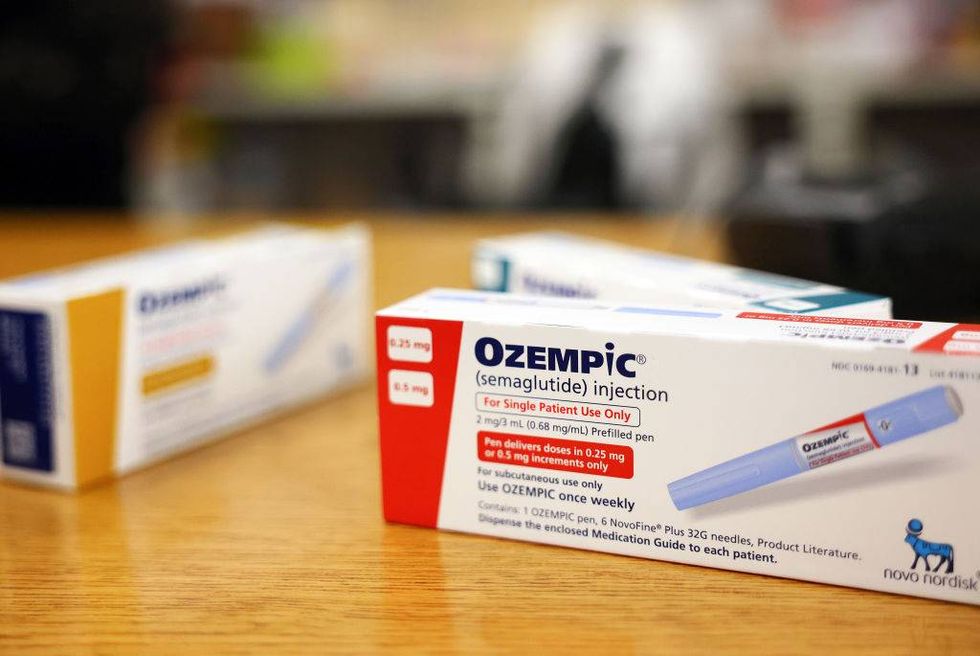
The emergence of these GLP-1 receptor agonists, medications for treating primarily obesity, diabetes, is also having an effect on how people consume alcoholic drinks.
(Photo illustration by Mario Tama/Getty Images)
What is a hospitality industry that revolves around socializing and drinking to do?
In the Twin Cities, it appears to come down to a few simple letters of the alphabet: N/A and THC.
The local restaurant industry is leaning heavily into multi-ingredient, innovative craft cocktails, without the alcohol, catering to those who still want an elevated experience of a nice, thoughtfully-prepared cocktail - but without the booze. And they are willing to pay for it.
Liquor stores and wine shops are figuring out their next steps too. Haskell's Wine and Spirits President Ted Farrell talked about it on a recent episode of their “Weekly Wine Chat” show on WCCO Radio.
“People are just not consuming as much,” Farrell begins. “The younger kids have a term, or there's a term called zebras or you're zebra-ing when you go out to a bar or restaurant. You order a fancy cocktail, whether it's a Manhattan or a Cosmopolitan, or one of those espresso martinis (that) are actually making a comeback. You have one of those, but then after, when you order a second one, you order the non-alcoholic version. And then maybe later on, then you have the full alcohol. So you kind of go back and forth, back and forth. You have a high alcohol drink and then a low one or a no alcohol drink. And so that term is called zebra-ing and that's kind of like the stripes on a zebra, black and white, you're alternating.”
Farrell says they're adapting as best they can in a world where, as Dr. Toben mentioned, even the popularity of weight loss drugs is having an impact.
“One thing also that's sort of affecting it a little bit is the Ozempic deal where yes, that does slow your yearn for food and your hunger pains and all that,” Farrell adds. “But it also slows down consuming alcohol. So that's an interesting fact that kind of steps in there and there's all kinds of other things where you're seeing, I mean, I still scratch my head on. Certain days when people tell me what's the most interesting thing in your store, and ‘I sell non-alcoholic bourbon,’ which, it's just a head-scratcher. People like non-alcoholic gin and I think it's just, you're seeing more and more people try different things.”
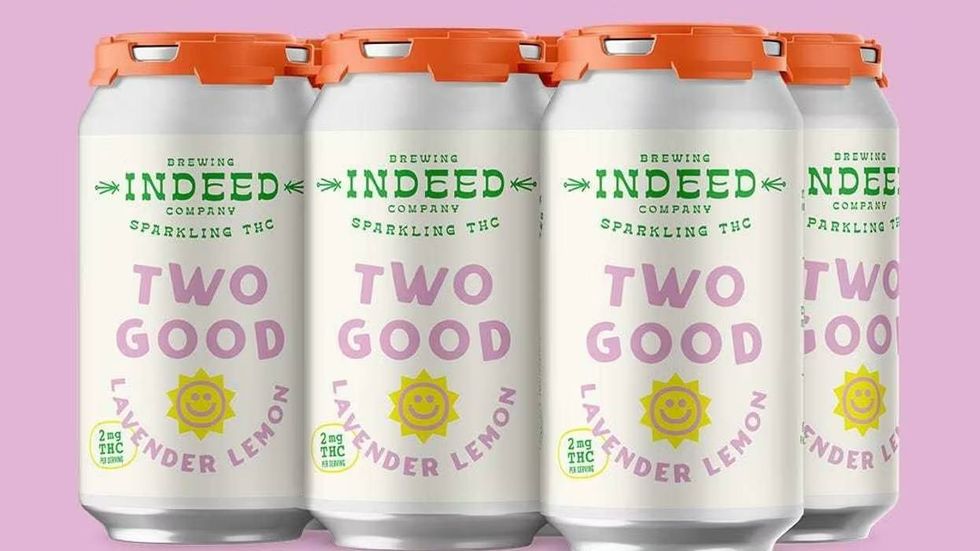
An example of what Indeed Brewing is working on when they debut their new THC-infused seltzers.
(Image courtesy of Indeed Brewing)
Enter THC - but that future is uncertain
Back at Indeed Brewing, they were among the first to figure out they needed to offer something other than beer once sales started falling off. Enter the state’s newly-legal cannabis industry.
“When it became legal, and beverages seemed like a really good option for that medium, we were excited because we have to do this,” says Indeed’s Bandy. “Most of us may imbibe, generally speaking, in cannabis, and it fits our brand so directly. And so that was the first instinct, we have to do it. It just makes too much sense. And then as we thought about building up what it looks like, what does it taste like, all those questions, we really thought about, yeah, to your point, OK, this is going to be a different drinker. We are probably going to be talking to new people or different people or people that maybe only care about Indeed once or twice a year. This segment is going to hopefully be people that now we can tell them they're going to care about us once a week or twice a week. So, how do we do that to make sure that we talk to the people that are adjacent, not the same, not the same exact person that's buying our beer?”
The University of Minnesota’s Nelson says absolutely legal THC has had a major impact on drinking habits.
“We think about THC as what we call an economic substitute for alcohol, and I think more folks are pivoting to using those products as they become more legally available,” Nelson explains. “The profile of that product, at least in terms of, sort of hangover, and the immediate negative effects, is different than it is for alcohol. And I think there are some indications that parts of the population are preferring that profile instead of the one that results from alcohol use.”
However, that industry is at a crossroads. An impending federal ban on THC drinks made from hemp is set to take effect in November, and that could upend an industry that’s generated millions of dollars in tax revenue for Minnesota and billions in sales nationwide.
This spring, a bipartisan group of lawmakers including Minnesota U.S. Senator Amy Klobuchar (D) introduced a bill that would allow states and tribal governments to regulate and ensure the safety of hemp-derived products.
Klobuchar says Minnesota is a national leader in hemp products, and Congress should recognize that leadership and commitment to consumer safety.
A hearing on the bill has not yet been scheduled.