

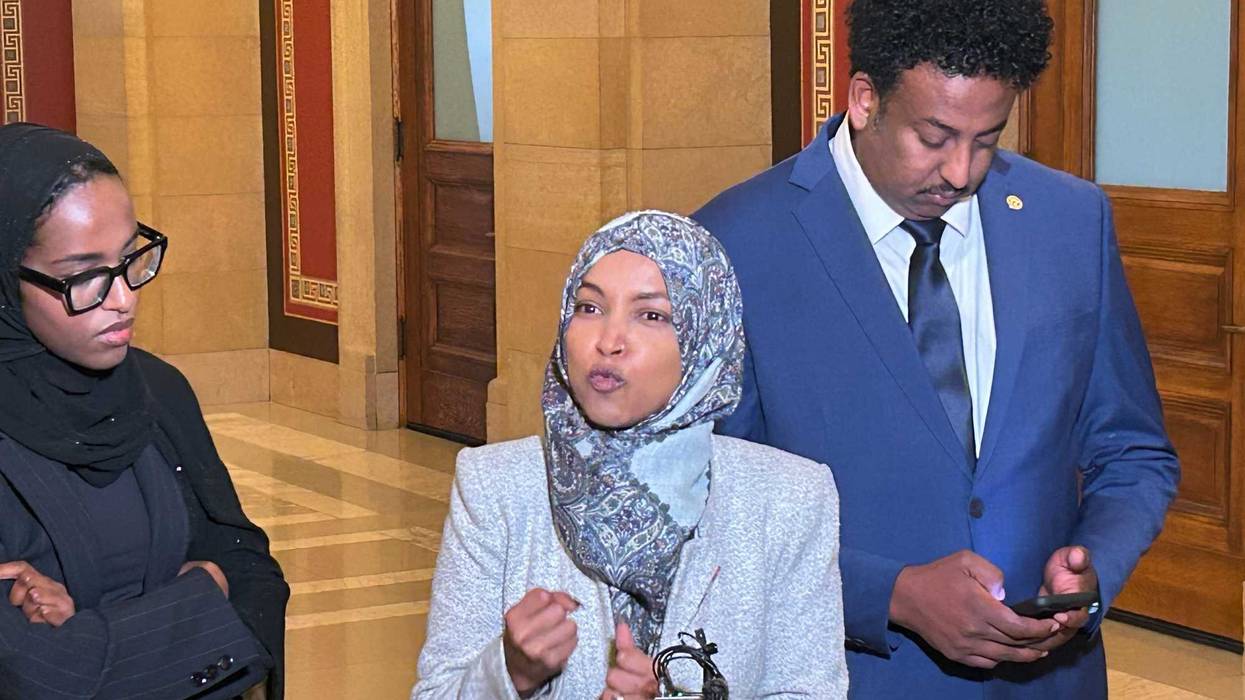
Minnesota's Somali community and legislators speaking out after this weekends pronouncement by President Donald Trump that he was terminating temporary legal protections for some immigrants living here.
After Mr. Trump posted on social media Friday that he wanted to immediately end temporary protected status for Somalis in Minnesota, Congresswoman Ilhan Omar (DFL) now says he doesn't have the legal power to do such a thing.
"For the 300 or so people that are impacted, that currently live in Minnesota and across the country, we see you and we stand with you," says Omar.
Omar and other allies, including Minnesota Attorney General Keith Ellison, say they will now explore new ways to protect the status in court.
Meanwhile, the move has been welcomed by some Republicans who argue that programs like TPS bypass Congress.
"The actions taken by the president by making that statement is dangerous," says Minnesota State Rep. Mohamud Noor (DFL). "It's endangering many communities. Somalia is a fabric of the State of Minnesota. As you've heard from my colleagues, they're in every profession. They're our neighbors. They're our friends. They're our family. "
Omar says the action will only impact a small potion the 80,000 Somali's living in Minnesota. A report from Congress places the number at about 700 people nationwide.
After questions from the media surrounding some of the fraud cases in Minnesota involving people from the Somali community, including the massive Feeding Our Future fraud case, Omar reacted with accusations of racism and cut short their press conference.
Omar strongly criticized KSTP-TV reporter, and fill-in host on WCCO Radio Tom Hauser and his questioning about the "perception problem" of Somali Minnesotans being linked to fraud.
"Well, it is interesting you ask the question in that way, Tom," Omar said. "Would you ask that question if it was white Minnesotans who are committing? Would you say, are you concerned that there are white Minnesotans who are committed? Would you ask that question to a white lawmaker? You wouldn't."
Omar had a similar exchange with Star Tribune reporter Rochelle Olson who asked a similar question.
"I understand the assumption in your question and how xenophobic and racist your question sounds," Omar said.
"OK, if you want to call me a racist, I'm not calling you racist," said Olson.
"I'm saying the question in itself sounds that," Omar reesponded. "Well, if I were to look at you and I said, you know, we have a problem and you have a problem because some white person did something, how would you react to me?"
"Well, I'd probably have a problem with the white person who did something," was Olson's answer.
"Yeah, I mean, I certainly have a problem with the Somali person who did something," Omar explained.
Omar says that individual criminals should be held accountable, not the entire community, and refused to take further questions.
70 people have been charged in connection with the Feeding Our Future fraud case, with many of them having ties to the Somali American community in Minnesota.