

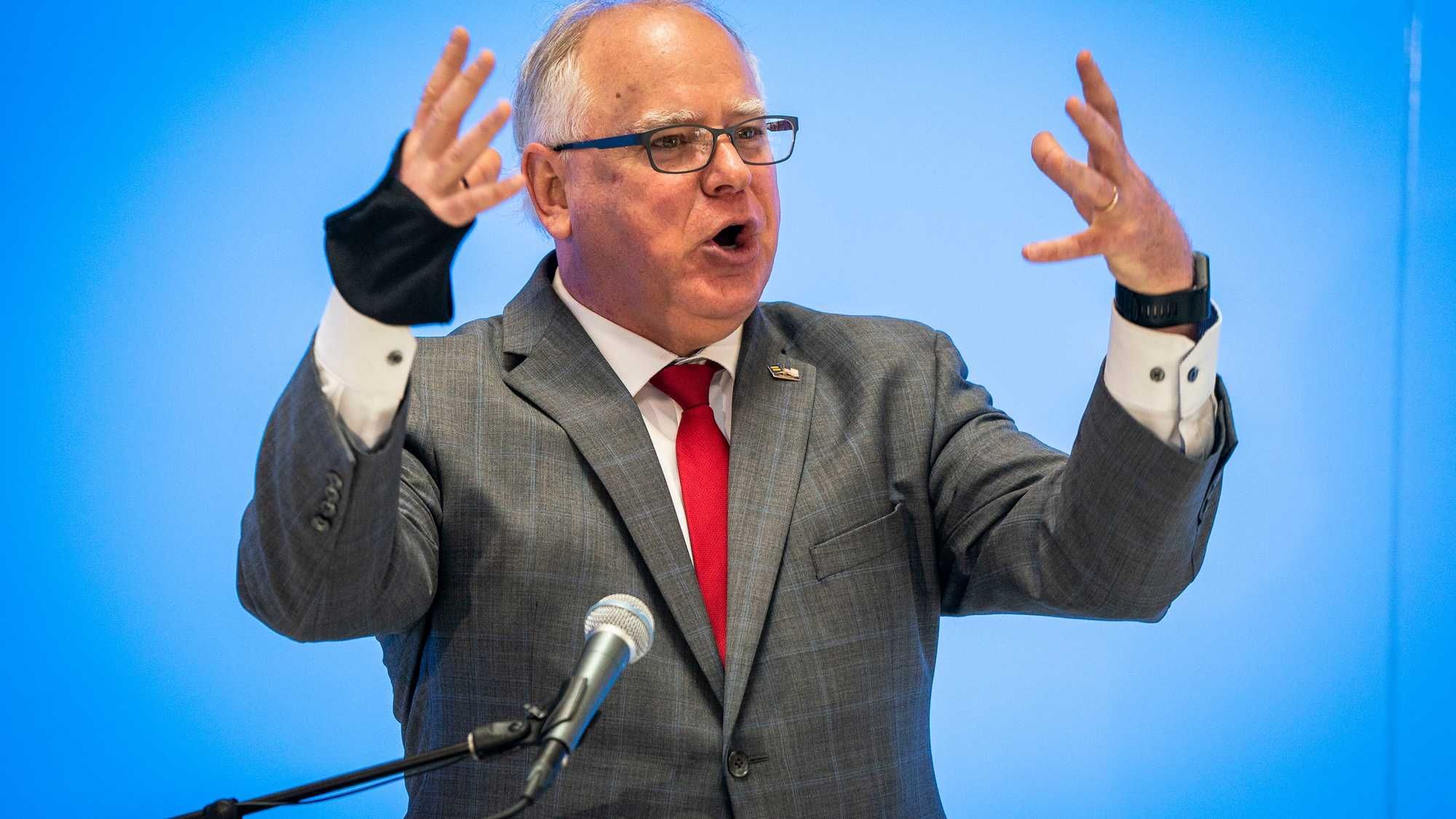
Governor Walz Wednesday evening shared the news that further restrictions were being put in place across Minnesota thanks to a stark increase in COVID cases across the state. The increase has now stressed the healthcare system to the point where over 90% of the critical care beds in the state are full.
According to state health officials, the numbers will continue to go up. Which is why this four-week pause in activities is being put in place.
Dr. David Hilden of Hennepin Healthcare joined Dave Lee on the WCCO Morning News and he confirmed what the governor was saying, things are getting hard. He also says the staff is up to the challenge.
"They're resilient, but they're exhausted," Hilden said. “Everybody's eyes look exhausted and I remember asking one nurse, a very dedicated, caring young nurse, and she is always so kind and pleasant. I asked her how you're doing. And she just said, I'm tired and that's how that kind of sums it up. People are tired and our hospitals are, as the governor said, getting close to being overwhelmed.”
Hennepin Healthcare is postponing elective surgeries that require an inpatient admission on a two week rolling basis. “We continue to evaluate and postpone as indicated semi-elective cases based upon daily inpatient staffed bed availability," Hilden told Dave Lee.
Hilden is also very optimistic about the latest news on vaccines from both Pfizer and Moderna.
“You just have to give you a tip your hat to scientists,” Hilden said. “These are a whole bunch of people who work in labs and white coats around the world. And they're doing amazing work. The Pfizer vaccine, the Moderna vaccine. And now, even just in the last 24 hours, we're hearing the Oxford AstraZeneca vaccine out of the UK. These are offering extreme hope.”
While the vaccines have come in record time, Hilden does say we can't rush them, but expect to see frontline workers in Minnesota getting these by the end of the year.
“That doesn’t mean it's there yet, but it is really close," Hilden says. "Now there's only 2 to 3 months long data, but that's really good. So I understand that this could be ready for delivery to Minnesota in the next 4 to 8 weeks by the end of the year. And so I'm now optimistic that will that that will happen. It's still not a done deal. You can't pop the cork on the champagne yet, but maybe put it in the fridge.”
When it comes to widespread distribution however, Hilden says there are still a lot of challenges.
"Now we need to turn to the logistics people, whoever that is, the shipping companies or the military, or the public health people who know how to deliver hundreds of millions of dollars of deep freeze vaccine freezers. We need to get the smart logistics people to help us out with that, and I know that that's what they're doing. So I anticipate that health care workers and other vulnerable people, I'm crossing my fingers that we might have a vaccine in our arm in the next 1 to 2 months. Not certain of that, but it's a least I'm optimistic about that.”