


'The Pitt' is the newest hit TV show on HBO, and after just wrapping up a harrowing second season, fans of the medical drama set at an emergency room in Pittsburgh, PA are wondering, "how realistic is this?"
The show isn't shy about displaying the graphic activities of an ER, nor are they shy about showing the stress, mental strain, and overwhelming responsibility of working in those situations.
Th show has won a gurney full of Emmys — for bringing a dose of classic episodic TV to the prestige streaming era. The stories behind how they create the amazing, sometimes downright gross, visual effects are fascinating in their detail and has actors begging for the chance to spend hours shooting as a victim on the show.
The show is also unique in how it presents each episode, with a one hour of a 15-hour shift in the ER creating 15 episodes of the season, taking you through one long, incredible day in a chaotic environment for the doctors, nurses, and support staff.
In fact, one ER doctor in the Twin Cities, fresh off an overnight shift, told WCCO's Morning News with Vineeta Sawkar that TV has never portrayed the chaos and atmosphere of an emergency room so well. So well, in fact, he had to stop watching it because it was just too close to home. The show has, in just two seasons, been able to tap into some major real-world issues, like mental health struggles, mass shootings, and more.
Dr. Max Elsenheimer, DO, is chief resident at Regions Hospital Emergency Medicine in St. Paul, and talked about what the show gets right, and how it’s affected relationships with patients since the show launched in 2025.
Vineeta Sawkar: I know you have seen some of The Pitt, and I want to just get a feel from you. How realistic is this show?
Elsenheimer: I just got off a night shift, so I've got some good insight here. The Pitt is, I'd say, about as realistic as it can get, whenever it comes to kind of a TV drama, as to how it really is in the emergency department. In fact, I was working with an attending tonight that actually is basically a doppelganger and has all the same mannerisms as Doctor Robbie, so I think that they just kind of copied and pasted them and put them in the show. But it really captures kind of the same feeling that you have when you're on shift. The fast-paced intensity, getting pulled in various directions and kind of like the mental tabs of having multiple patients and getting pulled in different directions. It's kind of a spitting image of what we do every day, which is really nice.
Sawker: My goodness, you must be tired! I watched this show and you talk about the different cases that come at you, just the challenge of that, there must be something with your desire to be in emergency medicine. Do you enjoy that challenge of having these different cases just minute by minute?
Elsenheimer: Yeah, I think that's why a lot of us got into medicine, but especially emergency medicine. It kind of takes a certain type of person to want to go into that. The challenges of different cases every day, and each patient is unique and has their own unique challenges. But kind of coming up with solutions on the fly and kind of using our knowledge and going from there. So yeah, super, super rewarding, and we get to meet lots of cool patients and, hopefully, make a big impact in a small amount of time.
Sawkar: I just can't imagine the stress that all of you are under, not only doctors, but all of the medical professionals in an emergency department. How do you decompress after these very, very intense shifts?
Elsenheimer: Yeah, it's an excellent question. We all kind of develop our own strategies for kind of healthy coping. Emergency medicine docs and nurses and techs and a lot of the staff are kind of known for being adrenaline junkies, but outside of the ER, a lot of people deal with their stress by running, lots of physical activity. We're known for being rock climbers, (it’s) one of our stereotypes, or being outdoors. So kind of letting go of energy that way. Some people in my residency class have now gotten to knitting and they use that, which is super interesting. But everyone kind of has their own unique way to kind of channel all that stress into something positive in their lives. We've all got each other to lean on whenever we've got difficult cases and kind of routes that the hospital has to kind of go through, the different experiences that we have that are difficult and go from there.
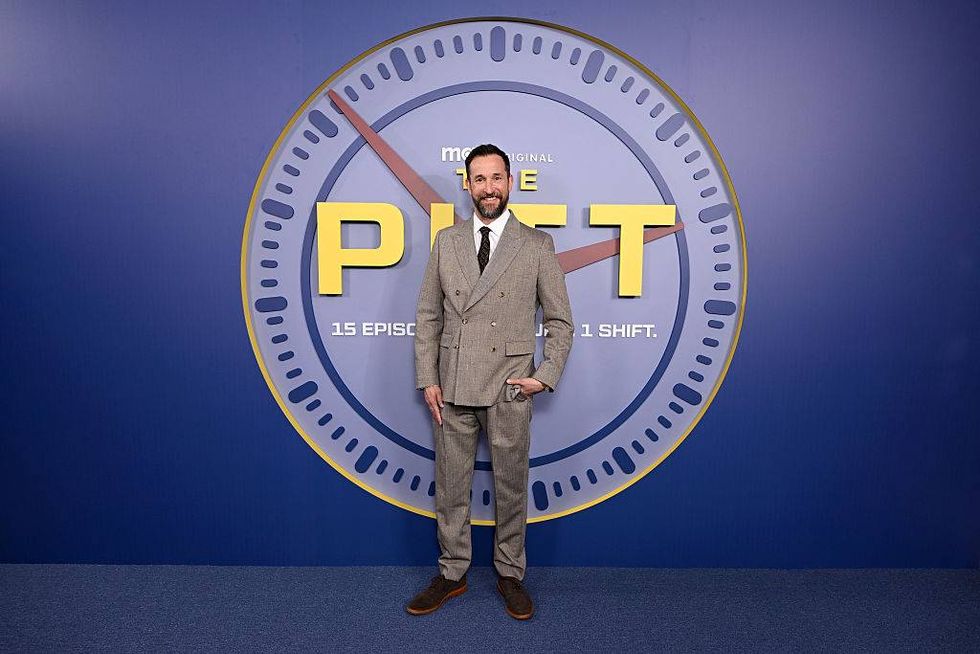
Noah Wyle attends the Special screening of The Pitt, at The launch Of HBO Max, at Ham Yard Hotel on March 24, 2026 in London, England.
(Photo by Jeff Spicer/Getty Images for HBO Max)
Sawkar: So do you find now that you've been watching the show and so many people talking about The Pitt, do you find that people have new appreciation for what you do?
Elsenheimer: Yeah, absolutely. Actually, it was funny after the first couple of episodes came out, and I think it was specifically regarding the long wait times in the emergency department when that was that episode in season one. Patients were coming in and I'm like, ‘oh, thank you so much for, you know, being patient.’ If it was just a small wait. And they're like, ‘oh, don't worry, like we saw The Pitt, we totally get it.’ So it was nice and I think that the public has a newfound appreciation for what we do in the hospital, and kind of the type of care that we try to give them. It's definitely led to questions by a lot of people in the public as to kind of what goes on in the emergency department and yeah, a lot more curiosity.
Sawkar: I know Regions, you guys at the emergency department are going through an expansion, which is great to see that, to handle some of these big volumes?
Elsenheimer: Yeah, we've got a new triage system and a big new triage space, to kind of address some of these increased volumes that have been going throughout the Twin Cities and throughout the country. And so, we're very excited about that. It should improve the patient experience and set up a more efficient care system for not only the patients but for us as coworkers. So we're just really excited about the new space and this will be rolling out here soon.
Sawkar: Do you find watching this show at all, it's just like it's not a getaway for you because you live it every day? I don't know if I want to watch this show because I live this every day, or are you fascinated by it?
Elsenheimer: Yeah, absolutely. I actually stopped watching season two because I was just like, ‘OK, that's enough of that.’ I need a little bit of a break. It's not exactly a show that you want to watch after a stressful or high intensity shift. So sometimes, I just like to get home and go to bed, or read a book, or something like that. But I think I'll pop back onto season two. I heard that the rest of it in the ending was very good. So I'm excited.