

Minnesota farmers are bracing for impact, as the tariff war with Canada heats up again. This after U.S and Canadian trade negotiations broke down, triggering a fresh set of tariffs from both sides.
The United States imposed 50% tariffs on about $20 billion of Canada's goods. And now Canada has announced retaliatory tariffs as high as 50% on hundreds of United States products, including some steel and aluminum goods, furniture and clothing, a senior Canadian government official told ABC News.
We will meet the moment together. And as the Prime Minister has said, we will support our workers, our businesses, and our industry with whatever it takes for as long as it takes," says Canada's Finance Minister, Francois Philippe Champagne.
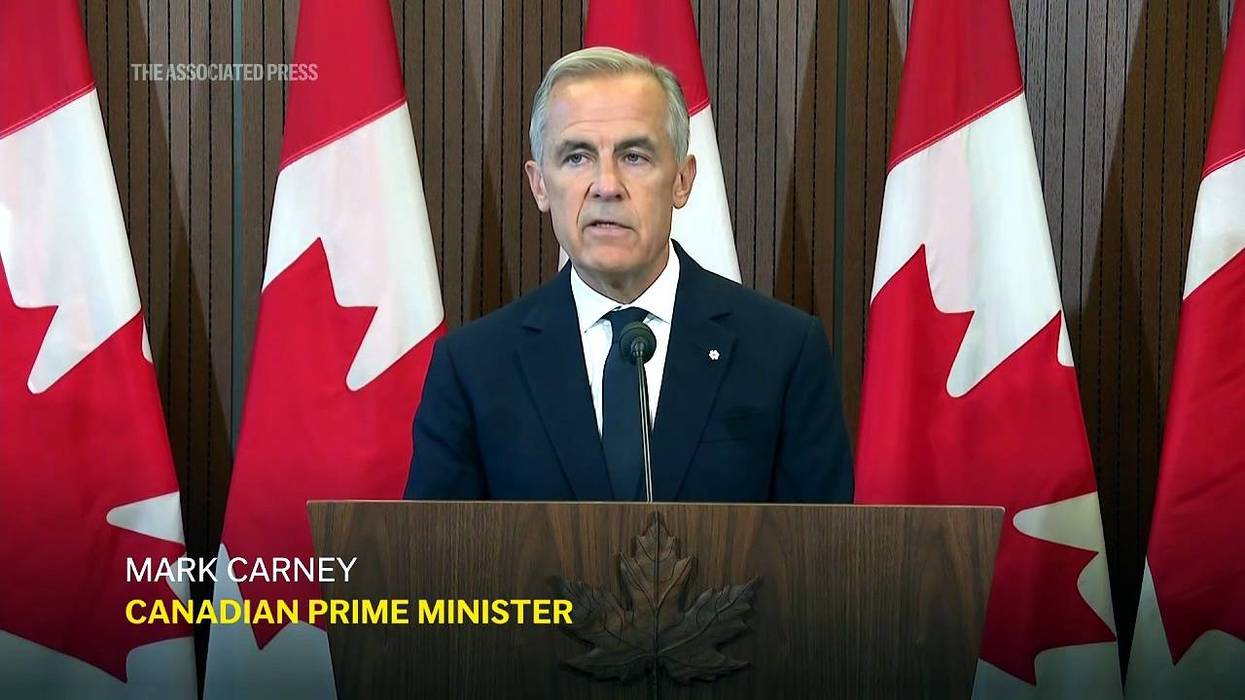
Relations deteriorated sharply Monday, with President Donald Trump telling Canadian leaders to “fall in line” or face consequences “far WORSE” than existing tariffs and Prime Minister Mark Carney accusing Washington of trying to subordinate Canada.
Minnesota Agriculture Commissioner Thom Petersen says the impact on Minnesota could be significant given Canada is the state’s largest single trading partner, and it's creating a lot of confusion.
"You might need a part for your combine coming into harvest in a few weeks," Petersen explains. "And you can't get it, or you're waiting, or you get a tariff charge added on to it, you have a load of whatever that gets caught up, is it on a tariff or not on a tariff."
Trump also threatened new 50% tariffs on Canadian vehicles, auto parts and steel, while Carney said U.S. trade demands showed Washington wanted to “destroy our major industries,” including autos, steel and aluminum.
Minnesota sent 24% of its total goods exports to Canada in 2025, worth $5.6 billion, according to the Office of the U.S. Trade Representative.
"I do have worries that this is not going to benefit our farmers and it comes at a terrible time," Petersen adds. "Some farmers are already dealing with maybe the worst drought we've had in a couple of years. We've just had the big announcement on Argentinian beef that, you know, really was a gut punch to farmers. And now, we have this tariff chaos that creates more uncertainty for farmers."
Finance Minister François-Philippe Champagne and three other Cabinet ministers are also expected Tuesday morning to share details of supports for workers affected by tariffs. Carney said earlier Monday that Canada may need to move away from matching U.S. tariffs dollar for dollar and instead use more targeted retaliation aimed at protecting Canadian workers and businesses.
“An attitude at the negotiation table that Canada is a subsidiary of the United States” is “not something we’re going to accept,” Carney said.
Carney was even more blunt in French.
“We learned during the negotiations that the Americans want to destroy our major industries, including autos, steel and aluminum,” Carney said. “That was one of the main reasons we said no. It was a bad deal.”
The fiery words from both sides show how U.S.-Canada relations have deteriorated since Carney walked away from trade negotiations with the Trump administration late Friday, triggering the president’s threatened 50% tariffs the next day on about $20 billion worth of Canadian goods.
Canada and the United States share one of the world’s largest trading relationships, with deeply integrated supply chains across autos, energy, agriculture and manufacturing, making a prolonged trade fight potentially costly for businesses and workers on both sides of the border.
Carney cast doubt on the U.S.’s dependability, saying Canada was finding reliable partners “everywhere in the world, except in the United States. Except in the United States. And Russia.”
Trump unleashes personal attacks on Canadian leaders
On Monday, Trump came back with further tariffs, warning that he would impose them on Canada's auto industry beginning next year.
“Canada has been ripping off the United States of America for years,” Trump wrote on social media, criticizing what he called the country’s “ridiculously high tariffs” on American farmers.
Carney said Washington’s auto-sector proposals would gradually have the effect of dismantling Canadian production.
“This is the most successful automotive partnership in history,” Carney said, referring to the deeply integrated Canada-U.S. industry.
Meanwhile, Ontario Premier Doug Ford unleashed his own tirade. In an interview with The Associated Press, he said Trump had underestimated Canadians’ willingness to endure economic pain rather than give in to U.S. pressure.
“We’re all in,” Ford said. “Up here, we’re at a fever pitch; everyone’s in for an economic war. They know they’re going to have to sacrifice.”
Trump responded in a social media post by attacking Ford personally, calling him “the less charismatic, intelligent, and overall unimpressive brother of the late, great, Rob Ford,” and once again referring to Canada's prime minister as “Governor Carney.”
Ford dismissed the insults: “If you think an insult from him hurts me? Well, bring it on, buddy, I’m ready.”
Ford is a Progressive Conservative whose party differs from that of Carney, a Liberal, but the two underscore broad political unity in Canada over the trade fight with Trump.
Ford threatens critical minerals and electricity
Ford said “everything is on the table” if the dispute worsens, including cutting off electricity and critical minerals from Ontario.
Critical minerals are increasingly important to U.S. national security and manufacturing. The Pentagon has sought more secure supplies of minerals used in military aircraft, missiles, munitions and electronics as Washington tries to reduce reliance on China, which dominates the mining or processing of several strategically important minerals.
Ford said Canada should also consider increasingly severe retaliation if Trump continues targeting Canadian industries, including oil and potash, while Ontario could raise electricity prices or stop sending power south.
“We power 1.5 million homes and businesses,” Ford said. “Everything’s on the table. I’ll do whatever it takes.”
Ford has used electricity as leverage before. During an earlier phase of the dispute, Ontario imposed a 25% surcharge on electricity exported to Michigan, Minnesota and New York. Trump responded by threatening to double tariffs on Canadian steel and aluminum before both sides backed away.
Auto industry becomes a central battleground
Ford accused Trump of not simply seeking a better trade deal but aiming to hollow out Canadian industries and move production south.
Ford said Trump wants to make Canada a vassal state.
“He wants to bleed out every single sector and bring them down to the U.S.,” Ford said.
The auto sector is especially important to Ontario, the center of Canada’s vehicle manufacturing industry. Plants and suppliers in Ontario are tightly integrated with factories in Michigan and other U.S. states, with parts routinely crossing the border multiple times during production.
Automakers including Ford, General Motors and Stellantis operate major assembly plants in Ontario, and the wider supply chain supports tens of thousands of jobs. Trump’s new threat of a 50% tariff on Canadian vehicles and parts puts that sector directly at the center of the escalating dispute.
U.S. Trade Representative Jamieson Greer said Monday that “the only reason Canada has auto production in the first place” was because of the 1960s Auto Pact, under which Canada used access to its market to encourage vehicle production north of the border.
Ford says he opposed preliminary deal
Ford also disclosed that he had opposed the preliminary agreement Carney was considering before Canada walked away from negotiations, and that he was unwilling to restore American liquor to Ontario store shelves as part of an agreement.
“I wasn’t going to put the booze back on the shelves,” Ford said. “I was ready to go out there and call a press conference … and say I’m not buckling over.”
Ford said he understood Washington had sought language late in the negotiations that would have restricted Canada’s ability to negotiate trade agreements with other countries without U.S. approval. Carney has called that demand unacceptable and a question of Canadian sovereignty.
Carney said the dispute also exposed a deeper divide over language and culture, saying protections for French and Canadian culture that Washington views as trade irritants are considered fundamental rights in Canada.
“Who does he think he is?” Ford said of Trump. “You gotta be kidding.”
(Associated Press reporter Rob Gillies contributed to this story)