


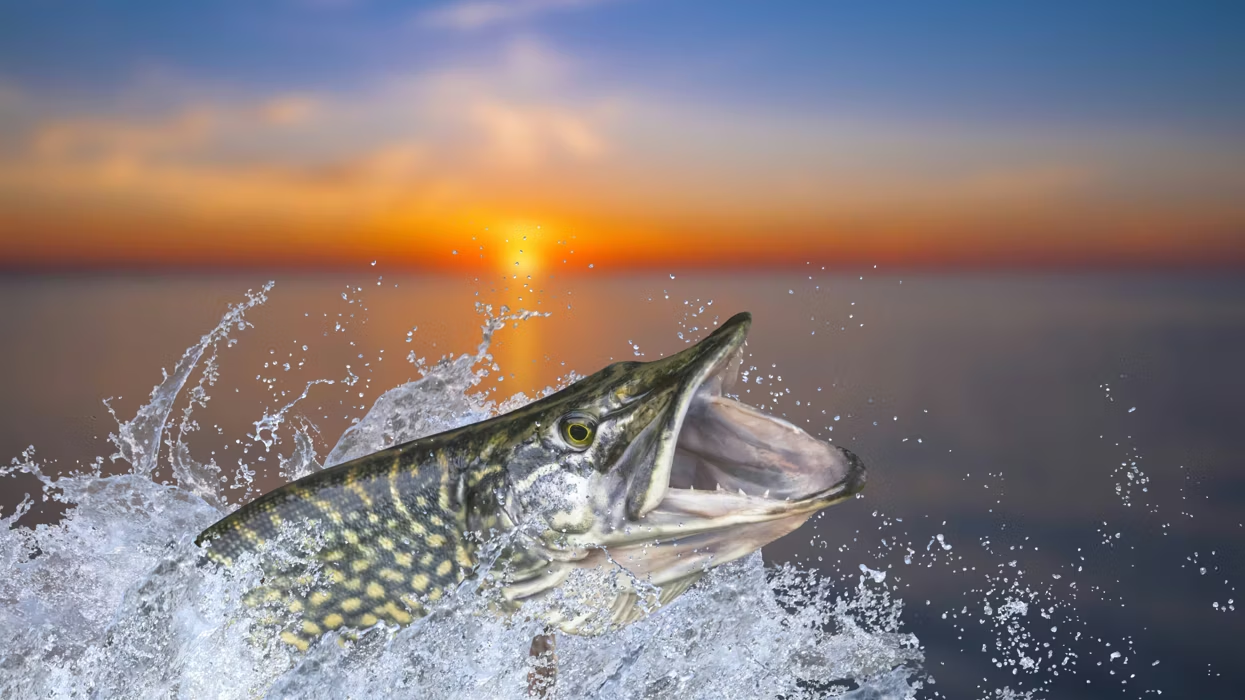
The Minnesota DNR says soaring temperatures are killing fish.
The state is in the midst of another heatwave, and one of several over the previous two months. That hot weather is also driving up water temperatures, and it some cases making it deadly for one of the state's prime resources. Temperatures Sunday and Monday soared into the high 90s, and the heat index was well above 100 across much of the state.
Minnesota Department of Natural Resources fish health supervisor Isaiah Tolo says this isn't anywhere near the largest fish kill they've seen. But it's happening a lot quicker than in previous years.
"Also just seeing 30% of our total mortality events, so 65 of those events happening in that kind of four day window, July 16th to July 20th, was out of the ordinary," Tolo explains.
He says this year there have been 217 fish mortality reports across 107 different bodies of water. The DNR says northern pike are taking the hardest hit so far. And that is unusual. Cold water fish like lake cisco and other salmonids become stressed when water temperatures exceed 75 degrees and cool water species like northern pike can handle temperatures up to 84 degrees.
"Generally, northern pike are not the number one species that we see in fish mortality events," Tolo says. "Usually we see species in lakes that are pretty impaired and don't necessarily have really strong populations of northern pike in them."
Water temperatures during Minnesota summers are increasing, and this summer is no exception. On average, according to climatology data, Minnesota lakes are about 3 to 4 degrees warmer and have lost an average of 10-14 days of ice cover in the last 50 years.
The continued warming trends accelerate decomposition and algae growth. Research also indicates that summer fish kills are likely to increase with climate forecasts.
Tolo says department officials will continue tracking upcoming weather patterns to see if the ongoing heat triggers another surge of mortality events.
The DNR is also asking the state's anglers to be cautious as well. Fish that are stressed due to warm water temperatures and low oxygen availability and are at a higher risk of experiencing angling mortality, which means fish are less likely to survive after being caught, handled and released.
Fish are also particularly susceptible to mortality in lake systems impaired by excessive nutrients, caused by urban and agricultural runoff.
Anyone can report fish mortality events they observe on the Minnesota DNR website. This webpage also includes details about what can cause these events.
“Reports from members of the public are an important way we receive information about fish mortality,” said Tolo. “Those reports reach an interagency team of fish and water quality professionals.”
It's far from the biggest fish kill the DNR has seen but they say it has happened faster than previous years
It's far from the biggest fish kill the DNR has seen but they say it has happened faster than previous years