


It’s tough to say what is happening to Minnesota’s reputation following months of unrest and economic instability during the federal immigration crackdown in Minnesota known as Operation Metro Surge. WCCO’s Laura Oakes has A Closer Look.
“Unprecedented invasion, occupation, siege, generational trauma.”
These are not very nice words, yet they are exactly some of the words that were used to describe the federal immigration crackdown that ushered in 2026 in Minnesota.
“Stability, civility, Fortune 500, highly-educated, calm.”
Those are nice words that traditionally have been used to describe Minnesota and its business climate. A place for families, solid jobs, business expansion in the outdoors.
What happened?
Let's refresh what happened to our state from roughly December, 2025 through mid-February, 2026.
At its height, 3,000 immigration officers, primarily from Immigration and Customs Enforcement and U.S. Border Patrol. Agents flooded small towns and bigger cities with the stated goal of rounding up undocumented immigrants who don't - or don't yet - have legal status in the United States.
Most visibly, the killing by federal agents of two Minnesotans, Renee Good and Alex Pretti. Once again, it put the Twin Cities on a national stage not seen since the 2020 murder of George Floyd, and the violent protests that followed.
“Hundreds of people walking through the streets, just blocks from where Renee Good was shot and killed on Wednesday,” you heard on the news.
“People are still waking up and kind of like responding to the horror of what happened yesterday, more and more people will be coming out,” another person tells the nation.
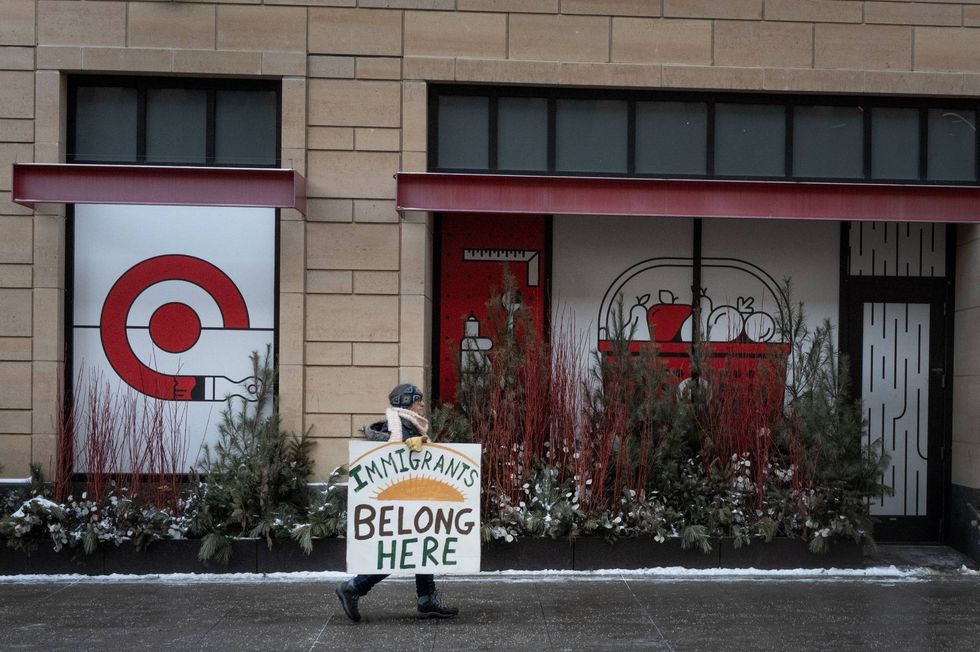
A demonstrator leaves following a protest outside of the Target store's corporate headquarters on February 02, 2026 in Minneapolis, Minnesota. The protestors were calling on the company's new CEO Michael Fiddelke to take a stand against ICE operations in Minnesota and Target stores.
(Photo by Scott Olson/Getty Images)
What was the fallout?
According to a Minnesota Star Tribune analysis, the operation at its peak matched immigration enforcement efforts in Los Angeles, which has 2.2 million undocumented immigrants compared to 130,000 in Minnesota.
“But the fact of the matter is they left us with deep damage, generational trauma,” said Minnesota Governor Tim Walz. “They left us with economic ruin in some cases. They left us with many unanswered questions. Where are our children? Where and what is the process of the investigations into those that were responsible for the deaths of Renee and Alex. So while the federal government may move on to whatever next thing they want to do, the State of Minnesota and our administration is unwaveringly focused on the recovery of what they did.”
The numbers compiled by Minneapolis city leaders are staggering:
- 76,000 additional residents experiencing food insecurity.
- $47 million in lost wages among people who have been afraid to leave their homes.
- Those lost wages led to a monthly need of nearly $16 million in rental assistance.
- Local businesses losing 10 to $20 million a week in revenue.
- An estimated $100 million hit to city businesses.
In the wake of it all, many ask why would anyone want to come here?
Minneapolis Mayor Jacob Frey begs to differ that the chaos amid the crackdown has tanked the area's reputation. In fact, he says it's just the opposite.
What I see is the arc of our story continuing,” said Frey. “It's not just the place where George Floyd was murdered. It's also the place that defended democracy and defended our republic, and I see this as a new brand of the city. One that of course we've known about for quite some time. People love their neighbors and they care deeply about them, but now the whole world is seeing it and they want to experience it for themselves. They want to come here. They want to see the city.”
“And so, no, the vibe I'm getting is not don't go to Minneapolis,” Frey continues. “It's a place of chaos. That could not be further from the truth based on the real people that I've talked to throughout the country.
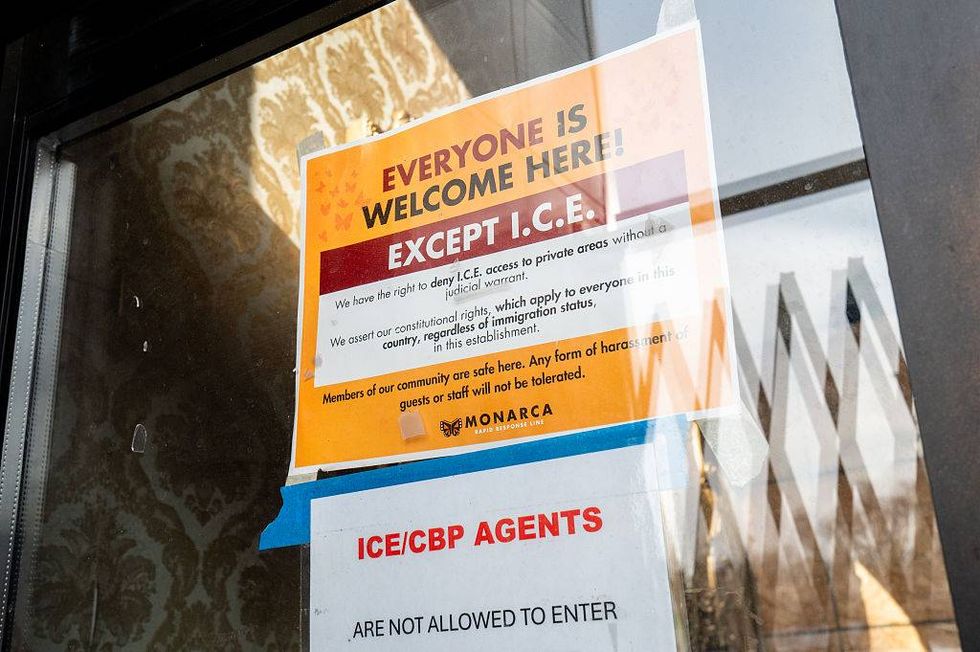
Messages are displayed in a window at the Quruxlow establishment on January 20, 2026 in Minneapolis, Minnesota.
(Photo by Brandon Bell/Getty Images)
What is the business climate?
Still, founder and director of the University of Minnesota Center for the Study of Politics and Governance, Larry Jacobs, says restoring the state's reputation will be a decades-long hurdle.
“The impact is on a number of fronts,” Jacobs explains. “Tourism is part of our state, and when you think of Minnesota these days, it doesn't sound like a peaceful place. It might intimidate, you know, a number of people, and that's gonna put, you know, a depressing effect on our tourism.”
“We also rely on our businesses attracting the best talent,” says Jacobs. “This is a state that has a remarkable number of Fortune 500 companies, and they need to get the best talent in the country and sometimes internationally. Are they now going to have more difficulty recruiting those folks who are gonna be intimidated from coming here? And will that have an impact on the stability of our employers if they struggle to keep, or attract top talent? They think, oh, maybe we have to leave Minnesota.”
On the business front, local CEOs are banding together to reverse the narrative that the Twin Cities is a place of chaos.
CEO of the Minnesota Business Partnership and former Speaker of the Minnesota House of Representatives, Kurt Zellers, says it's going to take some reminding of what Minnesota, its people, and its Fortune 500 workforce and headquarters economy are all about.
“Of the 30 large metropolitan communities in the country, we have the highest family dual income in the country,” says Zellers. “So, the husband works at Medtronic, the partner works over at Health Partners. Combined those two have an income now, it's highest in the country. Husband and wife, one works for Medtronic, another works for Mayo Clinic. That combined income, so there's great news here.”
But Zellers admits, the optics during the height of the unrest were not good, comparing our experience with a similar situation going on in Michigan.
“They went through, not anywhere near as dramatic, and that's a Democrat governor, Democrat legislature, Democrat mayor of Detroit,” Zellers explains. “They kind of took a different approach. Where, what do you need? How can we help you? And then how do we get you out of here sooner rather than later? And I think that approach is what we missed. I think some of it was factors out of our control. There were a few things with how Minnesota jails at a county and city level versus a penitentiary level, that that communication wasn't clear. I don't think on the administration side they came in and said, ‘here's who we want, here's why we want them, and here's how we normally do it.’ And I think that hampered our communication locally. But I think that all that kind of combined for really all the bad possible options at the same time. And then, what led to, we all went to our corners and decided to flip each other off from across the playground, right?”
As for tourism, leaders with Explore Minnesota are saying the same, continuing with their spring and summer “Star of the North” tourism campaign to draw visitors.
“I'm Brad, and I'm Patty. We are the Petersons and we're from Iowa,” they say in a new ad campaign. “The first time I really fell for Minnesota, I was probably 8-years old. Grandpa would take my brother and I.”
Whether it's a blip remains to be seen, but for now, the Minnesota Business Partnership’s Zellers says the focus needs to be not on what the rest of the world or country thinks of us, but instead, it’s about taking care of our closest neighbors.
“We talked about this the other day,” Zellers explains. “We brought together the chamber of hospitality, you know, a lot of the tourism folks. We look at it as, you know, how do we convince people from Florida to come up here? You know, if you ask Hennepin Arts, they'll tell you that the second largest pool of their customer base is from Fargo. Surprising, right?"
"There's a reason why the Twins call it ‘Twins Territory,’ not just the Minnesota Twins," Zellers adds. "Because they draw from Iowa, the Dakotas, South, North Dakota. So I think we need to make sure that people in Fargo and Sioux Falls and Hudson, you know, maybe Milwaukee, feel safe coming here. But then also know all the really great things to do in our state. So it doesn't have to be just convincing Californians or Texans to come up here. We just got to make sure, because that's where a lot of our business, it's like our trading partners with Canada, that's our biggest trading partner. All the others, all great, we always want to have a good tariff agreement with everybody else, but fix it with Canada and Mexico first. And then worry about the rest of the world. It's kind of the same thing with us in the Midwest here.”