


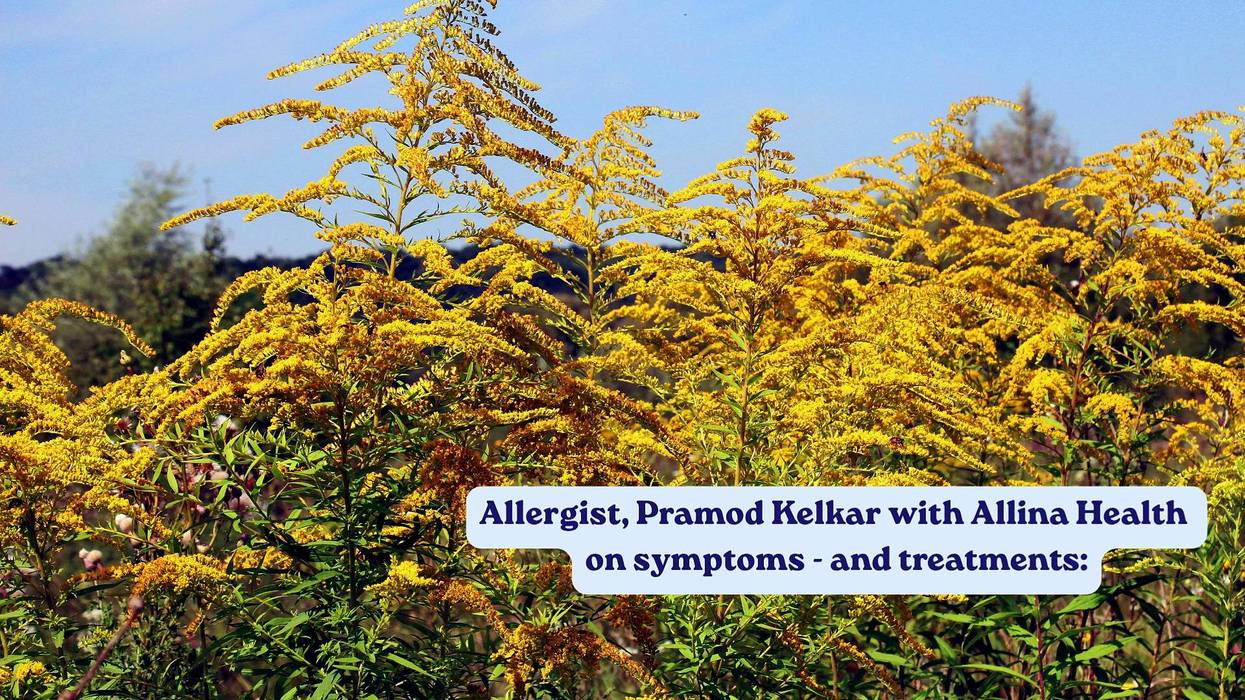
Your eyes are probably itching as you read this. And you're not alone. Pollen counts in the Midwest are kicking up some serious allergic reactions for people as August becomes September.
The central third of the U.S. is really "ground zero" for those classic hayfever symptoms and the current pollen counts in areas from Minnesota south to Arkansas, and from Colorado to the Mid-Atlantic are in the "high" range.
On Tuesday, for example, Minneapolis was at an 11.3 level according to Pollen.com. That's in a 1-12 range. Their forecast calls for levels above 9 all week, and mostly above 10. Clearly, this is high-season for tissue use.
Pramod Kelkar is a doctor of Asthma, Pediatric Allergy, Allergy and Immunology at Allina Health, and he talked to WCCO Radio about those seasonal allergies, what you can do to mitigate it, and if they're getting worse (hint: yes, they are).
What can you tell us about how elevated pollen levels are impacting people who have everyday allergies, and people who have asthma?
Kelkar: Right now we are in the typical ragweed season that comes in the fall time. This is very classic for Midwest ragweed allergies. The Midwest is considered capital of ragweed allergy, and typically people will get symptoms like stuffy nose, runny nose, sneezing, itchy eyes, watery eyes, red eyes. Some people also get allergy-induced asthma. So if they do have asthma, they will get asthma symptoms like coughing, wheezing, shortness of breath and chest tightness. And unfortunately, some patients have combination of both. They have allergies plus asthma. So they will get the nose and sinus problem, plus the respiratory issues.
In more recent years, the allergy window has been expanded, something that we have certainly seen in Minnesota. How is that catching people off guard?
Kelkar: With the climate change, the allergy season is extended by approximately a month at each end. So, typically we are seeing extended allergy seasons throughout the Midwest, and Minnesota is no exception. So we will have the springtime allergens starting early. People in the past would get symptoms beginning in April, but now they are seeing symptoms in March or sometimes even earlier. And in the past, the snowfall used to be earlier, but with the climate change now, snowfall is a little later. So the ragweed season and the fall allergy season gets extended in the fall time as well.
Also keep in mind there is mold allergy in addition to ragweed and tree pollens and grass pollen. Because mold allergy can be bothersome to patients in the fall time, especially when they're raking leaves in the garden because everything is wet. Everything is moist with the rain, and that can have significant mold exposure.
We've seen recently it has gotten harder to track how many people are being affected by these changes in pollen. How does that make your job a little bit more difficult, with trying to track how this is impacting people?
Kelkar: You know, nowadays there are many medications that are available over the counter. So, what is happening now is that people are using over the counter medications and not necessarily going to healthcare providers, because in the past, these medications used to be prescription medications. So it was easier to track patterns in allergy season. Now, because most medications are over the counter, people tend to use over the counter medications, so they are not reported in the medical system as much.
What advice do you have for people in terms of getting out to see their doctors? How they should be getting treated during this time and how they can avoid some of these side effects of heightened pollen?
Kelkar: If over the counter medications are helping you perfectly fine, you are welcome to use over the counter medications like antihistamines, nasal sprays and eye drops. But if they are not helping you, please note that there are many other treatment options available that are prescription medications, allergy shots, that can provide you immense benefit. And so in that case, seeing your healthcare provider or allergy specialist can be helpful because keep in mind that in Minnesota we all love our beautiful outdoors. And we don't want to deny anybody the pleasure of enjoying time outdoors when it's feasible when the weather is so great. So those people who have allergies should be taking the right treatment so they can enjoy the outdoors as much as they want. They don't have to be stuck at home.
Is there any truth to those that say just staying inside and avoiding those pollens altogether is the way to go?
Kelkar: For some patients it may be beneficial, but it's completely unnecessary. Because we have so many great treatment options available that in my experience, almost nobody has to sit at home when the allergens are outside. As long as they are in the right treatment plan, on the right treatment plan, they should be able to enjoy outdoors.
What are other things people should know about treatment?
Kelkar: So the two things I would like to add. One is there is something called a neti pot or sinus rinse over the counter, which is water, salt, irrigation of the nose and sinus. Very, very useful as long as people do it once a day, every day.
And the second thing I would like to bring to the listener's attention is there are some nasal sprays that are over the counter. They're called decongestant nasal sprays. They should not be used on a regular basis. They can be used only occasionally and not more than three days in a row because they can cause rebound congestion or addiction. So be careful about which nasal spray you're using. There are some nasal sprays that are OK to use continuously. There are some nasal sprays like decongestant sprays, they should be used only occasionally, and certainly patients can ask the pharmacist to get some more information on that.