


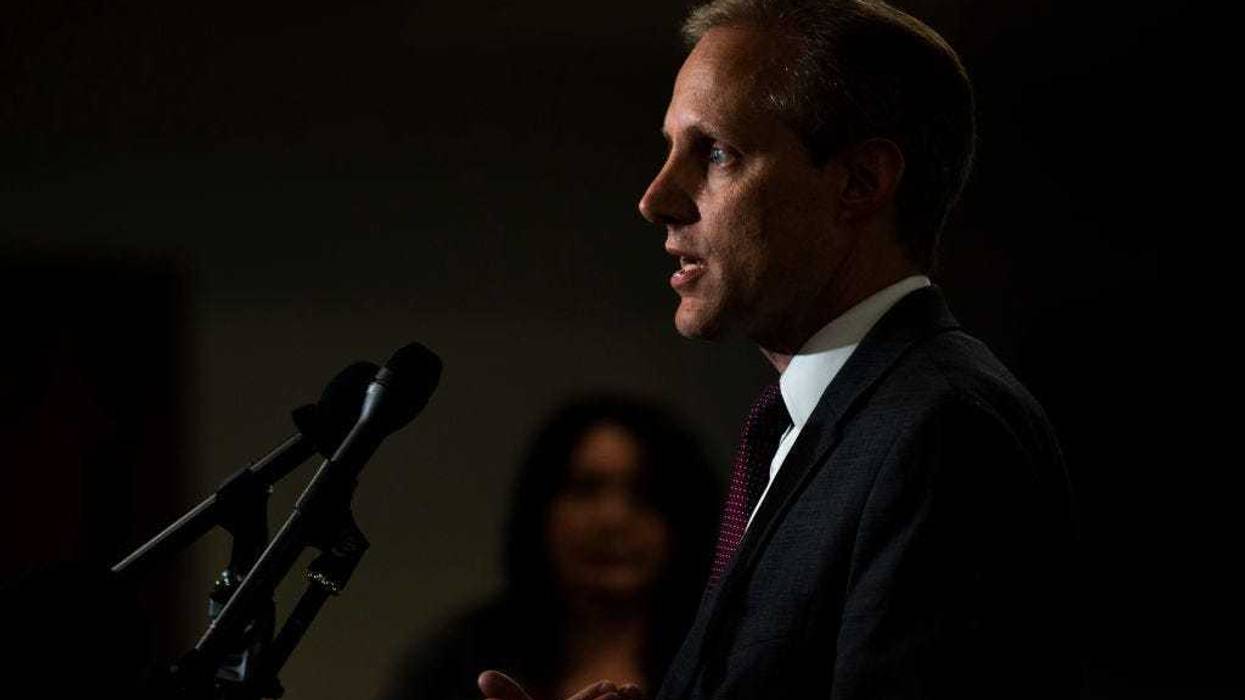
Minnesota Secretary of State Steve Simon is responding to the latest demands from the Trump Administration that would require states to transition to paper ballots and hand counts, which they say will eliminate more voter fraud.
"I think that's a recipe for chaos," Simon told WCCO's Adam and Jordana on Wednesday talking about counting ballots manually, by hand.
The Trump administration is reporting that if states don't comply, they risk losing millions of federal terrorism-prevention funds. The White House is telling states and high-risk urban areas they must submit plans to transition away from voting systems that use bar codes or QR codes to count votes and toward equipment that accepts hand-marked paper ballots.
“The plan, for all jurisdictions currently using such systems, must include a timeline and, if necessary, a funding request to eliminate ballot marking devices and utilize hand-marked paper ballots," FEMA wrote, saying funds would be withheld if conditions are not met.
Simon said comparisons are being made to other countries that still hand count, but they are not the same.
"And once in a while I see people pushing that, saying, 'well, what about France? What about Israel?' They hand count, yes," explains Simon. "But that's one contest on the ballot. Literally one, and they're able to do that. Here as any Minnesotan knows who's voted, you have, I don't know, a couple dozen? Sometimes three dozen or more."
Simon says complaints about how long it is taking to count votes this year in California's June election is nothing compared to what hand counting paper ballots would be during a general election.
"That's nothing compared to this, and we know that the way we do it now in all the states is not only more accurate, it's quicker and it's less expensive than hand counting," Simon explains.
In some cases, Simon notes, Minnesota does hand count ballots.
"So we do hand counts in some cases like in recounts where we try to check the math," he adds. "But that's just really a recipe for a lot of delay and a lot of chaos and a lot of doubt."
Simon adds that the federal government has been more involved in the process in the past.
"In a normal election we would have had active partnership in cybersecurity," said Simon. "We would have had them doing on-site visits, trying to poke holes in and find weaknesses in our cybersecurity systems. We would have had intelligence briefings by now at secure locations."
He says the state is now filling that void. But that has to be paid for by someone, if it's not the federal government.
"I don't want anyone to think that we're just sort of high and dry here," Simon adds. "Like, take cybersecurity for example. This is something that we can find consultants to do. We used to get it for free. We're having to spend extra money."
President Donald Trump’s false claims about a stolen 2020 election have created suspicion of voting machines among conspiracy theorists, with one of the solutions to replace those tabulators that count every vote with people who will do that by hand.
But research has shown that hand-counting is more prone to error, costlier and likely to delay results. The few counties that have attempted the massive task in recent years found the process more time-consuming, expensive and inaccurate than expected.
Simon also says that his office is not getting any support this year from the federal government to prevent voter fraud, which he says could actually lead to more fraud than already exists.
As for dictates from the Trump administration about how elections need to be run, Simon explains that the Constitution clearly lays out that elections are administered by the states, not the federal government.
The administration has also tried to limit when mail-in ballots can be counted, which was struck down recently by the U.S. Supreme Court.