

U.S. Interior Secretary Deb Haaland is in Minneapolis Tuesday at a public hearing led by the Not Invisible Act Commission.
The panel is working with the U.S. Justice Department to improve the federal response to missing and murdered indigenous people and human trafficking.
Minnesota Lieutenant Governor Peggy Flanagan, who is Native American, spoke to the group.
“There isn't a single solution to this problem, but there is an urgent and critical need for all of us to work together in whatever area we have as our expertise,” Flanagan said. “So we can create a future where all of our communities are safe and we'll be able to give some sense of closure to loved ones who've lost family members.”
Tuesday’s meeting was the commission's fourth so far. Three more are scheduled later this year. Minnesota leads the nation on this issue, recently opening the first Missing and Murdered Indigenous Relatives Office in the country.
In 2019, the Minnesota Missing and Murdered Indigenous Women (MMIW) Task Force and Wilder Research provided a report to the state legislature. The report included mandates aimed at reducing and ending violence against indigenous women, girls and two-spirit people. As a result, the legislature created the MMIR Office to provide support and resources for affected indigenous families and communities.
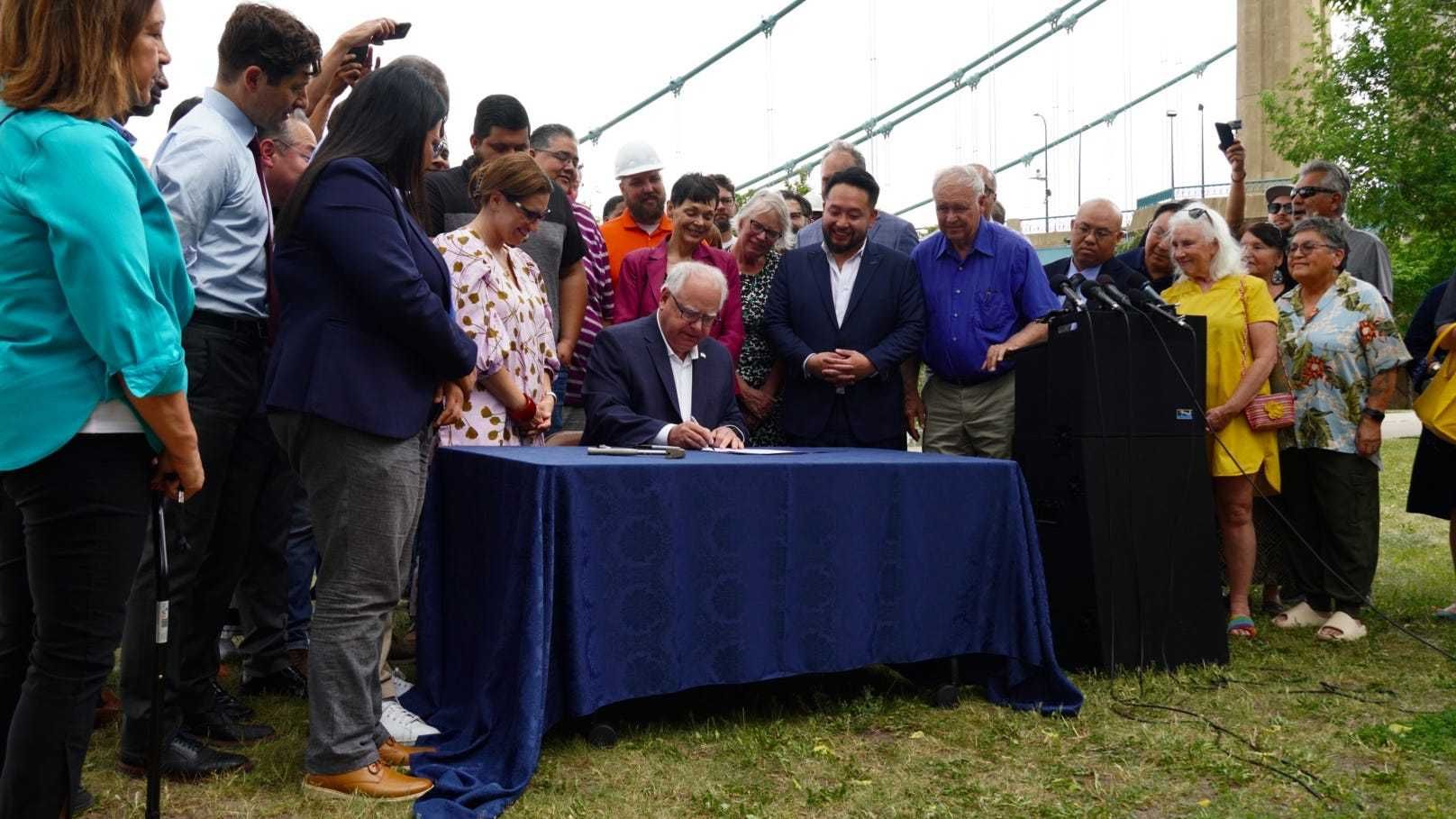
Gov. Tim Walz signed into law the legislation to establish the first-in-the-nation MMIR Office in 2021. Staff are housed in the Department of Public Safety Office of Justice Programs (OJP) and will work to implement the recommendations of the MMIW Task Force.
On Oct. 10, 2020, the Not Invisible Act of 2019 was signed into law as the first bill in history to be introduced and passed by four U.S. congressional members enrolled in their respective federally recognized Tribes, led by Secretary Deb Haaland during her time in Congress.
Secretary Haaland, in coordination with Attorney General Merrick Garland, is now working to implement the Not Invisible Act. They established the Not Invisible Act Commission, a cross jurisdictional advisory committee composed of law enforcement, Tribal leaders, federal partners, service providers, family members of missing and murdered individuals, and most importantly — survivors.
Missing and Murdered Indigenous Relatives (MMIR)
Indigenous people make up just one percent of Minnesota's population, but between 2010 and 2019, nine percent of all murdered girls and women in the state were American Indian.
In any given month, from 2012 to 2020, anywhere from 27 to 54 indigenous women and girls went missing in Minnesota.
Indigenous women, girls and two-spirit people are far more likely to experience violence, be murdered, or go missing compared to other demographics in Minnesota.