


(WTIC-AM) -- A union representing 2,500 nursing home workers threatened a walk-out on May first, unless meaningful progress is made towards 4 percent annual raises for each of the next two years.
Because the homes are largely state-funded, lawmakers and the governor would have to set aside more money to make the raises possible.
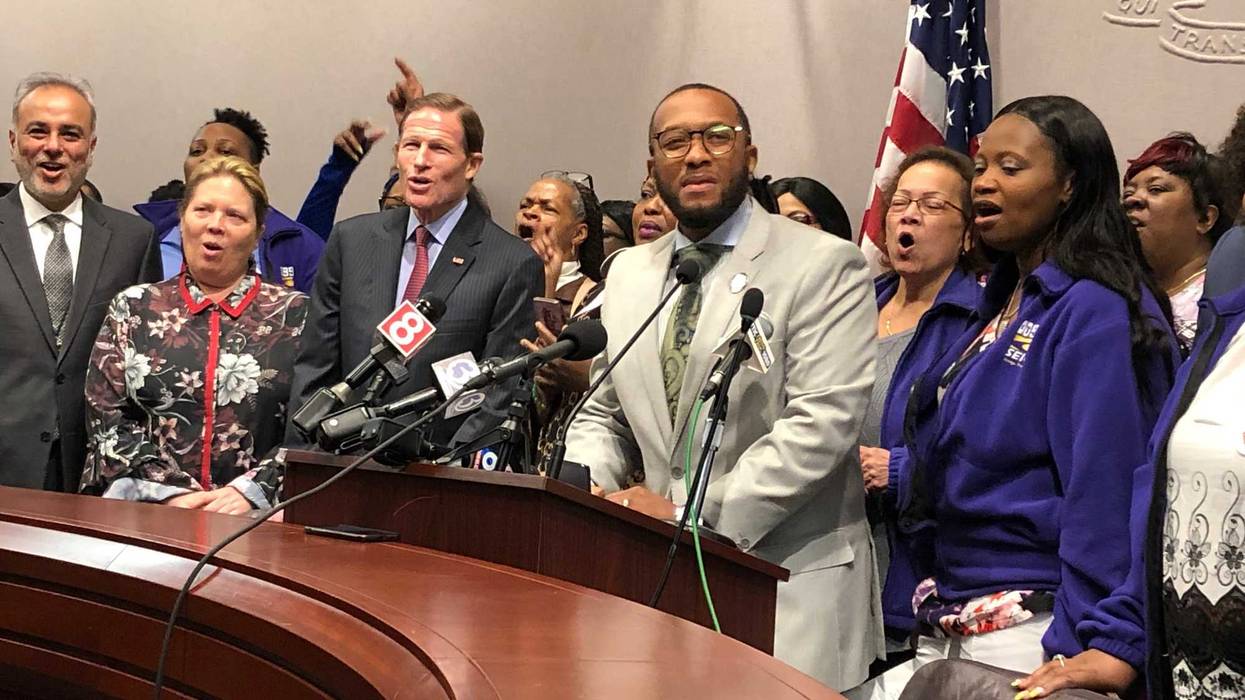
Healthcare Workers union President Rob Baril says the small or nonexistent raises given in recent years are not enough to care for workers' families.
"Every caregiver in this room knows what it is like to do their job," Baril said. "It is a labor of love, they give of themselves in caring for the sick, the infirm, and the elderly. But you cannot pay the rent with love. You cannot feed or clothe children with love."
General Assembly Appropriations Committee Democratic member Robyn Porter says this is something the state needs to do.
"I'm just hoping that the members of the appropriations Committee will take to heart what has been shared, and will make a way out of no way," Porter said.
But Republican Senate Minority Leader Len Fasano says Democrats continue to make promises they cannot afford.
Workers at twenty nursing homes around the state voted to authorize a strike.
Union officials say the raises would cost the state $40-million, with about half of that amount being covered by the federal government.
The Connecticut Association of Healthcare Facilities says nursing home residents might be in harm’s way if there is a large-scale strike.
The nursing home association says interrupting the continuity of care for residents can create trauma.
The homes say bringing in replacement workers abruptly can lead to health care issues.
The facilities are forced to pay deposits to staffing agencies for replacement workers.
They must also pay the cost of transportation, housing, and extra security.
At least some of those costs are passed on to the state.
The homes say the core issue is too little funding from the state through Medicaid.