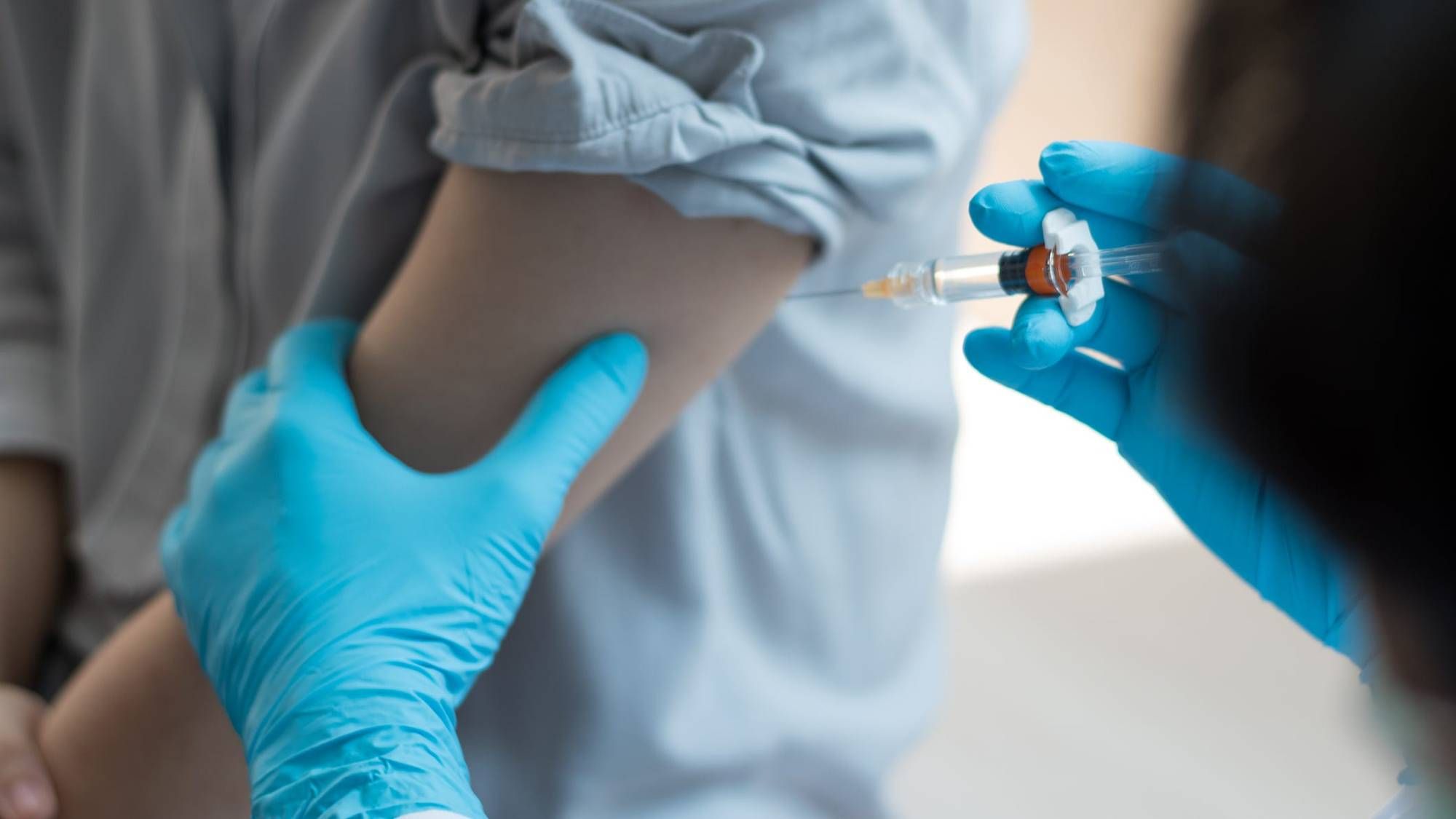



LANSING (WWJ) This upcoming school year may not look as normal as you might want for your children.
The Michigan Department of Health and Human Services (MDHHS) recommends children should continue to wear masks and social distance this upcoming fall to further mitigate the spread of COVID-19.
This is despite Friday's COVID-19 numbers being the lowest since the pandemic began in March of last year with 40 confirmed cases and 15 deaths in the past 24 hours.
"There's a significant portion of student population that is not eligible for the vaccines. Anyone under 12 is not eligible," Peter Spadadore with the Michigan Association of Superintendents Association told WWJ's Sandra McNeill. "That may change between now and the beginning of school, and that will change the factors going into the decision making."
The MDHHS stresses this is not an order, only a recommendation. The goal is to protect children who are not fully vaccinated, and to minimize disruptions to in-person learning.
56% of Michiganders 12 and older have received at least the first dose of the COVID vaccine, according to Michigan's COVID-19 Vaccine Dashboard.
"These vaccines are the reason transmission of the virus in Michigan is at the lowest point in a year," Michigan's Chief Medical Executive, Dr. Joneigh Khaldun, said in a press release. "However, as the school environment brings together large groups of individuals who may not yet be vaccinated, MDHHS is issuing this guidance to help protect Michiganders of all ages."
The guidance includes:
"Promoting COVID-19 vaccination for eligible staff and students.
-Correctly and consistently using well-fitted masks that cover the nose and mouth. See the CDC recommendations for when to wear a mask in school settings.
Social Distancing: Physical distancing, including cohorting children together to reduce potential exposures.
-Encouraging students and staff to stay home if sick or having COVID-19 symptoms.
-Encouraging students and staff to get tested for COVID-19 if having symptoms or if they are not fully vaccinated and are a close contact of someone who has COVID-19.
-Conducting screening
-Implementing contact tracing and quarantine, collaborating with the local health department.
-Promoting handwashing and covering coughs and sneezes.
-Implementing routine cleaning to help maintain healthy facilities.
-Avoiding crowded and/or poorly ventilated indoor activities (e.g., engaging in outdoor activities when possible and increasing ventilation for indoor activities)."