

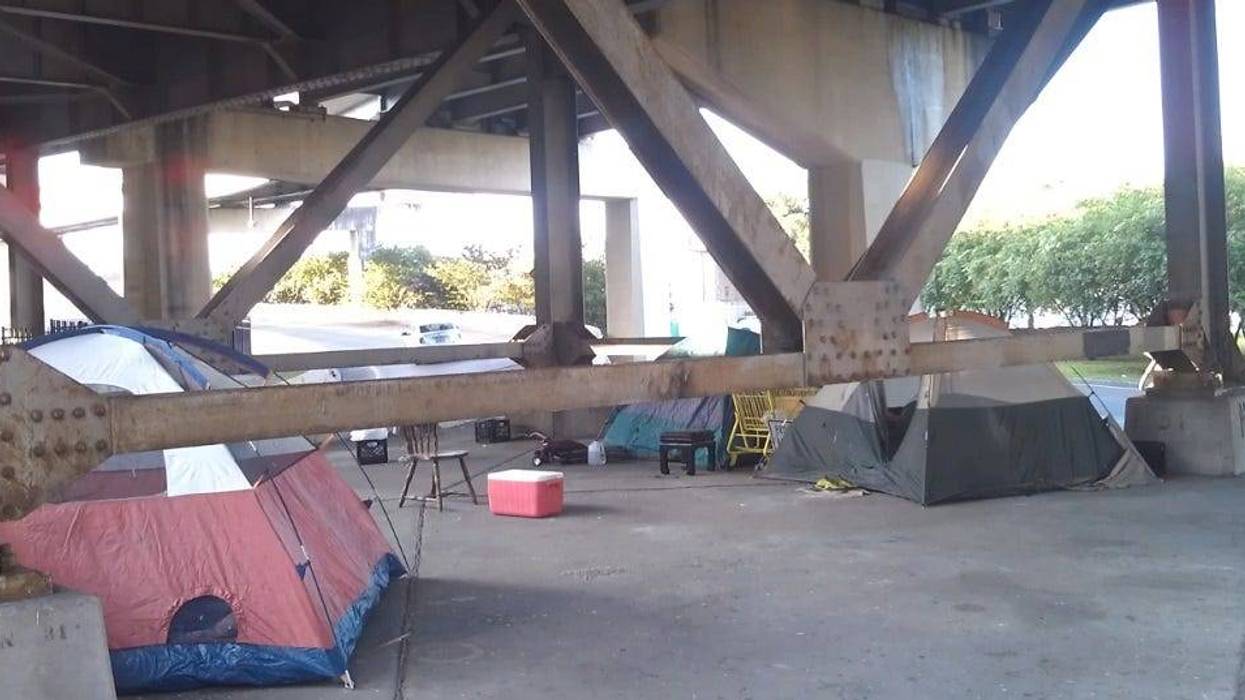

A bill that would criminalize sleeping on public property is awaiting a vote in the Louisiana House. The bill would also give each judicial district in the state to set up homelessness court programs.
Supporters of the bill say it's designed to help people out of the cycle of homelessness.
"The criminal justice system working in partnership with providers can make a dent in homelessness and related crime," Rep. Debbie Villio (R-Kenner) said while presenting her bill during a committee hearing last week. "This legislation reframes treatment not as a social service, but as a core public safety infrastructure."
Opponents say it would do the exact opposite.
"It's certain not the solution to homelessness," Unity of Greater New Orleans executive director Martha Kegel said to WWL's Tommy Tucker on Wednesday. "It's very expensive. It diverts resources from violent crime and unfairly punishes people for being poor."
In her testimony before the House Judiciary Committee, Rep. Villio said getting the criminal justice system involved in the homelessness issue would help the unhoused find their footing.
"When the systems are aligned as called for in this legislation, they can function as coordinated points of intervention. It transforms traditionally punitive touchpoints into stabilizing ones," Rep. Villio said.
Kegel argues that making homelessness a crime will add to the burden already carried by local police and courts and reduce the effectiveness of her group's and similar groups' work.
"An apartment with case management services is very cost effective compared to the cost of putting people in jail and really clogging up the criminal justice system and diverting it from what it's supposed to be focusing on: violent and real crime," Kegel said. "A lot of people who are homeless are actually working. One thing that arresting them does is it makes them lose their job. If they're in the disabled category, it completely disrupts our process of getting them housed because they're missing appointments with Social Security. They're Missing appointments with their case manager. They're missing appointments with their doctors. Then, often they get discharged from jail in the middle of the night, and they don't have their medications. They don't have their ID any more. It completely undermines the work we're doing."