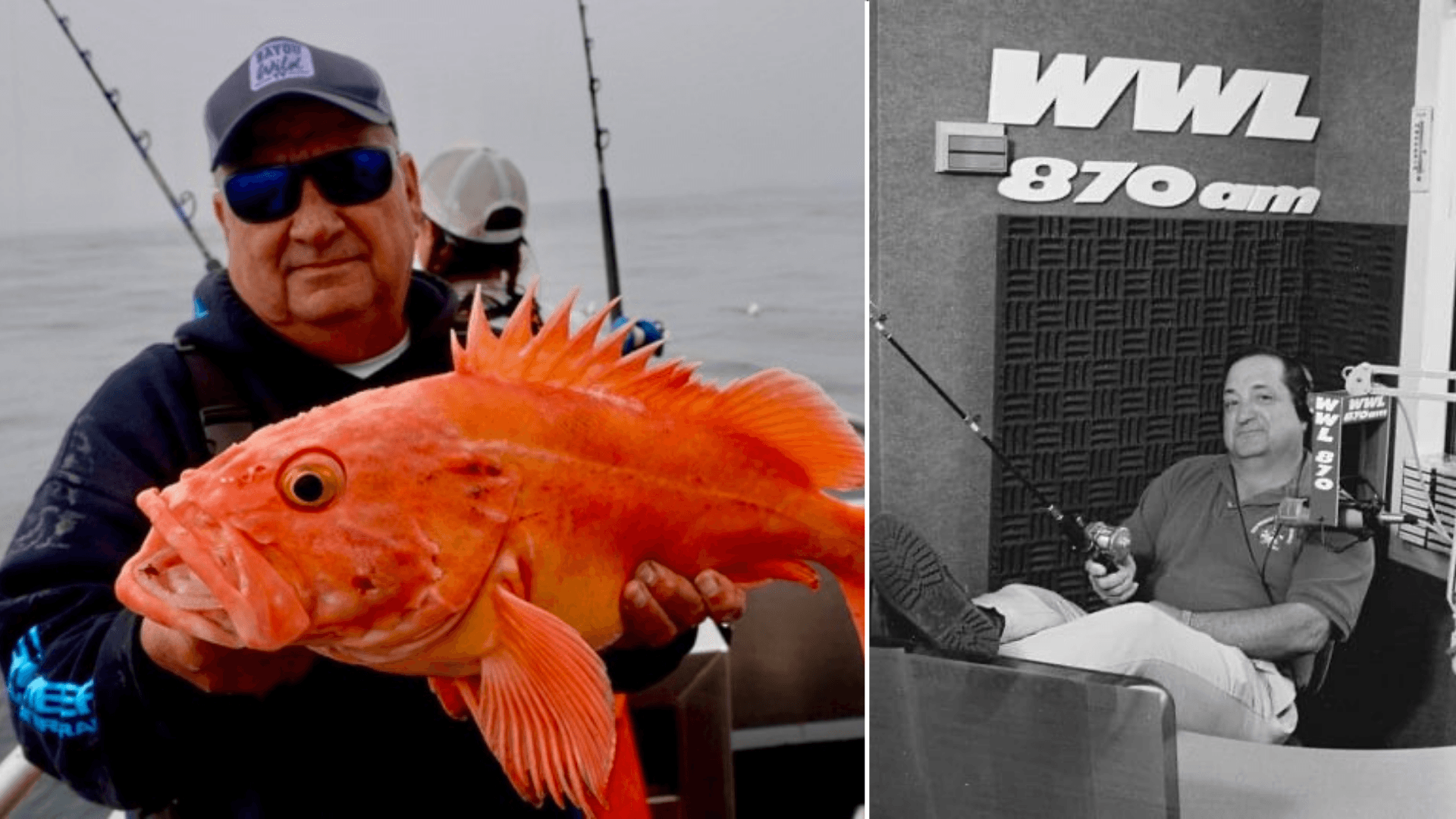


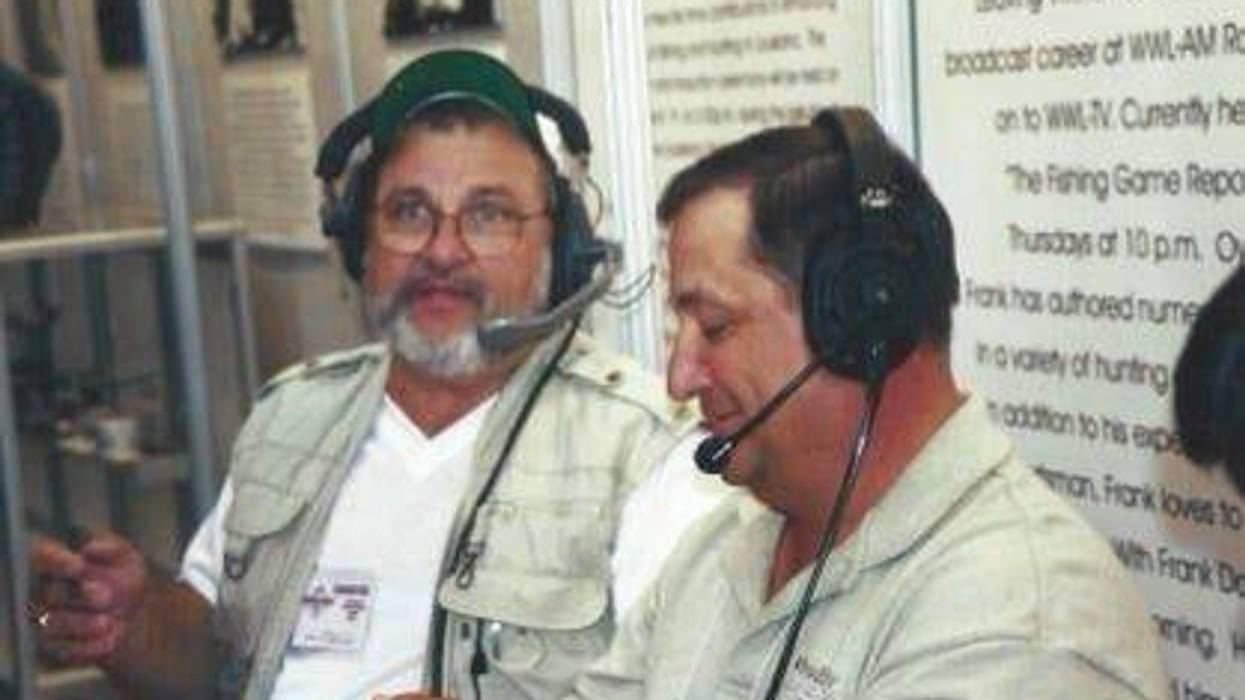

For many Louisiana outdoors lovers, Saturday mornings from 5-7 a.m. were a tradition. Those were the hours friends and families would tune into WWL to hear stories and glean information from Don Dubuc while prepping gear at the fishing lodge, taking a drive out to the marsh for a duck hunt, or on the boat launch right before shoving off.
Soon, Saturday mornings in Louisiana between 5 and 7 a.m. won’t ever be quite the same. Last Saturday, Dubuc announced his retirement.
This week, Louisiana's outdoor guru appeared on WWL to talk about his life, the leap of faith he took that led to a historic career in outdoor journalism, and what he plans to do in retirement.
Below are a few highlights from this week's interviews, along with audio players containing the full segments.
And remember to tune in on Saturday, February 7th, for the final episode of Louisiana Great Outdoors with Don Dubuc.
Don Dubuc on being inspired by Frank “Naturally N’Awlins” Davis to start a career in outdoors journalism
“The guy who inspired me was Frank Davis. Sometimes in life, you have these moments of epiphany. I remember I was sitting on my patio barbecuing. I had the radio on, and this guy Frank Davis was on, and he was talking about hunting and fishing. I said, ‘That’s what I want to do.’ From that moment on, I worked towards getting that.”
“I started off writing about the outdoors,” Dubuc tells Newell Normand. “There was a special moment, and this really serves for people who have their eyes targeted on a particular career… I sent a query to a national magazine. The editor came back with a rejection notice. But he said, ‘This isn't what I’m looking for, but don't give up. You've got a talent.’”
“That was a motivation for me to continue, and I ended up writing for magazines: Louisiana Conservationist, Louisiana Game and Fish, Louisiana Sportsman, and Louisiana Outdoors. Eventually, I got a newspaper column in the St. Tammany paper, the Slidell paper, the Mandeville paper, and the Bogalusa paper.”
From there, Dubuc's writing career evolved into a career in radio and TV.
“I walked into a small, 250-watt lightbulb radio station in Convington and talked to the station manager. I pitched an idea. He bought into it and started a 15-minute show right after Swamp Shop. That grew. Finally, I moved to a Slidell station and was competing with WWL at the time… I formed a network in 1989 and syndicated the show all over Louisiana. Finally, WWL came to me in 1996 and said, ‘We’re ready for you. We either want you to flagship from us, or we want ot be your New Orleans affiliate.’
There wasnt much to think about, says Dubux. “I came to WWL and never left.”
Eventually, Don Dubuc took over for the man who inspired him to pursue a career outdoors.
“When Frank Davis—my idol, my mentor—could no logner continue at WWL (TV) with the Thursday fish and game report, he told them, 'If you’re going to continue this feature, this is the guy.’ I did Frank’s fish and game report for several years and then came right back to the radio. Tomorrow will be the final show. I’m looking for ward to it. I’m going to get a chance to thank a lot of people. SPonsors loyal listeners, and my field staff who was a very important part of that program.”
Don Dubuc on his close friendship with Hokie Gajan
Dubuc and former Saints fullback and longtime color analyst for WWLradio, Hokie Gajan, became friends after partnering for features on the Saints Sideline report. Dubuc would take Hokie, a lifelong outdoorsman, on wildlife excursions.
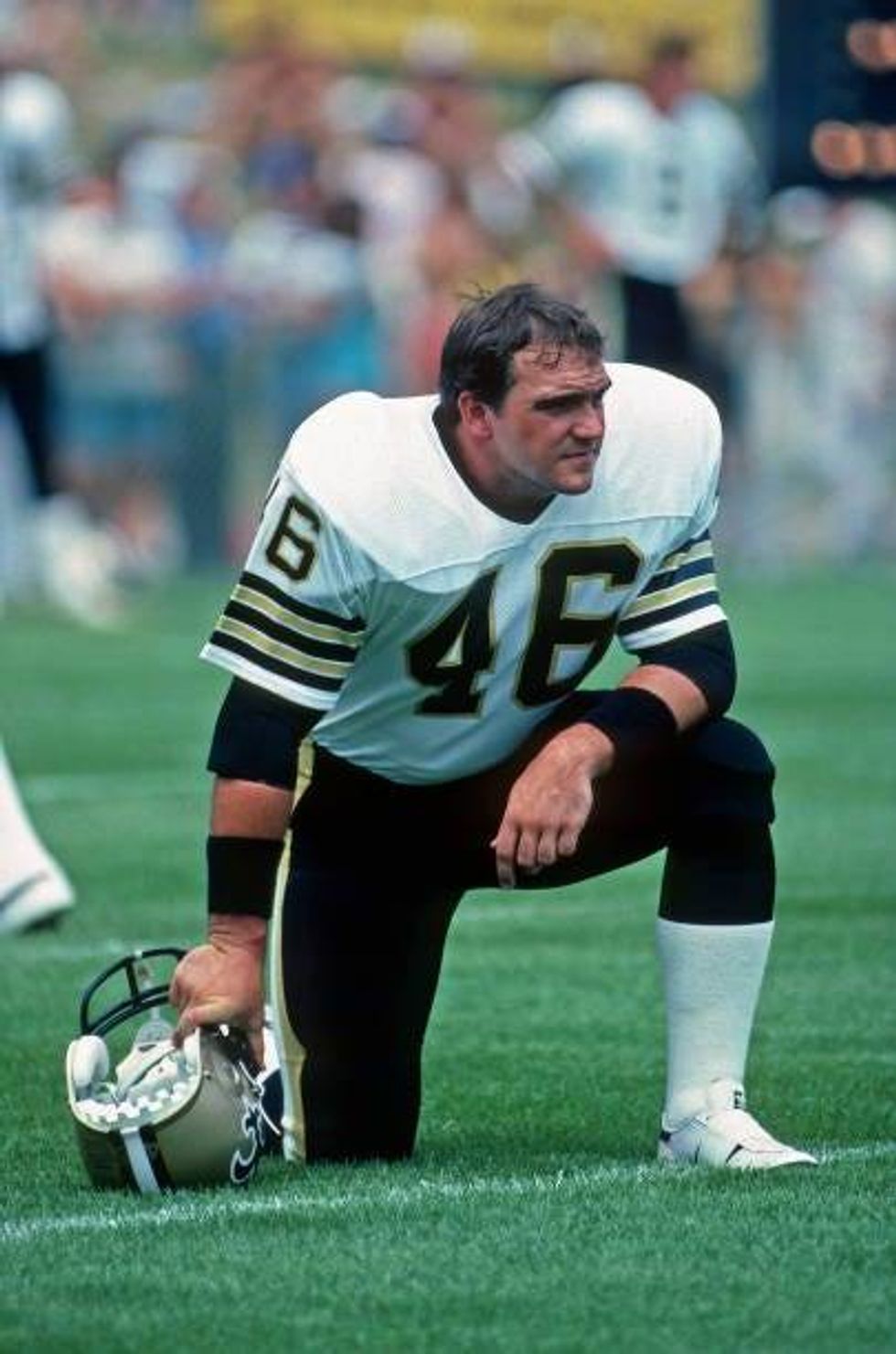 Getty Images
“Hokie was a natural. He grew up an outdoorsman just like I did,” says Dubuc. “We only lived 20 minutes apart on the North Shore. After we met and did some features together on Saints Sideline, we became friends. People thought we were brothers; we looked close enough alike and talked and acted similarly."
Hokie Gajan passed in 2016, but Dubuc says not a day goes by where he isn't reminded of his friend.
“I’ll go to a place where we went I see someone we knew. He was a great guy, a great friend. And I’m just sorry we lost him so soon.”
Dubuc explains that although Hokie Gajan was known for his gladiator-like strength and ferocity on the football field, earning him the nickname ‘The Bayou Bowling Ball,’ in his personal life, he couldn’t be any more different.
“I learned a whole different side of Hokie Gajan... Most people see his film, and he’s a crushing, bruising fullback. He was a big, strong guy, impervious to pain. He was incredibly strong."
“One of his friends had a mentally handicapped child,” Dubuc explains. “This kid adored Hokie. He’d take him in his arms and treat him like his little baby… They'd play games and sing the Barnie song. You don’t associate a guy like Hokie Gajan with having that very soft side, as he did. He was a great family man. Family came first, then hunting and fishing, then football… Drinking a cold beer was up there, too."
Don Dubuc’s most memorable hunting trip turned award-winning short story: “The Saint Hokie Turkey.”
Dubuc explains that, later in his life, Hokie didn’t care much for killing turkeys. While he was an excellent hunter, he cared more about guiding others to them.
“When you hunt turkeys, you go out in the evening, and you find where they fly up to roost and spend the night," Dubuc explains. "Then you know where the turkey is and go back the next morning. The turkey is the hardest animal to hunt in North America. Hokie was very good at it. And he went out, and he would find the turkey on the roost. When he came back to camp, he would tell you: 'I got one put up for you.' He didn't want to take the turkey; he would let someone else get it.”
After Hokie died, Dubuc went on a hunting trip to Kansas.
“It was a tough hunt; we weren't seeing a lot of birds. The last day comes along, and I say were going to hunt 'til about 10 o'clock, then were going to jump in the truck and head straight back to Louisiana... We’re driving in the dark. There are 1,000 trees. And I said, drop me off right here. I walked in and sat underneath the tree, and just when I started to call at daylight, there was a turkey sitting in the tree above my head. Out of 1,000 trees, I picked the one with the turkey," Dubuc recalls.
“I ended up shooting the turkey—one of the biggest I’ve killed in my life. He’s on my wall right now. The reason I call him the Saint Hokie Turkey is that as we headed back to Louisiana. I remembered a dream I had the night before. In the dream, Hokie came up to me and said, ‘Don, I got one put up for you.’”
“So whether you believe in coincidence or believe in divine intervention, Hokie put me onto that turkey," Dubuc says.
Shortly after Dubuc wrote about the experience.
"I wrote a story about it, got it published, and it won awards. Because you can’t make something like that up.”