



We hear a lot about how conditions in America’s big cities might improve if Republicans could win elections there. Is that possible? Sure. But in these conversations, we are almost always missing important historical context, and we end up asking the wrong question.
I don't mean nobody with an R next to their name ever campaigns in a city, or ever wins. Obviously they do. There are a handful of medium sized cities with Republican mayors, urban districts represented by Republicans in statehouses and Congress. They do exist.
But what never gets talked about around here is that over the last several decades, Republicans built an electoral strategy that simply does not require them to compete seriously for urban majorities. That was a choice they made - nobody else decided that for them. And, to their credit, it has worked extremely well.
Donald Trump won rural voters 69% to 29% in 2024. Kamala Harris won urban voters 65% to 33%. The urban-rural divide has gotten bigger over the few election cycles and that trend is likely to continue.
I don't think the right way to understand this is that Republicans simply “gave up on minority voters,” although there are many who could make that case.
Trump did better with Hispanic voters in 2024 than in 2020 or 2016. He got 48% of the Hispanic vote, compared with 36% four years earlier. He improved with Black and Asian voters, too. He loves bragging about this.
But that doesn’t mean Republicans rebuilt the party around some newly diverse coalition (as you’ll likely see in the midterms and in 2028, when these gains vanish. @ me, bro). Trump got more nonwhite voters to join the coalition Republicans already had. That’s different from changing the coalition itself to compete for diverse majorities. Republicans haven’t necessarily given up on nonwhite voters, but they’ve definitely given up winning places where lots of different kinds of voters have to be held together.
Winning in cities is a lot of hard work
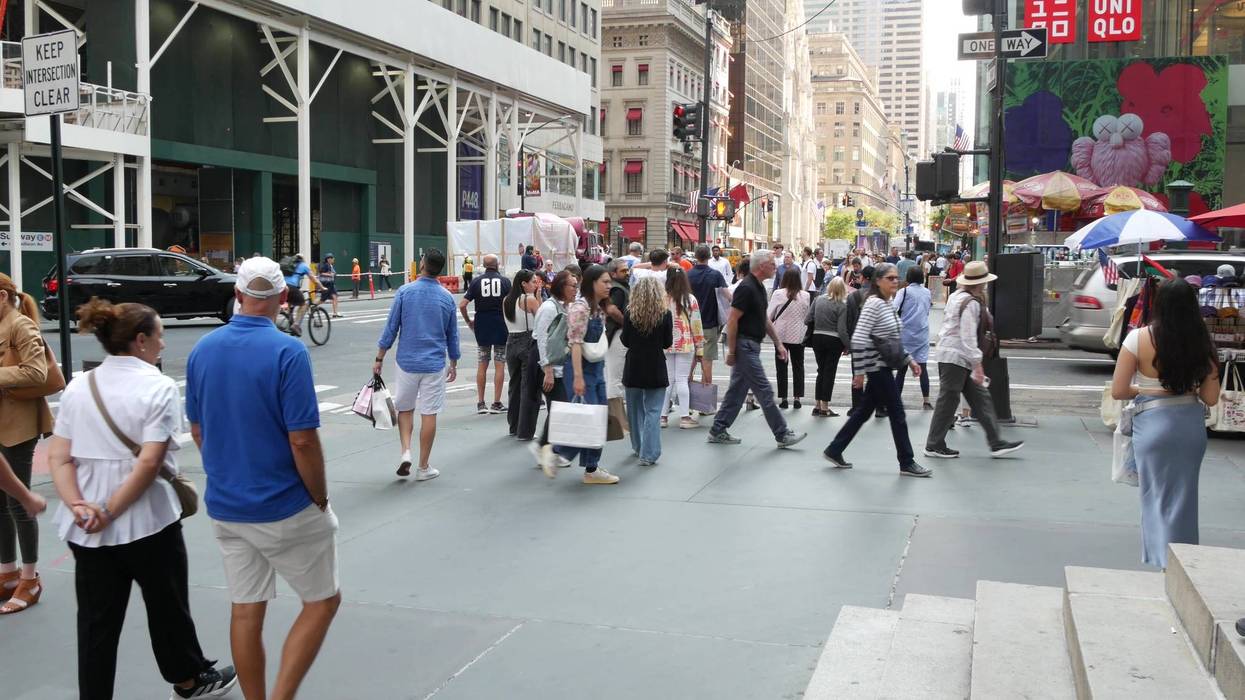
Think about what it takes to win a big American city.
You need Black voters and white voters and Hispanic voters. You need rich people and poor people. Catholics, evangelicals, Jews, Muslims and people whose most deeply held religious conviction is wearing the same Saints jersey every Sunday morning.
You need college professors and construction workers. You need queer couples and retired couples and immigrants and cops and bartenders and people living in million-dollar houses three blocks away from people living below the poverty line.
These people do not necessarily agree with each other very much.
So winning a place like that requires coalition building. It requires persuasion, and persuasion is really hard. It's much easier, politically, to find a group of people who already have a lot in common, figure out what makes them angry or afraid or enthusiastic, and then hammer those issues as hard as possible.
This isn't an insult to rural voters. Rural voters aren't stupid. Rural America isn't one giant homogenous blob, either. There are Black farmers and Hispanic small-town communities and college towns and union households and all kinds of weird little pockets of America hidden underneath the giant red paintbrush that the cablecritters on TV use on election night.
But as a whole, yes, rural America is less racially and culturally diverse than America's biggest metropolitan areas. And Republicans have built a political machine that is extremely good at winning there.
This didn’t happen overnight, and it’s tempting to draw a straight line from Richard Nixon to Donald Trump and call the case closed. But the modern political geography of America indisputably has roots in the realignment surrounding the Civil Rights era.
It all goes back to the 1960s
The Democratic Party's embrace of civil rights in the 60’s helped break apart the old Democratic “Solid South.” Republicans were increasingly able to compete for white Southern voters, and Nixon's famous Southern Strategy sought to capitalize on that political realignment and the racial backlash surrounding it. The party was deliberately changing direction on race and civil rights so they could snatch up these voters. Don’t believe me? Ask Lee Atwater.
That didn't suddenly make every city Democratic and every farm Republican. The political map didn’t just snap into its current shape after Nixon. The urban-rural divide took decades to harden. Rural voters moved increasingly Republican, cities moved increasingly Democratic, and all kinds of things helped drive it: race, religion, education, economic decline, population loss.
But eventually Republicans discovered something very important - they really could win this way! They could get absolutely annihilated in cities and make up for it by running up gigantic margins everywhere else. And once that worked, the math started rewarding them for doing more of it. It’s like a socket wrench that only turns one way.
If you're running for president, you don't actually have to win Philadelphia. You don't even have to come particularly close. You just have to lose Philadelphia by few enough votes that the rest of Pennsylvania can make up the difference.
You don't have to persuade a majority of voters in Detroit if you can produce enormous margins everywhere else in Michigan.
It's all just math. And if the math tells you that you can control Congress, win Senate seats and win the presidency while getting absolutely obliterated in America's biggest cities, why would you spend a fortune trying to reinvent your party to win those cities?
That's the bargain Republicans made.
Constantly smearing cities makes winning them even harder
Lots and lots of Republicans are perfectly comfortable expressing open contempt for cities and the people who live in them. The messaging is everywhere - Democratic cities are lawless, chaotic hellholes crawling with junkies and criminals and parasites. I’m old enough to remember when Sarah Palin started talking about “real America” as if city dwellers were effectively aliens inside US borders.
Once you accept that you don't need to win cities but just need to win enough everywhere else, your plan has to change. You don't need to spend as much time asking, “How do we convince people who disagree with us?” You can spend more time asking, “How do we make sure the people who already agree with us show up?”
Persuasion gives way to mobilization. And grievance is really, really good at mobilization.
If I convince you that your taxes ought to be lower, maybe you'll vote for me.
But If I convince you that your way of life is under attack and that the people on the other side hate you and your family and your church and everything you care about?
Buddy, you're crawling over broken glass to get to the polls.
That's powerful, and Republicans are very good at it. They simply don’t do persuasion anymore. They don’t want to and they don’t need to. At best, they offer individual voters a chance to locate themselves inside the coalition Republicans have already built.
But it comes with a cost. Because eventually you become extremely good at speaking to one kind of electorate and increasingly bad at speaking to another. And then we act shocked when Republicans can't win cities, or act like Democrats had anything to do with it.
What does this look like here at home?
New Orleans is actually a pretty good place to see what this looks like in practice.
Forget the fact that New Orleans hasn't elected a Republican mayor since Reconstruction. That's interesting trivia, but we're talking about the modern Republican Party here.
Look at our mayoral elections now. The real contest isn't Democrat versus Republican. It's Democrat versus Democrat. The Republican candidate, if there even is a serious one, is usually way down the ballot.
Rob Couhig ran as a Republican for mayor in that absolutely bonkers post-Katrina election in 2006 and got about 10% of the vote. He tried again four years later and got 5.5%. In 2021, Republican Vina Nguyen finished second to LaToya Cantrell, but "finished second" is doing a lot of work there. Cantrell got nearly 65%. Nguyen got 13.5%. And in 2025, with an open mayor's office and voters pretty obviously hungry for change, the only Republican on the ballot got 2.2%. Do you even remember that person’s name?
That's not a party competing for control of City Hall. That's a party that has decided City Hall is somebody else's problem, and given up.
One thing that’s fascinating is that we actually got a brief glimpse of what a Republican could look like when the party seriously competed for New Orleans voters.
Joseph Cao.
In 2008, Cao somehow won Louisiana's 2nd Congressional District, which at the time included almost all of New Orleans and was about 60% Black. He became the first Vietnamese American elected to Congress and the first Republican in generations to represent that heavily Dem district.
Now, there should be a Superdome-sized asterisk here.
Cao was running against William “Dollar Bill” Jefferson, who was under federal indictment on corruption charges after the FBI famously found $90,000 in cash in his freezer. Hurricane Gustav also pushed the congressional election away from the November presidential election, producing an unusually low-turnout December vote. Cao won 50% to 47%. A truly once-in-a-generation bizarre confluence of circumstances made that victory possible.
But once he got to Washington, he behaved like somebody who understood that representing a diverse urban district meant you couldn't just vote the Republican Party line and call it a day.
He worked across the aisle. He was the only Republican in the House to vote for the first House version of Obamacare. He took positions on gay rights that got him attacked by conservative Christian groups. He was repeatedly finding himself at odds with Republican leaders because he was trying to represent a largely poor, minority district.
In other words, he had to do exactly the thing I’m saying Republicans have given up on doing - coalition building.
And then reality returned. In the 2010 midterm shellacking, Republicans picked up a monster 63 House seats nationwide, but Cao lost, and it wasn’t close. Cedric Richmond beat him 65% to 33%. Cao was one of only a few Republican casualties in an enormous Republican wave.
A Republican can win a diverse urban electorate. Cao literally did it. But it required extraordinary circumstances, a spectacularly damaged Democratic opponent, crossover appeal and a Republican willing to depart from his own party when he thought his district required it.
And even then, he lasted one term.
So what's the lesson the national Republican Party is supposed to take from that? Spend years building a different kind of Republican Party capable of getting to 45 or 50% in New Orleans? Or spend those same resources running up the score on the Northshore where you're already winning 70-30?
They chose the second one.
No fate but what we make
Look around the country and the larger pattern is unmistakable. The Republican Party has become extraordinarily successful in rural America while becoming almost irrelevant to the governance of many of America's largest cities.
Again - that was a choice they made and continue to make. That’s the chickens coming home to roost from decades of political incentives telling Republicans that losing cities is totally fine as long as they're winning enough places somewhere else. If you think they’re gonna put very much effort into trying to get that socket wrench going the other way, you’re nuts.
Democrats have their own version of this problem. Democrats can run up absurd margins in cities while becoming so politically alien to rural communities that huge portions of the map are basically conceded before the campaign even starts. That's not healthy either!
A functioning two-party democracy ought to punish a political party for writing off huge groups of Americans.
If Democrats were losing rural Louisiana 85-15, they should desperately want to know how to turn 15 into 30. If Republicans are losing a major city 75-25, they should desperately want to know how to turn 25 into 40. Instead, both parties have increasingly learned that there are places they can simply afford to lose.
That's the real problem.
Republicans made a series of choices about which voters they wanted most, which resentments they could cultivate, which fears they could weaponize, which communities they could organize - and losing cities was part of the price.
And after decades of winning elections while paying that price, they've been given remarkably little reason to change course.
The problem isn't that Republicans “can't win” cities. The problem is that our political system allows either party to decide that millions of Americans simply aren't worth persuading.
It's not so much they can't win - it's that they don't even really try
It's not so much they can't win - it's that they don't even really try


