

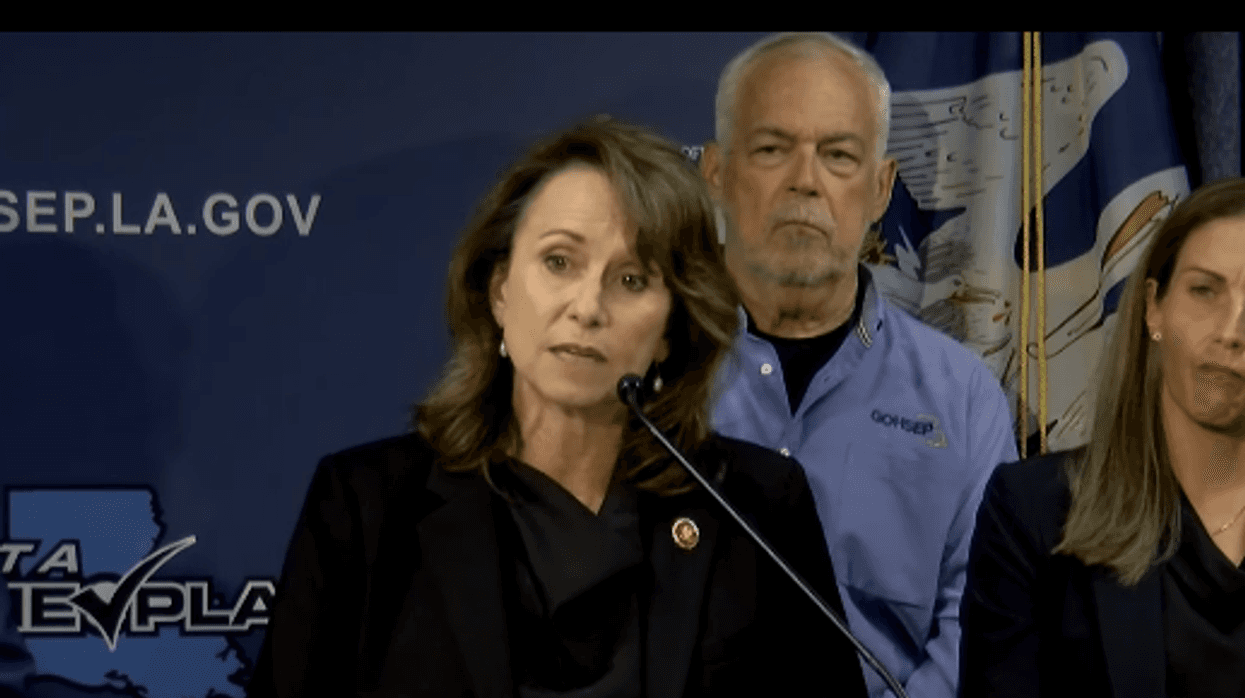

Louisiana Attorney General Liz Murrill joined WWL on the Newell Normand Show the morning after it had been announced that all 16 charges brought against her by a New Orleans grand jury were being dropped. Below is Murrill's full audio interview along with select quotes.
Do you believe someone was behind the instigation of the grand jury?
“I think that nobody believes that this was just some random occurrence and that a grand juror just happened to know how to put all of this machinery in motion and then ignore all the law."
“There's sort of a long list of people who have been implicated as we've tried to unravel in my defense what was happening here, who was involved. You know - where, what, who might have been interfering with the existing grand jury. I don't have all the answers to those questions. I'm not going to name names and impugn people's character when I don't know if those things are true, and it won't be my job at this point to determine the accuracy of those statements. I can tell you that we received emails and phone calls. Some things were speculative… There were other allegations that were made that were not so speculative. And I think that the state police or the FBI can go run all of that down. They are going to independently be the bodies that would investigate whether there was grand jury tampering and obstruction of justice or any of the other long list of potential things that might have occurred, and we'll let that process play itself out.”
Murrill speculates on Orleans Parish Jason Williams’ influence on grand jury proceeding:
"He has a lot of questions that I think he needs to answer."
“I raised that issue yesterday with the district attorney being the lawyer for the district, not the lawyer of the parish; he doesn't give advice to the parish. They have their own parish attorneys on civil matters and council matters, and that he allowed this to all happen and also portrays himself as a victim, still, of something that is not a crime as a matter of law, and you would expect the district attorney to actually know what the criminal law is if he's going to be enforcing it in your district.”
…
“I certainly agree that he bears a lot of responsibility, and he has a lot of questions that I think he needs to answer. You know, he did start this off by writing a letter that was outside the purview of his role. He does not advise the council as a civil matter on anything. And he doesn't give them legal advice on interpreting ordinary legislative matters that deal with the composition of offices in the city. He enforces the criminal laws.”
Desire for state/federal investigation:
“I’m not the right party to conduct the investigation.”
"It's not me that will conduct the investigation. The credibility lies in the fact that it won't be me conducting it; it'll be someone external… The system was weaponized against me. I'm not the right party to conduct the investigation; it won't be me. I do think that it needs to happen and that it needs to be thorough and that we all are entitled to the transparency that that investigation should bring."
New Orleans leaders “never acted in good faith”
“These are people who never acted in good faith from the beginning, so the idea that they somehow magically developed a conscience and then started acting in good faith is not credible, and I do think that they realize that ship was thinking very, very fast, and I think they saw that coming.
“I can't give them any great credit for having some great revelation that they were wrong. They haven't, in fact, admitted they were wrong. The district attorney's letter continues to refer to himself as a victim and that he's just asking the district attorney to take into account his preferences because he's a victim. The others said they weren't intimidated, but they don't acknowledge that what I did wasn't a crime, and that what they did was wrong as well… They took it upon themselves to just create their own law.”
…
“It's like shooting the messenger... I didn't write the law. I just delivered you a message that told you what the law is and what the consequences might be if I carry out my duties, if I am called upon to carry out duties. And that's what was threatening to them: the consequences of what they had done were threatening to them. And honestly, I don't know that they had ever really given any consideration to the particular consequence I raised in the letter. I think they all thought it was great political theater. I had asked J.P. Morrell for them to stand down. I called asking twice. Even after the Supreme Court had issued a stay and the answer was 'no' and they were doing it for political cover of their own, they really didn't care what the law was, and that's why I just don't think it's fair to give them any benefit of the doubt that they wanted to dismiss this because they somehow found religion. They didn't. The only religion they found was they're praying that they don't get in trouble for what they did. “