


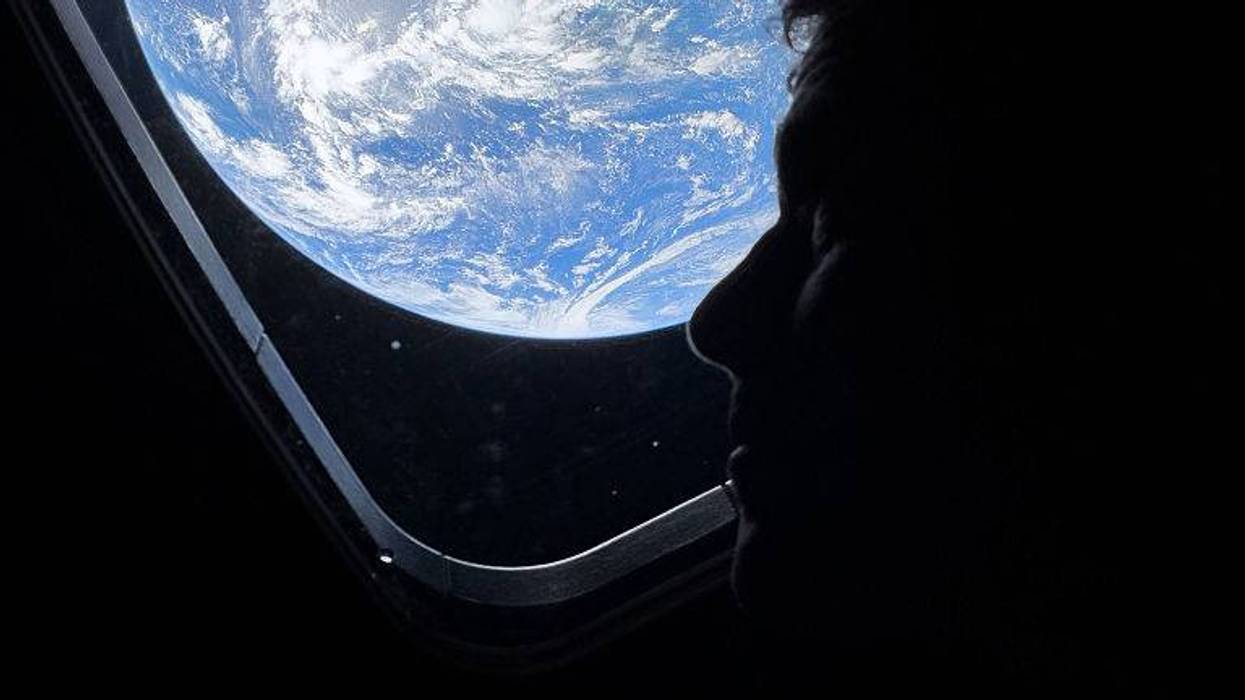

Turns out, "Dark Side of the Moon" isn't only an iconic rock album ... It's something the occupants of earth can see for the first time thanks to Artemis II.
The far side of the moon contains the Orientale basin — which NASA describes as a "huge, black impact crater" — and it came into full view of Artemis II on Saturday. The crew instantly sent stunning photos of the crater from their perch about 200,000 miles from Earth. Six million people saw the photo on X alone.
“In this new image from our @NASAArtemis II crew, you can see Orientale basin on the right edge of the lunar disk,” NASA wrote. “This mission marks the first time the entire basin has been seen with human eyes."
History in the making
— NASA (@NASA) April 5, 2026
In this new image from our @NASAArtemis II crew, you can see Orientale basin on the right edge of the lunar disk. This mission marks the first time the entire basin has been seen with human eyes. pic.twitter.com/iqjod6gqgz
Watch Artemis II photos as they come in
NASA has also created a way for people to view all the photos from Artemis II In real time. See the gallery below. Note that if employers thought March Madness was distracting, this may take it to a new level.
Looking for more? Bookmark this link to our Artemis II multimedia library for quick access to the latest imagery. https://t.co/rzM1P0QbOl
— NASA (@NASA) April 5, 2026
Those who keep watching the updates -- and let's face it, who among us isn't? -- will experience a lunar fly-by beginning at about 2:45 p.m. EST, and ending at 9:20 p.m. That's when Artemis, as part of its ten day mission, will show the world the moon through a porthole window on the craft.
Watch live coverage of the Artemis II lunar flyby on NASA+, Amazon Prime, Apple TV, Hulu, Netflix, HBO Max, and Roku, alongside the agency’s 24/7 coverage on its YouTube channel. Learn how to stream NASA content through a variety of online platforms, including social media.
The astronauts themselves reported to be in awe of what they're seeing. “Something about you senses that is not the moon that I’m used to seeing,” astronaut Christina Koch told NBC News from inside Artemis II.
“That is the dark side,” added Koch, the first women to see the moon up close. “That is something we have never seen before.”
You can see it too. Plus, here's a livestream of the lunar fly-by
You can see it too. Plus, here's a livestream of the lunar fly-by