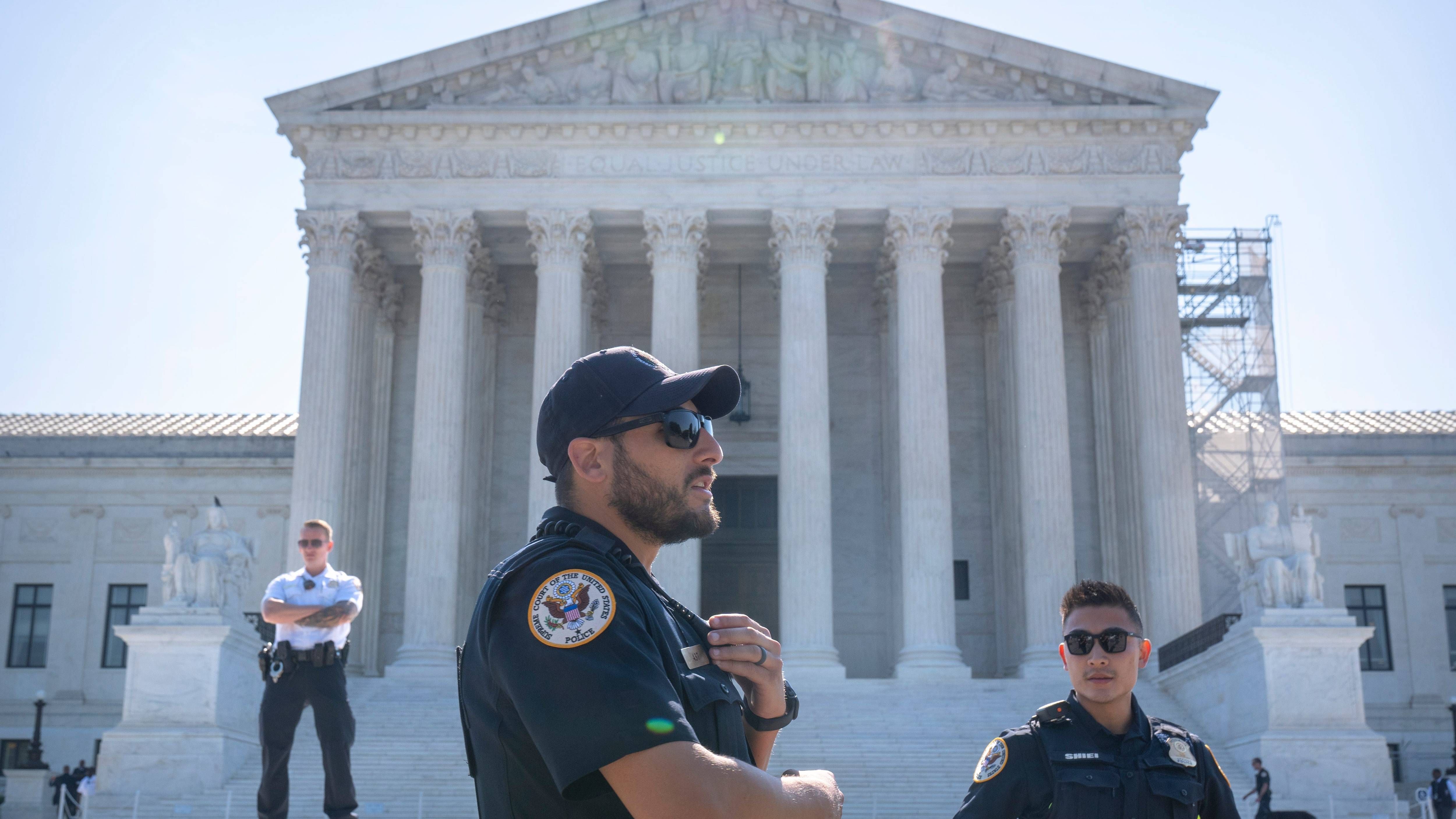



The United States Supreme Court has upheld a ban on gun ownership by people under a restraining order from their spouses or partners.
On Friday, the court issued an 8-1 decision in the case of United States v. Rahimi, reversing a ruling by the Fifth Circuit Appeals Court in New Orleans, which said such a restriction was unconstitutional. According to one legal analyst, the Supreme Court followed stuck to its recent approach in deciding cases.
"This is the first case approving of a regulation based on a history and tradition of analogous regulations," Loyola University law professor Dane Ciolino said, referencing the new judicial approach introduced by Justice Clarence Thomas in another gun rights case, 2022's New York v. Bruen. "The court made it clear in this case that there is a history and tradition of banning firearm ownership or possession to those who pose a real threat to physical harm of others."
According to Ciolino, American history and tradition do not include founding era regulations dealing with this particular situation. However, Ciolino notes that, historically, United States laws have included regulations prohibiting people from threatening physical harm on others and misusing guns. That, he says, allowed the Supreme Court to uphold the ban on gun ownership for those under a restraining order.
"Because of that history and tradition, the court found that modern-day regulations aimed at the same goal very well might pass muster under the Second Amendment," Ciolino said. "This certainly opens the door to more firearm regulation than some thought was possible in the New York v. Bruen decision."
In New York v. Bruen, the court ruled that the right to carry a pistol in public was guaranteed by the Second Amendment. Justice Thomas, who authored the majority opinion in the 2022 case, was the lone dissenter in today's decision. Ciolino says he believes if Thomas would have found an historical precedent on his own, he too would have voted wtih the majority.
"I don't think he believes it's an unlimited right," Ciolino said.