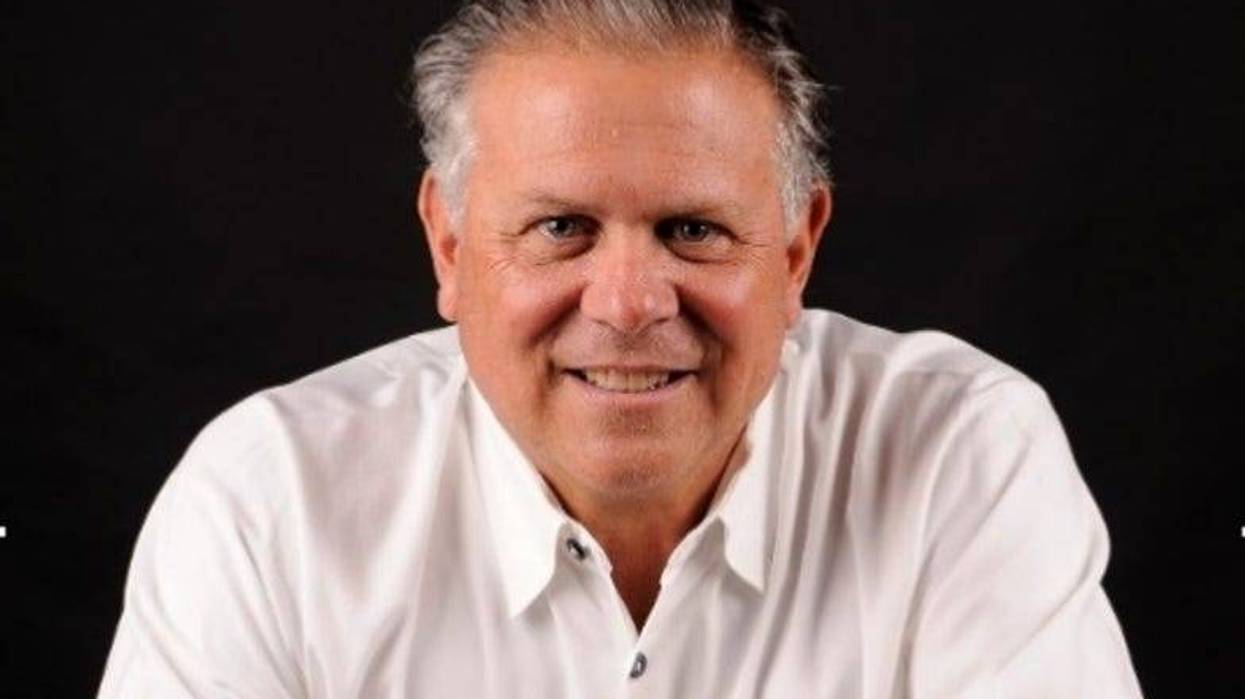


As American automakers announce plans to increase their footprint in the electric vehicle market, questions remain as to how the raw materials for these advanced components can be sustainably and affordably brought into the auto supply chain. Newell spoke to Dr. Donald Van der Vaart from the John Locke Foundation Wednesday morning to explain further.
“What is it that environmentalists should understand about those that actually would be the producers of electric vehicles, and the fallacies of the frailties in the way that they view the world relative to the utilization of them?”
“There are a number of issues, but there's a very strong campaign out there to make a lot of people very rich as they try to electrify our transportation system,” Van der Vaart said. “You can just imagine how much money would be involved if we're going to transfer over our entire fleet to electric vehicles. There's a lot of money to be made. There are a lot of people who have interests in that. There's a lot of false narratives out there, and it began with the EPA more than 10 years ago when they totally misled the public, when they claimed that electric vehicles were much more energy efficient in terms of an effective miles per gallon metric, which was totally misleading because it assumed that you started with a battery that was fully charged versus a gasoline engine with a tank of gasoline in it. And so there was no calculation taking into account the amount of fuel needed to do that, and DOE didn't agree with EPA and published their calculations in the federal register. They're much closer to being correct in my mind, and they show that there's no difference in efficiency. So that's one issue.”
“Now, as I understand, you're on the EPA scientific advisory board - and has the EPA itself retreated from that original position?” Newell asked.
“No, that that position is one taken by the staff. We are simply an advisory group,” Van der Vaart answered. “We were charged with looking at the ongoing federal incentives to buy electric vehicles. And in that report, it was noted that electric vehicles aren't any more efficient. That's as far as the scientific advisory board goes, but there's plenty of people out there that say the same thing. It's just this false narrative that they continue to peddle. But then the additional issue is how, where do the batteries come from? What you find is that some of these heavy metals that are harvested for the purpose of making these mostly lithium ion batteries are from far away places almost completely controlled by China. And they are mined in horrendously environmentally destructive ways, and they practice, in the case of the Congo, child labor practices. And so from a social justice standpoint, it should repulse any investors, or anybody cognizant of what's going on.”
“It's kind of our same attitude that we have towards China,” Newell continued. “No matter how bad the reports are, as it relates to the human condition and the way that we treat people, that doesn't seem to bother much of anyone. But going back to where did these batteries come from, obviously these rare earth minerals that they're looking for to be component parts of the battery. I guess we also don't have that desire to mine those here in the United States either, do we?”
“Well in the case of cobalt, we don't really have proven reserves,” Van der Vaart said. “That's a fairly rare metal, and the manufacturing part is almost overwhelmingly controlled by China, and they're going to source it wherever they have the most control. They have established a very sound approach to taking natural resources out of Africa, so they're going to be much more likely to deal with them than us. And nobody understands what to do with these batteries when they're done. Recycling is not a reality. If you listen to the left, they will say, oh, by that time, we'll have recycling technologies. Well, maybe, but that hasn't shown that hasn't been shown to be economically viable yet.”
Hear the entire interview in the audio player below.