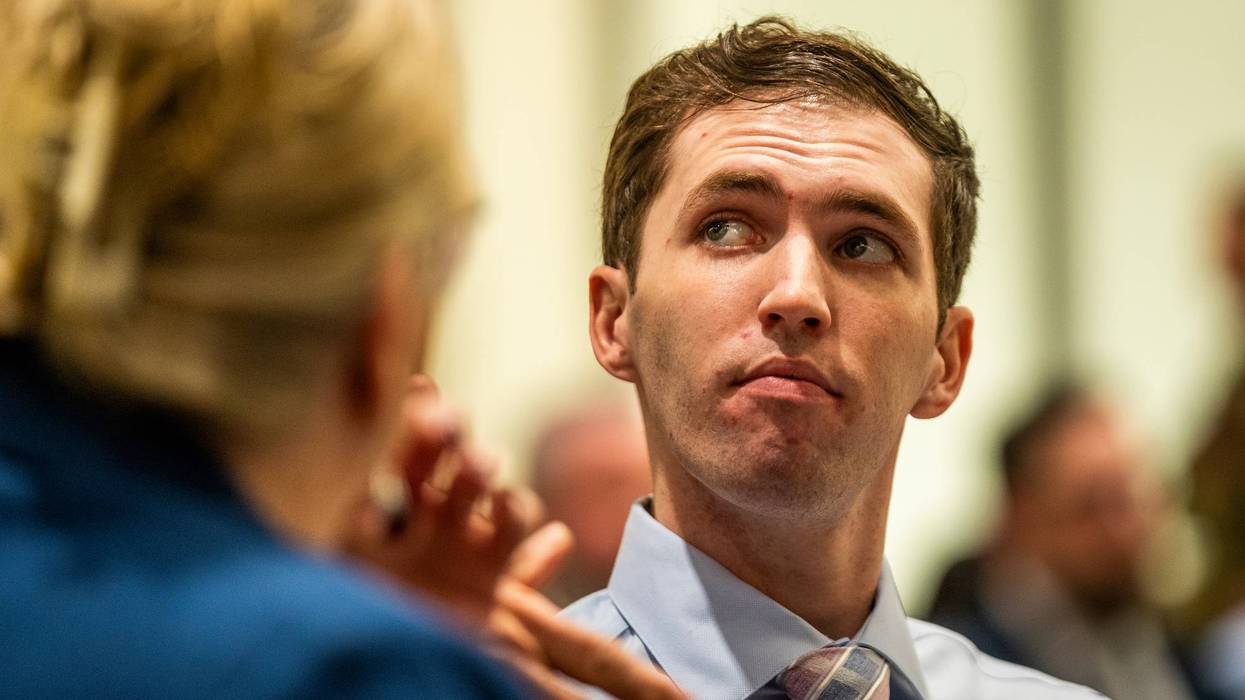


Louisiana’s State Health Officer Dr. Joe Kanter joined Newell for his recurring weekly segment Thursday morning to discuss the latest developments in the battle against COVID-19, vaccination rates, the Biden’s administration’s new outreach campaign and more.
“Doc, the world is worried about the Delta virus variant,” Newell began. “Fortunately, most studies still continue to show that vaccines are effective against it. Your thoughts?”
“I'm worried about Delta, and I'll tell you, we're beginning to see increases in every measure that we track in Louisiana,” Kanter said. “We had almost four months of pretty quiet numbers, and we held flat or decreased, we did well. We started seeing some increases about a week ago, maybe a week but it was too early to say, it's a trend. I think it's safe to say that it is a trend now, and that it's more than likely due to the Delta variant, which is now the dominant strand - both nationally at 52% of all new cases - and in our region, at 59% of new cases. So I think we're probably going to see numbers continue to go up for the next couple of weeks. How high they go up and how high hospitalizations and deaths go up, which is what we really care about, I really don't know. I completely agree with you that the data still shows that the vaccines are a very good match for this variant, which we're fortunate about. But as we both know, we need more people in Louisiana to stand up and get vaccinated.”
“A lot of the reports are saying that we are probably under-reporting the prevalence of Delta because of the manner in which we approach testing in this country,” Newel continued. “We are finding ourselves behind the eight ball in many hotspots across the country, not only ERs, but also critical care units.”
“That goes both to how we're testing samples, and the inherent time delay,” Kanter said. “If you were to look just at the actual positive COVID samples that we genomically sequenced in Louisiana and found that it was the Delta variant, that number is pretty low. It's only 23 samples, but that's just because we don't sequence very many at all. And the country does very little as well. This 59% number for our region comes from random sampling. And the way that the CDC does this is they take samples that get sent to these large reference labs that do millions of tests, they do a scientific sampling, and are able to estimate a percentage based on that. So if you look at just the number of actual samples, that would be a real growth under-count. I do think that the sampling method provides a pretty accurate picture. There's always going to be a lag, and particularly with something that grows as fast as the variant is. It's been doubling every two to three weeks. We're now in this position where if one was to be exposed to COVID tomorrow, odds are more than likely that they will get the Delta variant. And so we need to be shifting our framework and kind of gearing up for what will be hopefully a small spike.”
Hear the entire interview in the audio player below.