


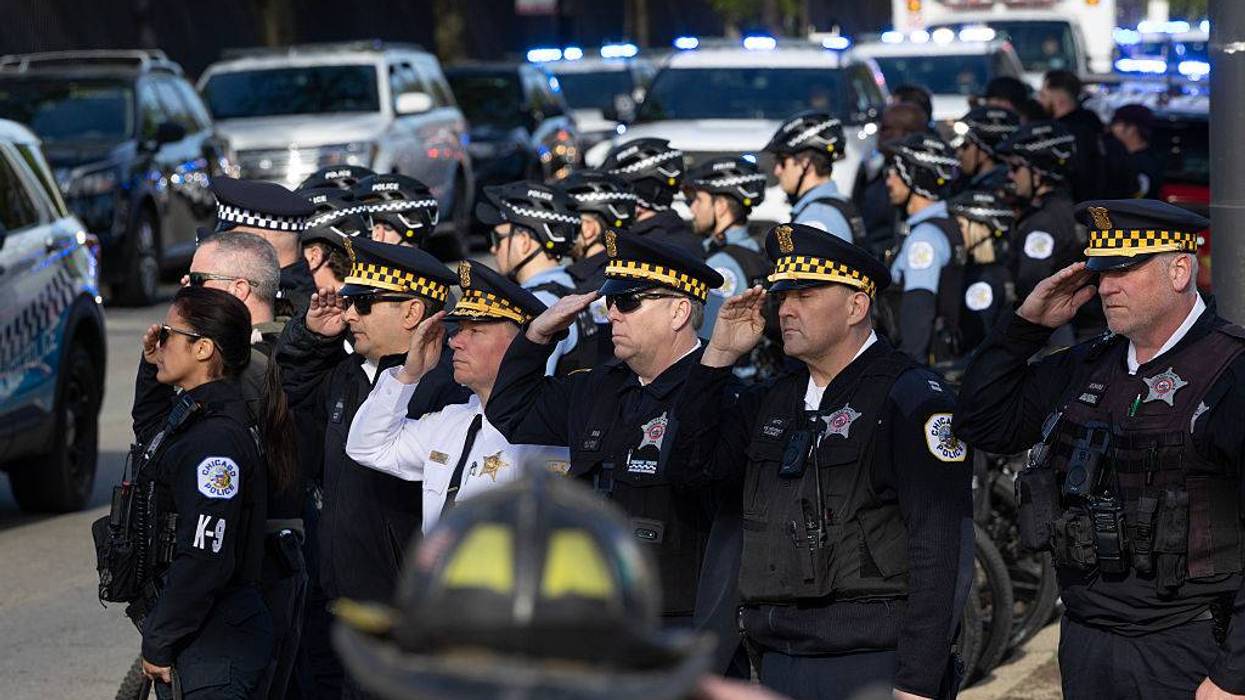

As family members and fellow comrades of slain Chicago police officer John Bartholomew prepare to lay him to rest this week, elected leaders across the city and state have expressed sorrow and anguish, along with a shared belief that the man now charged with opening fire on the officer and his partner during an encounter at Swedish Hospital never should have been in a position to do so.
And in the search for answers that rightly follow tragedies of this nature, critics of Illinois’ Democratic Gov. J.B. Pritzker have seized on the now-familiar target of the state’s bail-reform law, known as the SAFE-T Act … a measure that was controversial when it was enacted and remains so to this day.
The Act was approved by the Legislature and signed into law in 2021 as part of a focus on social justice initiatives following the previous year’s death of George Floyd at the hands of police in Minneapolis. Its purpose was in part to prevent the state’s jails from turning into "debtors’ prisons” filled with defendants - often people of color - facing non-violent or relatively minor offenses but unable to afford the cost of bail. The law eliminated cash bail in Illinois, leaving it to a judge to determine whether a particular defendant is at risk of committing a violent offense if they’re released before their trial.
Its supporters say it’s helped reduce jail overcrowding, and point to statistics suggesting that out of 150,000 people released from custody in Cook County over the last five years, 94% of those released before trial were not charged with new crimes against people. That sounds positive, and it is … but that means roughly 9,000 were back in trouble after being released.
And now, one of those 9,000 is charged in Officer Bartholomew’s death.
Prosecutors say at the time of the shooting on April 25, the suspect was on an electronic monitor from a previous violent offense, after a Cook County judge denied the State’s Attorney’s office’s request that he be detained. Reports suggest the judge saw signs that the suspect was turning a corner in his life, including the completion of anger-management courses, and believed he deserved another chance.
Critics of the law say the shooting that killed Officer Bartholomew and critically wounded his partner is the latest sign that in an attempt to respond to concerns about “mass incarceration” the system has lurched too far in the other direction. In Springfield, top Republicans in the state Legislature introduced a proposed change mandating that anyone who commits a felony while wearing an ankle monitor must be held behind bars until both cases are closed. "Letting violent offenders out over and over again to commit more violent crimes isn't creating less prisoners,” state Senate Republican Leader John Curran said while announcing the measure this week. "It's creating more victims, and more chaos.” Pritzker’s Republican opponent in the fall election, former state Sen. Darren Bailey, followed up this week with his own package of changes to the SAFE-T Act, mostly aimed at faster response for defendants whose electronic monitoring is compromised.
The governor, who in public has remained a staunch defender of what’s become one of his signature legislative achievements, insisted that the law provides the mechanisms necessary to keep potentially violent offenders off the streets … as long as everyone in the process uses them as intended. “It’s a tragedy what’s happened,” Gov. Pritzker told reporters this week, adding that “in most of the cases where Republicans have complained about the SAFE-T Act, it's actually been a bad decision by an elected judge.”
And in this case, Pritzker said he believed the decision to free the suspect in the Swedish Hospital shooting was bad: "A judge should have made the decision to keep that person in jail. The judge who had the ability to keep the person in jail ... didn’t.”
In the weeks to come, we’re likely to hear more about what led up to the shooting, including how the suspect managed to have a gun in his possession even after a series of searches by police at the hospital. And we’re likely to hear even more strident calls for change by people claiming to be acting in Officer Bartholomew’s name (indeed, Sen. Bailey’s proposed changes are named for the officer). But it is the officer’s death - and the sacrifice he and too many other first responders have made in the name of public safety - that will hopefully be top of mind as this week ends and his family and former comrades assemble to say goodbye.


