


EDITOR'S NOTE: During this Black History Month, we're taking a look today at a person who helps shape current history in the Chicago area.
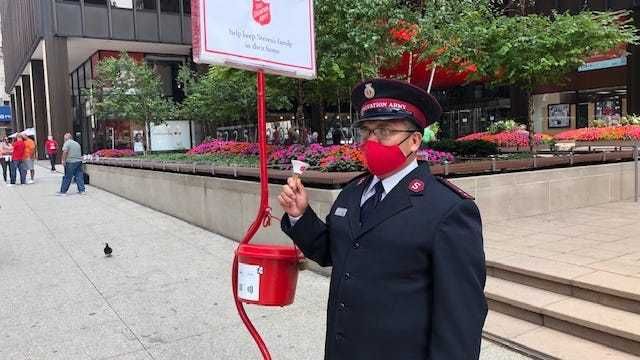
(WBBM NEWSRADIO) — Salvation Army Lt. Col. Lonneal Richardson, 61, grew up in Memphis. He was a child when Dr. Martin Luther King Jr was assassinated there but remembers the sense of chaos when Memphis and other cities erupted in response.
"That probably impacted my life as much as any other experience that a young person would have," he said.
Richardson says his grandfather was a sanitation worker in Memphis. King had spoken to striking sanitation workers the day before he was killed. He says he remembers seeing signs at his grandparents' home that said "I Am a Man."
When he asked what the signs were for, this is the answer he received: "All work has dignity and every individual has dignity."
"That kind of set in my mind this idea that, we were on this journey to not only being a part of the American dream but also recognizing the importance of our work, as individuals in the American story," Richardson said.
He and his wife, Lt. Col Patty Richardson, headed the Salvation Army division in Missouri and southern Illinois in 2014 when protests erupted in Ferguson following the police killing of Michael Brown.
"All of a sudden, what was happening on the streets, took me back to Memphis, took me back as a little child," he said.
Also influencing him was his mother's work for a Salvation Army abused women's shelter in Memphis. He remembers one victim and his mother's response to her.
"She kept saying, 'I can't go home. If go home, he'll kill me.' And, my mother put her arms around her and said, 'It will be alright. You're safe.'"
Richardson said he tries to think of ways he can have a positive impact on those who struggle.
He and his wife are the first African Americans to head a Salvation Army Midwest division.
"I think it shows us in ways that we are, as a country, moving forward, that we all play a role in this great democracy experiment, not necessarily one that we have gotten perfect," he said.
Richardson said during the pandemic people have shown up for help, especially for food, who have never before reached out before.