

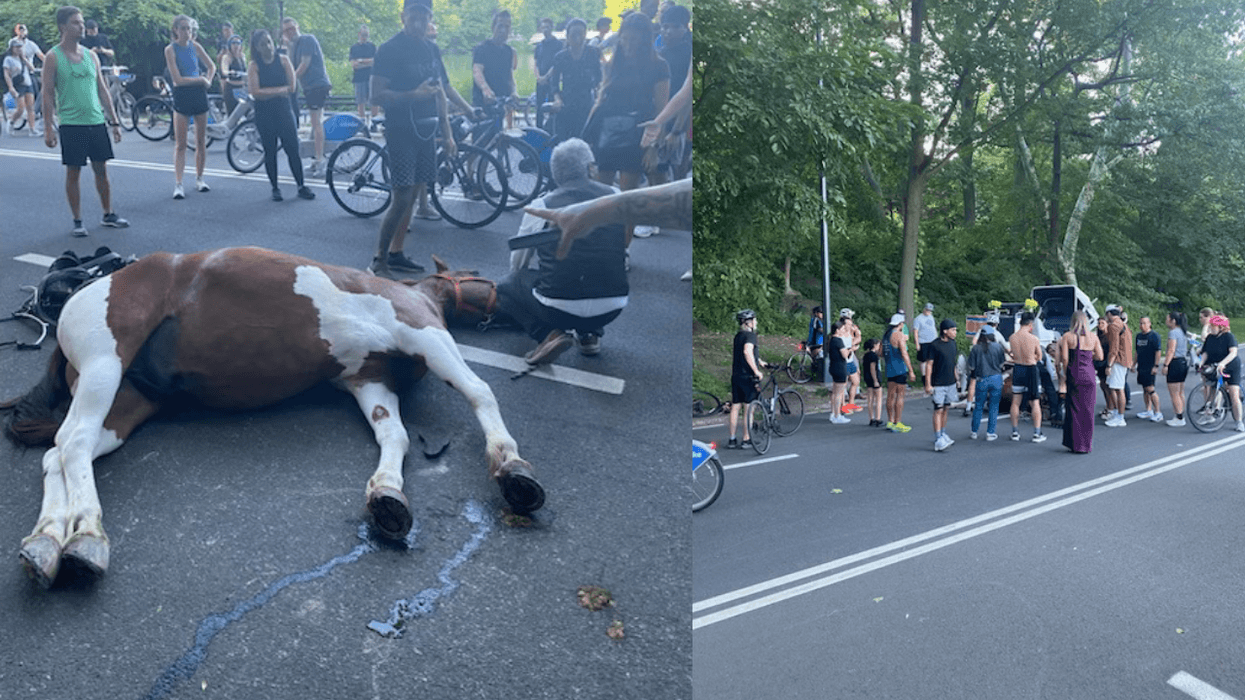
NEW YORK (1010 WINS) — The death of a carriage horse in Central Park last week was caused by its consumption of a nonnative toxic plant it nibbled on along its route, according to a necropsy publicized Tuesday by the Transport Workers Union of America, the union representing carriage drivers.
TWU president John Samuelsen told 1010 WINS that the death of 16-year-old carriage horse Deniz "had nothing to do with the work that [it] was doing at the time." He is instructing his drivers to avoid the route Deniz was trotting that has the Japanese yew.
In a statement, the Central Park Conservancy said that TWU "has now demonstrated how their own negligence has resulted in this unfortunate incident" as "NYC Parks rules plainly forbid horses from eating vegetation anywhere across our 843 acres." The park group said that is the responsibility of carriage drivers to attend to their animals to keep them healthy and in accordance with regulations.
"I said 'Drivers, make an effort to control the horses,' but to think that the Central Park Conservancy planted trees in Central Park that are poisonous to animals, all animals," Samulesen fired back.
The Conservancy used the opportunity to double-down on its stance to ban horse-drawn carriages in the park, which it first took in August 2025 after the death of 15-year-old mare Lady, who collapsed in the street while heading back to her stable.
"This tragedy underscores something larger: it’s time for New York City to join other major cities around the world and ban horse carriages from our city," the statement said. "Today’s Park is busier and more crowded than ever. For the safety of visitors, other animals, and the horses themselves, we continue to support a ban on carriage horse rides in the Park."
The debate over whether or not carriage horses should be allowed in the park intensified after the death of a carriage horse named Ryder in 2022, pitting transportation union members and tourism supporters against animal rights advocates and a growing number of city organizations.