



A famous four-legged resident is making headlines once again in East Texas.
Texas Parks and Wildlife Department (TPWD) District Wildlife Biologist Reuben Gay confirms that a male black bear has officially survived his second summer in the region, continuing to navigate the Neches River corridor between Anderson and Cherokee counties.
While black bears frequently pass through East Texas from neighboring states like Louisiana, Arkansas, and Oklahoma, this individual is believed to be the first documented black bear to overwinter in the region in decades.
Summertime Habitats and Health
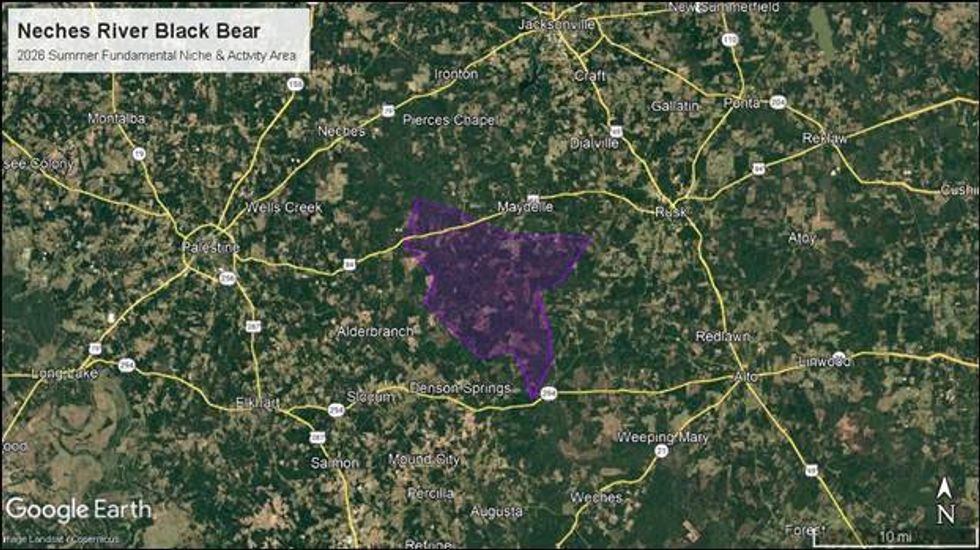
According to Gay, extreme summer heat and drought conditions led the bear to shrink his territory slightly over the warmer months, concentrating his movement primarily along a stretch of the Neches River between Highway 84 and Highway 294.
"In the past, over the winter, we were seeing him from Highway 79 all the way down to 294," Gay explained. "He's keeping a smaller range during the summer... but I assume he might expand his range again now that everybody's putting corn back out for hunting season."
Trail camera photos—including captures from late August—show the bear in good overall health, though his body weight has fluctuated with the seasons. Biologists estimate the bear currently weighs between 180 and 185 pounds and stands between 6 to 7 feet tall when upright.
Despite his size, wildlife officials emphasize that the bear has shown no aggression toward humans.
"I wouldn't say be afraid or be scared, but just have respect for the animal," Gay said. "He's just a young, curious male that ended up here and stayed. He's very shy and seems to run away anytime someone sees him close."
 Texas Parks & Wildlife
Safety Reminders for Hunters
With Managed Lands Deer (MLDP) seasons starting in October and general gun seasons opening in November, TPWD is reminding hunters and outdoor enthusiasts to stay alert in the woods:
- Carry Deterrents: Hunters spending time in known bear habitats are encouraged to carry bear spray or pepper spray.
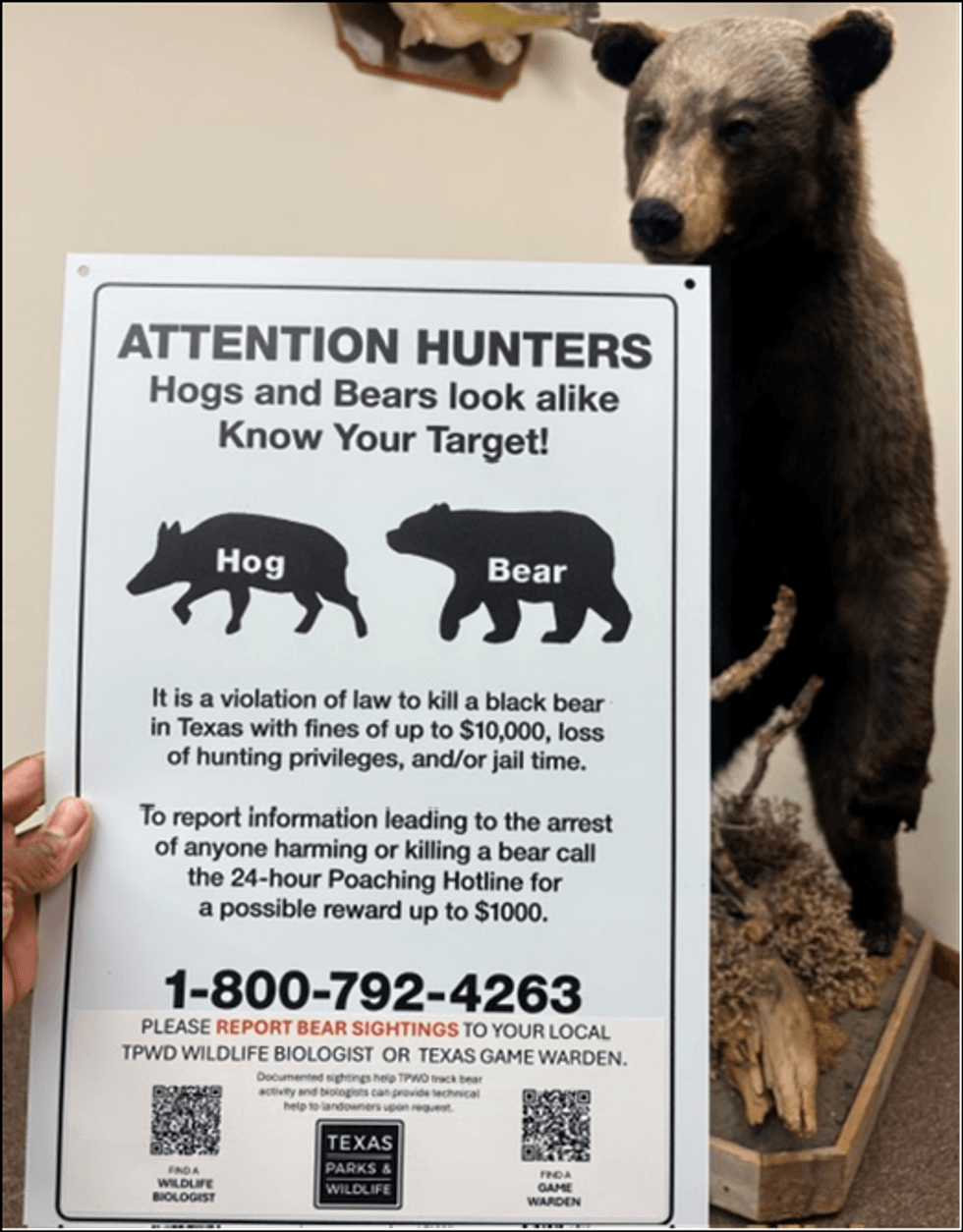
- Know the Difference: TPWD urges hunters to positively identify their targets before pulling the trigger. Unlike feral hogs—which keep their snouts close to the ground while rooting—black bears have larger ears, broader heads, and frequently move their heads up, down, and side-to-side.
- Remember State Protections: Black bears remain a state-threatened species in Texas. Intentionally harming or harvesting a black bear carries severe criminal penalties, including fines up to $10,000, potential jail time, and loss of hunting gear or equipment.
A Public-Driven Tracking Effort
 Texas Parks and Wildlife
Because the bear is not fitted with a GPS collar or tracking tag, TPWD relies almost entirely on trail camera submissions and sightings from local landowners, hunters, and residents to monitor his movements.
Gay credits public education and media outreach for keeping the animal safe over the past two years.
"To be honest, I think that's the reason why no one has shot this bear or nothing negative has happened," Gay said. "Everybody's talking about it, and everybody's increasing their awareness of black bears all over Texas."
Residents who spot a black bear or capture trail camera footage are encouraged to report their sightings to their local Texas Parks and Wildlife biologist.


