

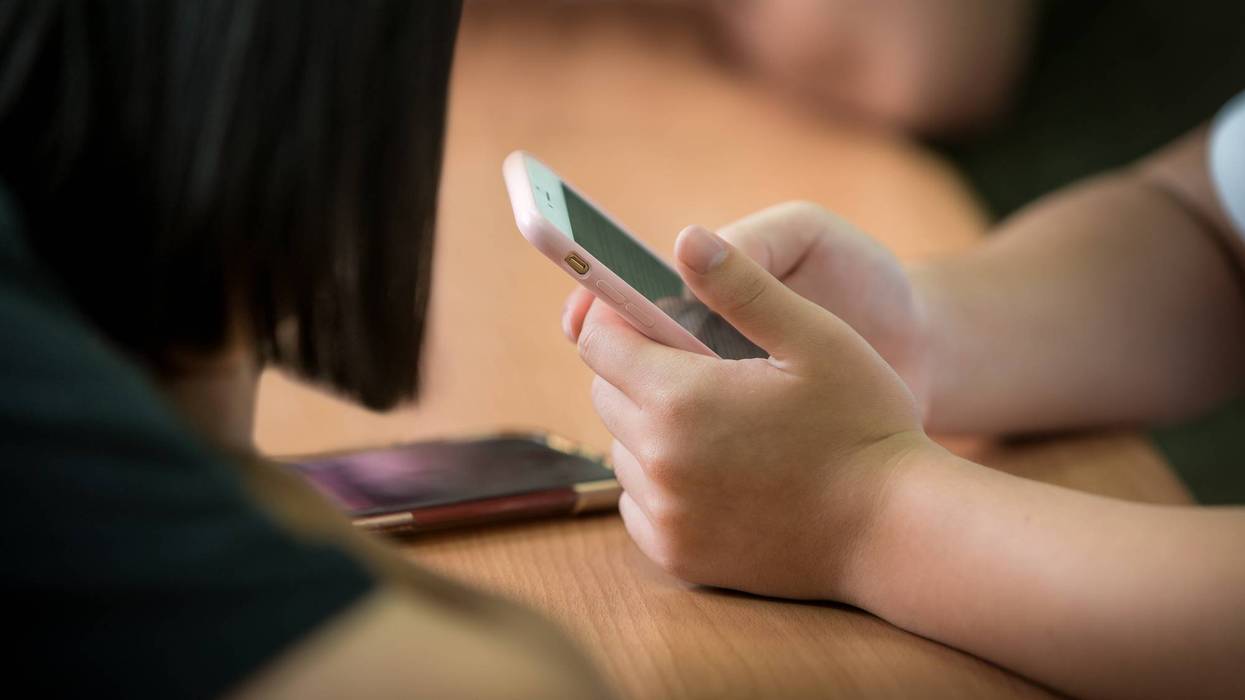

A year after Texas implemented House Bill 1481—a statewide mandate restricting cell phone use in Texas public schools—educators and psychologists are reflecting on how the shift has reshaped classroom dynamics.
Dr. Israel Arevalo, a school psychologist and researcher with the Texas A&M Health Telehealth Institute, said that while the policy initially caused unease, classrooms have gone back to normal routines.
“Initially, just like with anything that incorporates change in your daily routine, there’s going to be an initial level of anxiety,” Arevalo said. “However, since then, it’s been a year, right? And since then, that tension has really gone away. We’re back to this baseline of just going to school, learning, socializing”.
According to Arevalo, teachers are reporting noticeable improvements in student engagement and face-to-face interactions. With fewer digital distractions, students are paying closer attention to instruction and interacting more with peers.
“Teachers are also reporting that children are more attentive,” Arevalo said. “There’s less distractors in the classroom. Now, there’s always going to be distractors... but now there’s less cell phones in the classroom that teachers have to be attentive for and looking out for”.
However, Arevalo emphasized that a school-day ban is only part of the equation. Without healthy habits modeled and enforced at home, the long-term cognitive and social benefits can be diluted.
“We can supervise and we can limit the use of cell phone devices within the schools, but if the kiddos go home and they have unmonitored, unrestricted access to cell phones... that’s not going to be very helpful for their overall social development,” he explained.
He also cautioned school districts against applying blanket rules that overlook students with unique needs, particularly those in special education or under Section 504 plans who have learning accommodations.
“We want to be very careful in making sure that students in special education who receive accommodations that require some sort of technology device... that this policy does not impact adversely these children,” Arevalo said.
Despite the positive effects, he said it could take years of clinical trials and ongoing research before researchers can conclusively link the cell phone ban to sustained improvements in classroom attention and social behavior.
“In terms of whether this is working, yes or no... we need more time to be able to genuinely say that it’s because of the policy or because of the law that this has then, you know, enacted increase in social behavior or decrease in distraction."