


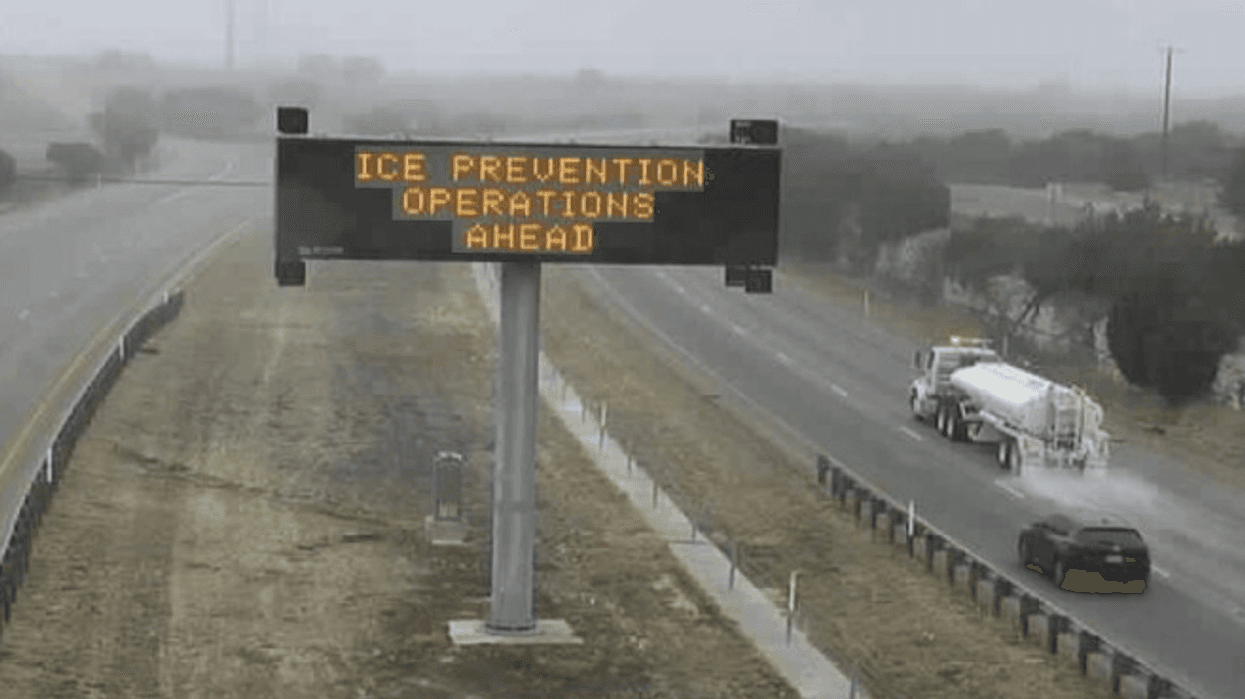

Federal Homeland Security officials have privately urged disaster response staff at the Federal Emergency Management Agency to avoid using the word "ice" in public messaging about a massive winter storm expected to slam much of the United States this weekend, according to people familiar with the directive.
The guidance was delivered Thursday as the Department of Homeland Security — which oversees both FEMA and U.S. Immigration and Customs Enforcement (ICE) — works with federal and state partners ahead of the storm.
The concern, according to CNN and sources briefed on the discussions, is that mentions of "ice" in warnings and safety messages — like "watch out for ice" — could be misinterpreted or quickly turned into social media mockery tied to the ongoing controversy over ICE's immigration enforcement operations. That, officials reportedly warned, could distract from critical public safety information about hazardous conditions expected as the storm arrives.
Instead, FEMA staff were encouraged in informal briefings to use alternative phrasing such as "freezing rain" or other weather-specific terms to describe dangerous roadway and travel conditions without using the four-letter word. Two sources with knowledge of the discussions described the guidance on wording.
A FEMA spokesperson pushed back on reports of any internal ban, telling CNN that media coverage characterizing the guidance as a restriction was inaccurate. The spokesperson said FEMA remains focused on using clear, accurate language to communicate weather hazards to the public.
The messaging issue comes as a powerful winter storm — forecast to cover more than 2,000 miles from Texas to New England and affect dozens of states — threatens heavy snow, dangerous freezing rain, and frigid temperatures that could lead to widespread travel disruptions, power outages and other hazards. Weather officials and emergency management teams have issued alerts and are urging residents to prepare now for the storm's impact.
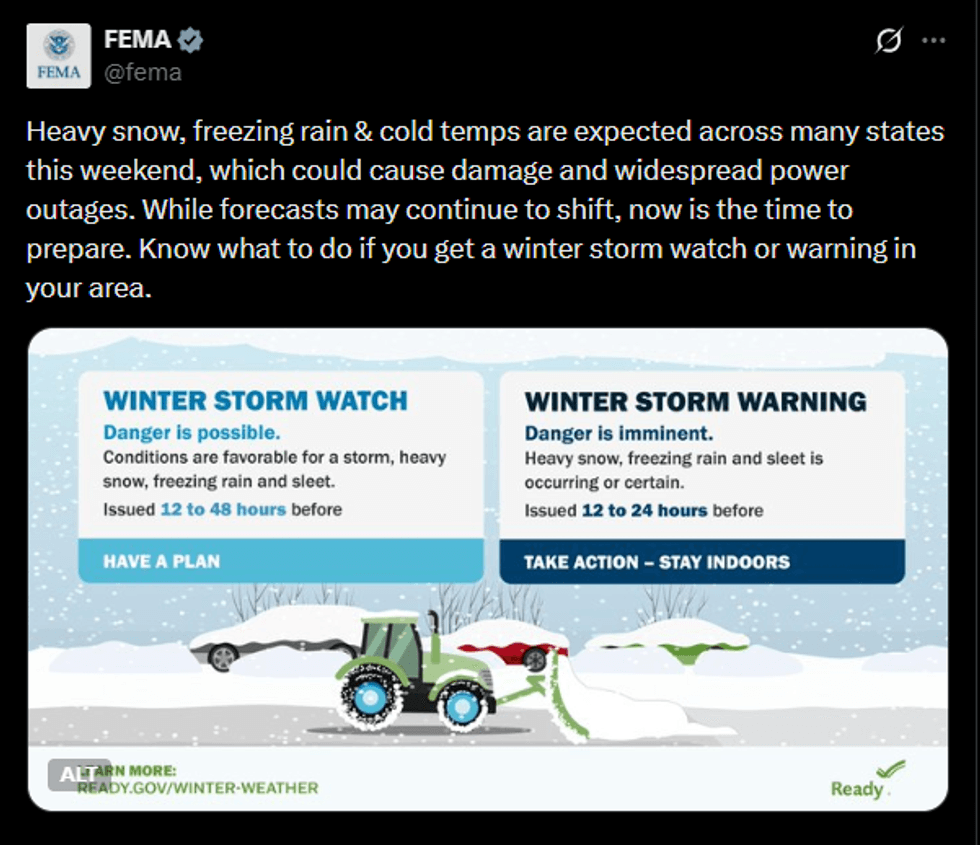
Below is an official FEMA advisory tweet detailing expected conditions that avoids the word "ice":
 Federal Homeland Security officials have privately urged disaster response staff at the Federal Emergency Management Agency to avoid using the word "ice" in public messaging about a massive winter storm expected to slam much of the United States this weekend, according to people familiar with the directive.X