


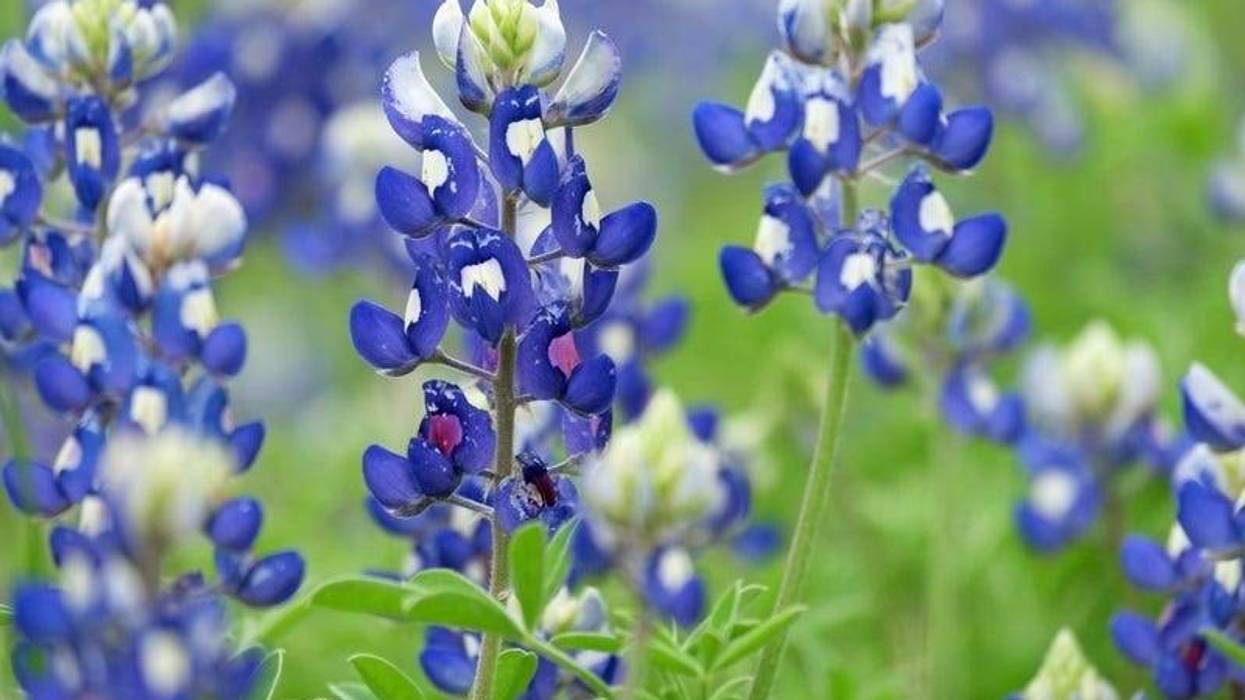

Bluebonnets are blooming along Texas roadsides right now, turning highways and fields into carpets of deep blue and white for newcomers and longtime residents alike.
On March 7, 1901, the Texas Legislature named the bluebonnet the state flower after spirited debate, selecting the species *Lupinus subcarnosus*. Lawmakers expanded the designation in 1971 to include *Lupinus texensis* and all other bluebonnet varieties native to the state.
The flower’s common name comes from its bonnet-like shape, and early Spanish settlers in Texas noted its resemblance to a pioneer woman’s sunbonnet. Native to the region, bluebonnets thrive from the Blackland Prairie to the Edwards Plateau and Big Bend, blooming most reliably in late March and early April.
The Texas Department of Transportation has played a central role in their popularity since the 1930s. TxDOT’s wildflower program scatters about 30,000 pounds of seed annually along highways as part of a low-maintenance beautification effort that also cuts mowing costs. The program, inspired in part by Lady Bird Johnson’s later national highway beautification push, has spread bluebonnets across thousands of miles of roadside. Today the blooms draw families for photos, boost spring tourism in the Hill Country and North Texas, and spark local festivals.
Bluebonnets symbolize Texas pride and resilience — hardy annuals that return each year with the right winter rains. In 2026 the display varies by region due to uneven rainfall, but prime viewing spots remain in state parks and along major routes. Officials remind visitors to pull over safely, stay off the pavement and leave no trace to protect both people and plants.
The tradition continues as a welcoming rite of spring for anyone new to the Lone Star State.
LISTEN on the Audacy App
Tell your Smart Speaker to "PLAY 1080 KRLD"
Sign Up to receive our KRLD Insider Newsletter for more news
Follow us on Facebook | Twitter | Instagram | YouTube