

PHILADELPHIA (KYW Newsradio) — President Joe Biden offered a fiery speech at the National Constitution Center in Philadelphia on Tuesday afternoon, asserting that American democracy is under the most threatening assault since the Civil War.
He called for action by laying out the "moral case" for voting rights, fighting restrictions that are passing in states around the country, refuting former President Donald Trump's continual accusations of election fraud, and saying "the big lie is just that: a big lie."
"You don't call facts fake," the president said. "That's not democracy. That's the denial of the right to vote."
The president's speech took on an ominous tone at times, calling 2020 the most scrutinized election in history and denouncing efforts to cast doubt on the results.
"There's an unfolding assault taking place in America today, an attempt to suppress and subvert the right to vote in fair and free elections, an assault on democracy, an assault on liberty, and an assault on who we are," he said.
He tempered his warning with a call for action that got a standing ovation.
"Freedom is not a state. It's an act, and we must act, and we will act," Mr. Biden said.
"Our cause is just, our vision is clear, our hearts are full. For we the people, for our democracy, for America itself, we must act."
The speech was intended as the opening salvo of a public pressure campaign, White House aides said, even as legislative options to block voting restrictions face significant obstacles.
Many Republicans continue to question the 2020 election's outcome, having seized on Trump's false claim of massive voter fraud, despite the absence of evidence, as a pretense for curtailing ballot access. Republicans in state legislatures have responded by enacting restrictions on early voting and mailed-in ballots, as well as tougher voter identification laws, prompting some liberals to demand that Biden do more.
"Seventeen states have enacted 28 new laws to make it harder for Americans to vote," said Biden during his speech, comparing such legislation to Ku Klux Klan campaigns of terror.
"The 21st century Jim Crow assault is real. It's unrelenting. We're going to challenge it vigorously."
Dozens of elected officials were in attendance, and they welcomed the president's message. Congressman Brendan Boyle, D-Philadelphia, thought the grim message was warranted.
"What we are talking about is as basic as 'Will we continue as a democracy?'" Boyle said. "Voting restrictions that have already passed ... that is deeply disturbing."
Pennsylvania's Republican senator attempted to downplay voting measures the GOP wants to enact, saying they are not in the same pattern as Jim Crow laws.
"Suggesting that election integrity measures such as voter ID and prohibitions on ballot harvesting are reminiscent of Jim Crow is false, offensive, and trivializes a dark period of actual systemic racism in parts of America," said Sen. Pat Toomay in a statement.
"President Biden knows that the state laws he has attacked are in many cases less restrictive than that of his own home state of Delaware."
Fellow Republican, City Commissioner Al Schmidt, was targeted by his party for defending Philadelphia's election results. He attended the president's speech.
"I thought it was a terrific speech, especially the part about how we need a coalition of people to strengthen our democracy and protect it, because it's clearly under assault right now," said Schmidt.
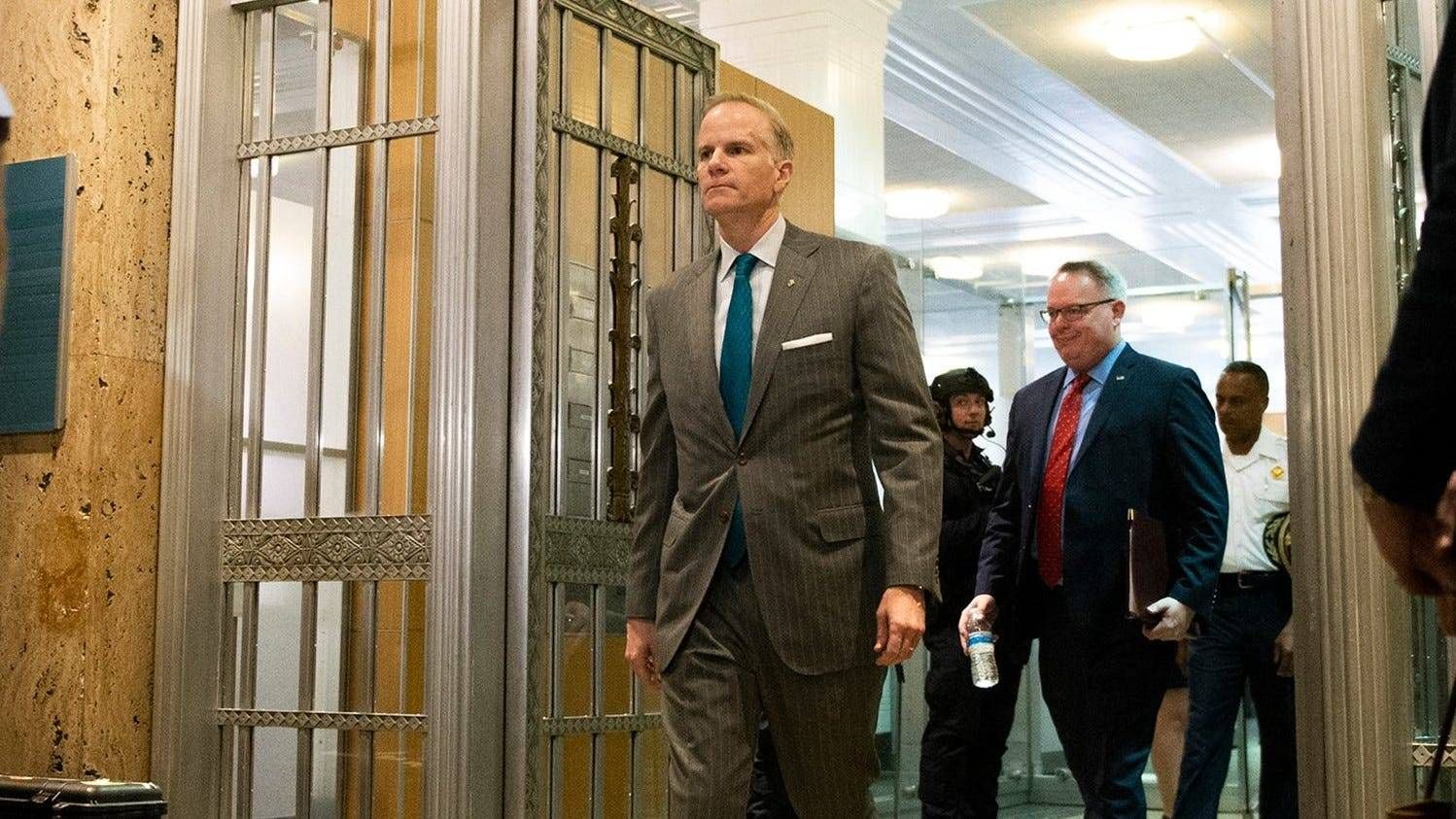
But voting in Pennsylvania may yet be under scrutiny. On Monday, former U.S. Attorney William McSwain announced his run for governor of Pennsylvania, saying he believes there were irregularities in the 2020 election and indicating that he will rely on Trump's support in his campaign.
In a letter McSwain sent to Trump in June, he says that his effort to investigate voter fraud was thwarted by then-Attorney General William Barr and he claims that Gov. Tom Wolf, then-Secretary of the Commonwealth Kathy Boockvar and the Pennsylvania Supreme Court "made up their own rules and did not follow the law."
In a statement released Tuesday before the president's speech, Trump called Philadelphia a "cesspool of corruption," and spoke out in favor of an effort in the Pennsylvania Legislature to conduct an audit of the 2020 election results.
"Joe Biden is going to Pennsylvania today in a rush in order to stop the Forensic Audit that the Pennsylvania Republican Senate is in the process of doing," he wrote, in part.
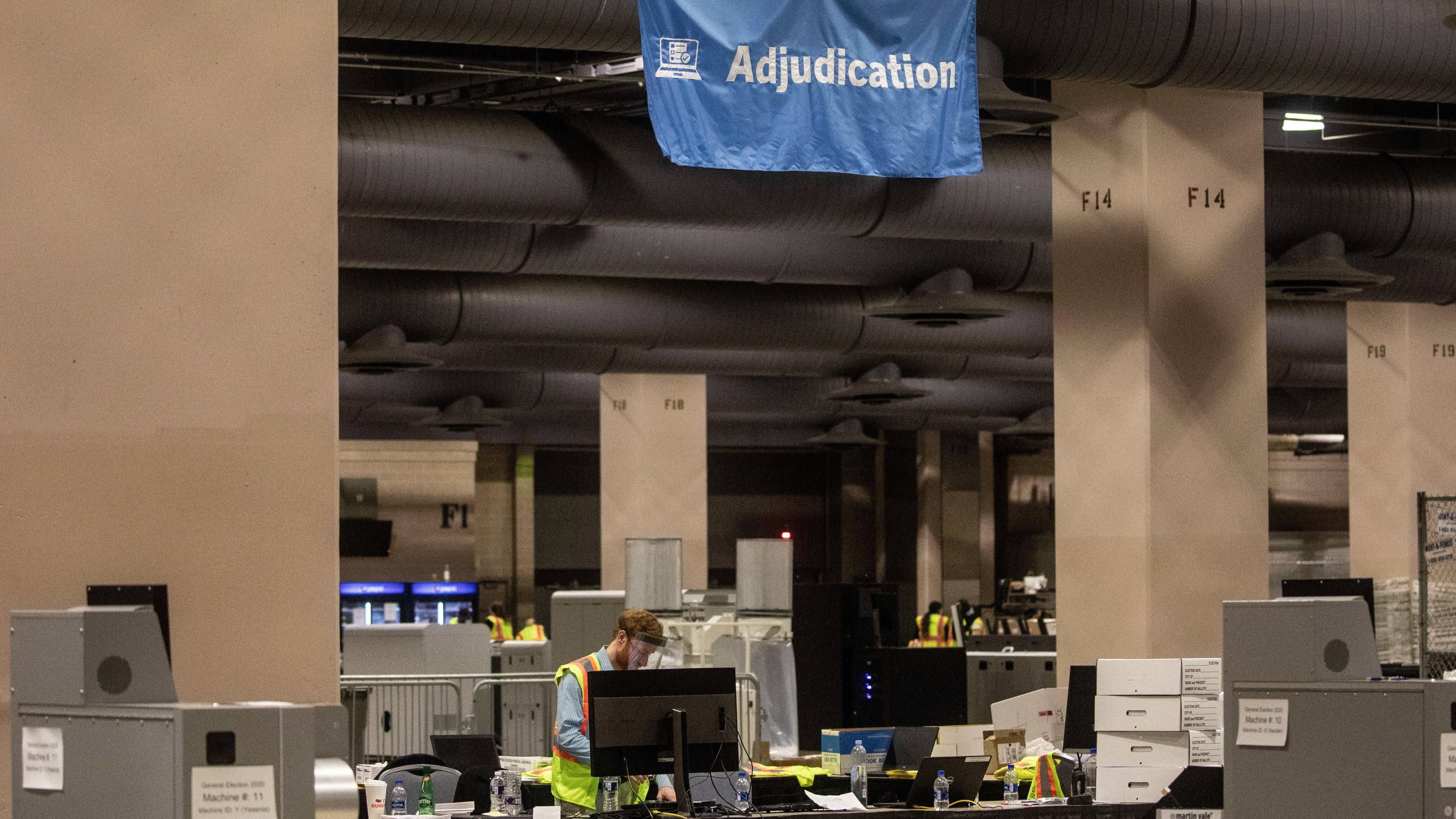
The state's election results were already audited — twice in most counties — with no evidence of significant fraud.
The president also referred to the push from some GOP legislators to change who can officially count votes.
"It's about who gets to count the vote. Who gets to count whether or not your vote counted at all. Moving from independent election administrators who work for the people to polarizing state legislators," he said.
"It's the most dangerous threat to voting ... in our history," he said, calling such GOP-led election policy moves "election subversion."
Democrats in Washington have already tried to respond with a sweeping voting and elections bill that Senate Republicans blocked. Most Republicans have similarly dismissed a separate bill, the John Lewis Voting Rights Advancement Act, which would restore sections of the Voting Rights Act that the Supreme Court had previously weakened.
Biden made a fiery appeal for the passage of both bills, saying that "guaranteeing the right to vote is the most patriotic thing we can do."
Those roadblocks have increased focus on the Senate filibuster, which, if left in place, would seem to provide an insurmountable roadblock to the pair of voting rights overhaul measures pending in Congress. Republicans have been unanimous in their opposition, and it would take the elimination or at least modification of the filibuster for the bills to have a chance at passage.
Moderate Democrats like Sen. Joe Manchin of West Virginia and Sen. Kyrsten Sinema of Arizona so far have expressed reluctance to changing the Senate tradition. The voting bills have little other chance of passage in a body that is a 50-50 deadlock, with Vice President Kamala Harris breaking the tie.
Many Democrats have expressed frustration with the lack of White House push to reform the filibuster, with civil rights activists stressing that Biden was elected with broad support from Black people whose votes are often put at risk by voting restrictions. House Majority Whip Jim Clyburn, a longtime Biden ally, urged this week that the filibuster be modified for voting rights legislation.
Biden, a veteran of the Senate, has offered some support for filibuster changes but has not put his political weight behind the issue. He and Harris, who is leading the administration's efforts on voting rights, met last week with some of the civil rights leaders, who made clear that they expected a legislative solution.
"Our backs are against the wall. This is the moment. We have no more time," said Sherrilyn Ifill, president of the NAACP Legal Defense Fund, after the meeting. "I told the president: We will not be able to litigate our way out of this threat to Black citizenship."
Although not abandoning hope of a legislative solution, the West Wing has been shifting focus to other measures to protect the vote, including legal remedies pursued by the Justice Department and in individual states, according to the officials. There also will be an emphasis on boosting voter turnout, with aides pointing to the successes Democrats had in getting out votes last year during the height of the pandemic.
Officials concede, though, that turning out voters is always harder in a nonpresidential election year. Some frustrated aides, seeing the reality in the Senate, believe too much of a focus has been placed on federal legislative measures and think that civic and business groups can also play a role in fighting the voting restrictions, noting that an outcry in Georgia helped water down some of the GOP's proposed plans.