

PHILADELPHIA (KYW Newsradio) — Philadelphia argued before the Pennsylvania Supreme Court on Wednesday that the state law prohibiting the city from enacting its own gun measures is unconstitutional. Justices seemed hesitant, however, to overturn a lower court that dismissed the case.
The city filed Crawford v. the Commonwealth of Pennsylvania in 2020, listing as plaintiffs several surviving family members of gun violence victims. The Commonwealth Court dismissed it in May 2022 without a trial.
City attorney Jasmeet Ahuja told the high court that the city's inability to regulate guns within its borders because of the state's preemption law has created "a public health crisis of staggering proportions" that leaves survivors "to struggle with unrelenting grief and constant fear." She said that violates the state constitution's guarantee of the right to life and liberty.
But the justices suggested her arguments belonged before the General Assembly, where policy matters are determined, not in court. Justice David Wecht said anyone could claim a state law violated their right to life and liberty.
"If we grant you leave," he said, "where does it end?"
Attorneys for the state made similar arguments. Even the attorney general's office said it agrees with the city that gun violence must be addressed but taking the preemption law to court upends the authority of the legislature. The solution, her attorney said, is through the political process, by electing new leaders.
Adam Garber of Ceasefire PA, which is also a plaintiff, noted Philadelphia cannot change the General Assembly, which has been hostile to the city's pleas for the ability to regulate guns within its border as a way of preventing the toll of gun violence. "This condition will continue as long as our decision-makers reject these evidence-based solutions," he said.
Mayor Jim Kenney and City Council president Darrell Clarke were visibly frustrated after the arguments.
"One size doesn't fit all on this particular issue," Clarke said. "You want to have a thousand guns a month, you want to have gun shows, whatever. But here in the city, we need help. We need to be able to answer the citizens when they ask, every time they see us, 'What are you going to do about gun violence in Philadelphia?'"
"Regulating the flow of guns is the only way to stem the tide of gun violence in Philadelphia, and everyone needs to understand the consequences of the choices the court will make in Crawford v. Commonwealth," said Kenney.
Nonetheless, city solicitor Diana Cortes said she remains confident. "This is the obligation of the judiciary," she said after the hearing, "to intervene where there is an unconstitutional statute."
Loved ones of victims discuss the human toll
The hearing came just two weeks before the first anniversary of the shooting at Roxborough High School that killed 14-year-old Nicolas Elizalde as he finished a football scrimmage.
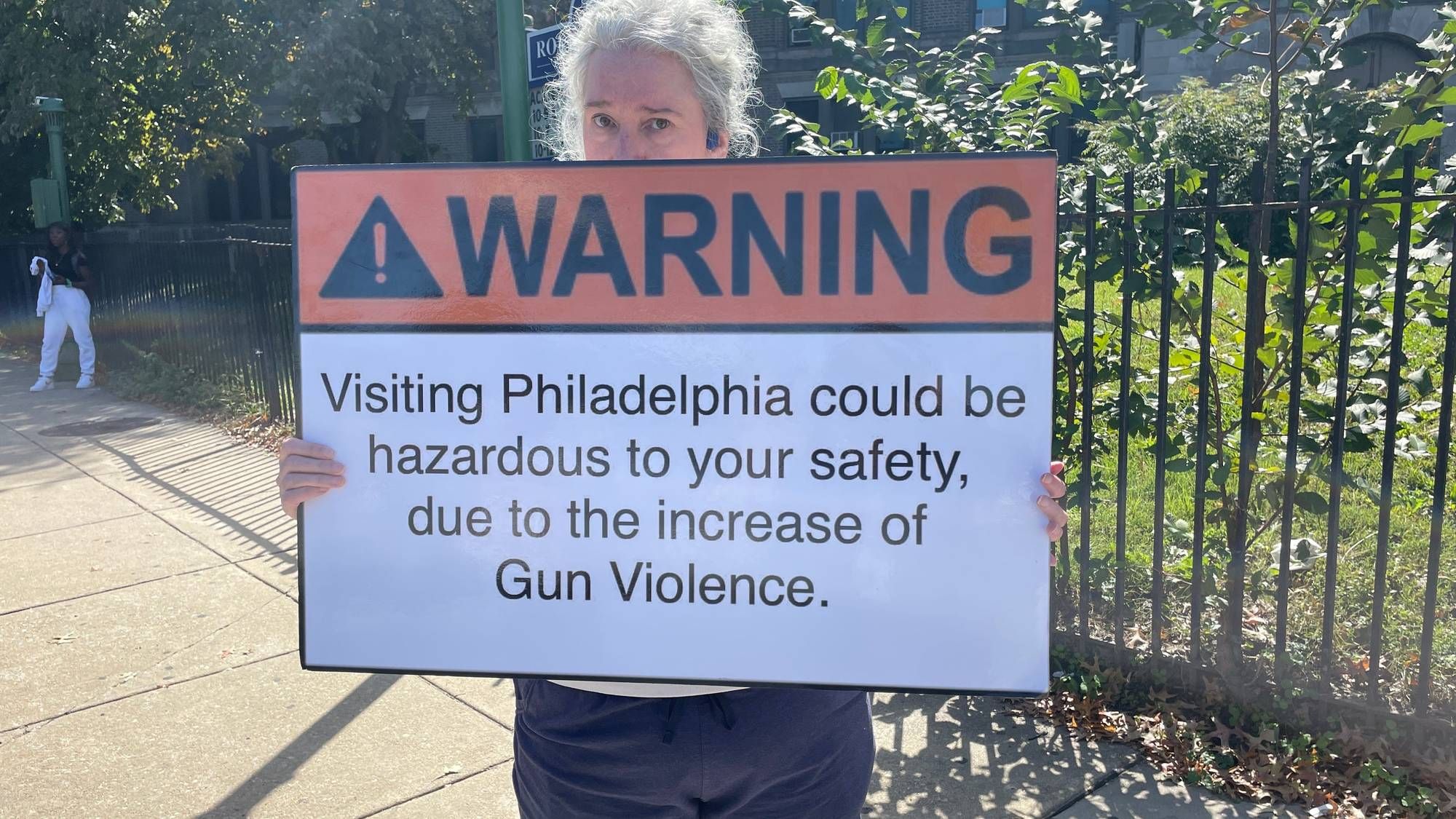
On Tuesday, ahead of the hearing, families of people killed by guns gathered at City Hall to highlight the lawsuit's central argument. A dozen people who lost loved ones to gun violence spoke, introducing themselves by giving the date of their relative's murder, several adding that they'd never been solved.
Elizalde's grandmother Marge LaRue criticized state legislators for barring the city from enacting gun laws and failing to impose any regulations themselves.
"I'll never see him again," she said. "He'll never drive. He didn't have a first kiss. He won't vote. We can vote. Let's do it every time. Let's get these people out of office who refuse to listen to us. Our children are dying. My grandson, 14, lying in the dirt at his high school football game."
Angela Gibson sobbed, "I lost my son Rashon in December last year. He was my first born. I have three sons and, Lord knows, I'm scared for my two other sons. I'm just afraid. And these tears aren't just for him. Every time I hear of someone's murder, it just touches me."
Stanley Crawford, the main plaintiff in the case, estimated that at least 100 people are impacted by every murder in the city.
"This decision that we're asking the court to make has nothing to do with your ideology, your politics, your philosophy. I don't care if you're Republican or Democrat. We're talking about human beings," he said.
"You do the math on how many murders there have been over these years and how many people are affected by each one of these murders, and if that doesn't hit your humanity, then you have to check yourself."